

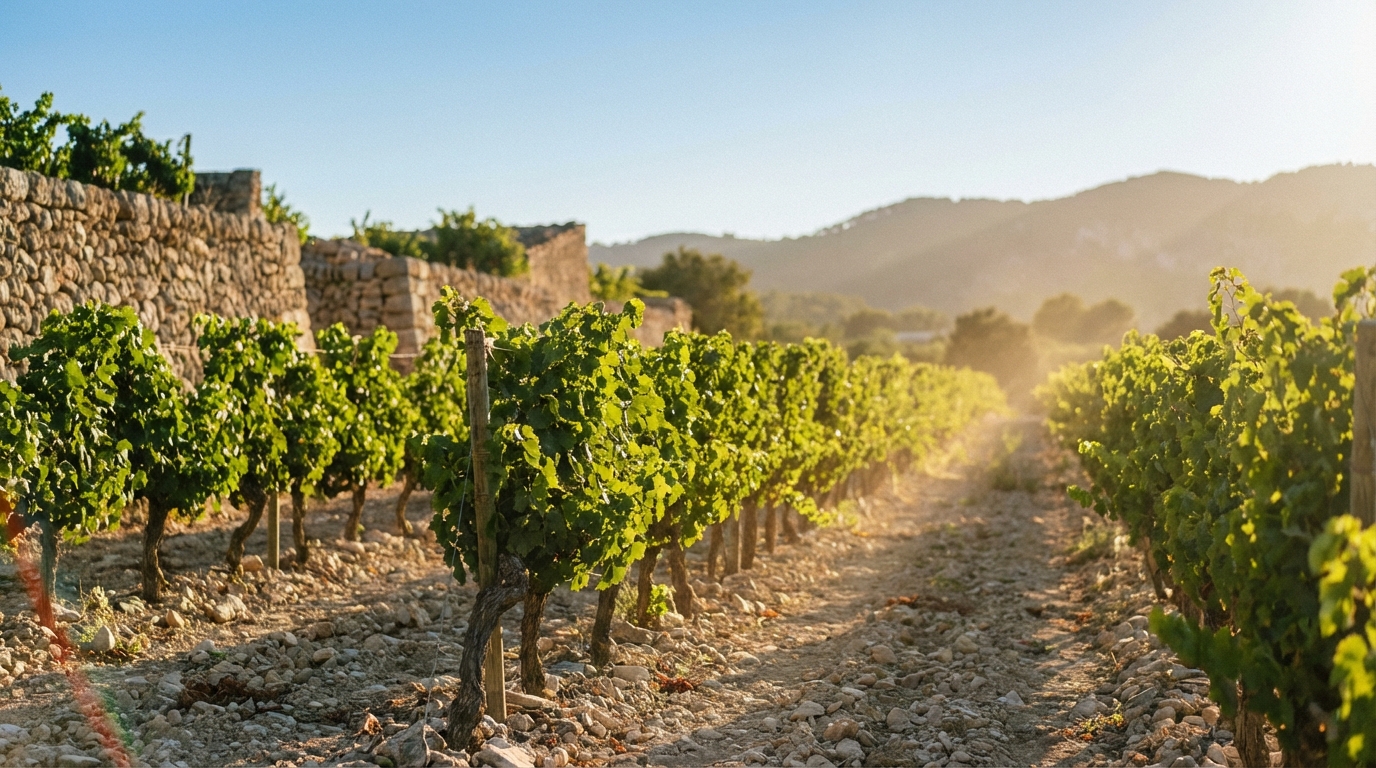
When exploring the unique profile of a viognier wine mallorca produces, the character shifts dramatically from its traditional continental origins. Grown under the intense Mediterranean sun and tempered by constant maritime breezes, this classic grape trades heavy viscosity for vibrant saline freshness. The varietal develops distinct notes of white peach, wild fennel, and a striking mineral finish. Island terroir effectively restructures the grape, proving that rigorous farming on limestone-rich soils at Montesion Wine Estate elevates international vines into profoundly localized expressions.
Cultivating an inherently low-acid, highly aromatic white grape on a sun-drenched island presents a formidable agronomic puzzle. The grape traditionally thrives in the steep slopes of the Northern Rhône, where cool nights preserve delicate floral compounds. Transporting this demanding varietal to the Balearic Islands requires a complete reimagining of canopy management. The Mediterranean basin offers 2,800 hours of annual sunshine, fundamentally altering how vines synthesize sugars. Rather than yielding opulent, heavy wines characteristic of warmer climates, the island’s microclimate forces adaptation. Constant sea breezes deposit microscopic salt layers on grape skins, while deep roots struggle through rocky earth. This tension strips away flabbiness, replacing it with a taut backbone. Understanding this transformation reveals exactly why certain mediterranean white wines capture global attention.
How Does the Maritime Climate Alter Viognier Tasting Notes?
Island viticulture introduces a relentless dynamic between intense solar radiation and cooling oceanic winds, fundamentally rewriting standard viognier tasting notes. In classical continental settings, the grape rapidly accumulates sugar, resulting in high-alcohol wines dominated by heavy musk aromas. The island climate disrupts this ripening trajectory entirely. The Embat, a localized thermal wind pulling cool sea air over the heated landmass during summer afternoons, acts as a natural temperature regulator. This daily ventilation prevents grapes from baking, extending the phenolic ripening period while preserving malic acid.
The resulting aromatic expression leans away from tropical opulence toward strict precision. Instead of thick textures, the wine develops a crystalline quality. A distinct salinity emerges on the palate, a direct consequence of airborne sea spray coating the vineyards. This saltiness interacts brilliantly with inherent stone fruit characteristics, creating tension that prevents the wine from feeling cloying. Under strict Demeter certification protocols, the absence of synthetic fertilizers forces vines to root deeply, enhancing mineral translation from soil to glass.
Specific aromatic shifts driven by this maritime environment include:
- White floral dominance: Heavy honeysuckle transitions into crisp citrus blossom.
- Saline undercurrents: A distinct sea-salt finish cuts through the varietal’s natural weight.
- Herbal complexity: Surrounding garrigue imparts hints of wild fennel.
- Restrained stone fruit: Ripe apricot tightens into tart white peach profiles.
Why Do Limestone Soils Matter for Island Viticulture?
Subterranean architecture dictates vineyard quality, and the Balearic archipelago possesses a distinct geological advantage for white grape cultivation. The soil matrix across premier mallorca wine regions consists primarily of Call Vermell, an iron-rich clay resting over dense layers of porous limestone. This calcareous bedrock acts as a massive subterranean sponge, retaining vital winter rainfall and releasing it precisely when vines face peak summer stress. For a grape susceptible to drought-induced shutdown, this natural irrigation system proves critical for maintaining balance.
Limestone also plays a vital chemical role. Soils rich in calcium carbonate profoundly impact the must’s pH, helping preserve natural acidity even as ambient temperatures soar. This geological influence remains vital for organic wine Spain produces, as winemakers avoid aggressive cellar corrections. Deep root penetration ensures the vine extracts a complex array of micronutrients. This exact tension makes the grape an excellent blending partner, beautifully demonstrated in the Montesión Rose Cuvée 2024, where aromatic intensity perfectly elevates the fruitiness of Merlot.
Interaction between the vine and calcareous soil requires specific strategies:
- Utilizing rootstocks that tolerate high active lime content.
- Maintaining indigenous cover crops to regulate soil temperature.
- Implementing preparations that stimulate microbial activity in the bedrock.
- Harvesting in micro-passes to capture exact mineral tension.
Comparing Continental and Insular Expressions: A Terroir Breakdown
Evaluating a viognier wine mallorca cultivates against traditional counterparts highlights the profound impact of terroir. In its ancestral home, the grape relies on steep slopes and granitic soils to achieve signature viscosity and floral intensity. The continental climate provides a sharp diurnal temperature shift, locking in the classic apricot profile. However, this environment often produces wines that demand immediate consumption, as naturally low acidity leads to rapid oxidation and a noticeable loss of freshness over a short period.
Transitioning to a Mediterranean island ecosystem flips this paradigm entirely. The Balearic Islands wine sector embraces environmental stressors that force physiological adaptation. Constant oceanic wind, blinding sunlight, and rocky soils strip away the inherent fatness of the grape. What remains is a lean, athletic version of the varietal. This transformation aligns perfectly with shifting market dynamics; global sales data indicates a 14% increase in demand for saline, mineral-driven white wines over the last three years. Modern consumers consistently move away from heavily oaked, viscous profiles toward wines offering precision and extensive gastronomic versatility.
| Viticultural Factor | Continental (Traditional) | Mediterranean Insular (Mallorca) |
|---|---|---|
| Soil Composition | Granitic sand and schist | Iron-rich clay over porous limestone |
| Dominant Aromatics | Ripe apricot, musk | White peach, wild fennel |
| Palate Texture | Viscous, heavy | Taut, energetic, saline |
| Acidity Retention | Low to moderate | Moderate to high |
| Maturation Speed | Rapid sugar accumulation | Extended phenolic ripening |
The Enduring Legacy of Insular Adaptation
Successful cultivation of demanding international varieties within a maritime climate relies entirely on responding to the local ecosystem. The transformation of this classic grape from a floral heavyweight into a precise, mineral-driven wine underscores the power of island terroir. Several core principles emerge from this viticultural shift. Constant oceanic winds act as a crucial moderating force, slowing sugar accumulation and preserving vital acidity. Furthermore, calcareous limestone soils provide necessary hydration and structural tension, preventing wines from becoming flabby under the Mediterranean sun. Rigorous farming methodologies force vines to engage deeply with their environment rather than relying on synthetic additives. This approach yields a profoundly localized expression of a global grape. By prioritizing soil health and honoring natural rhythms, Montesion Wine Estate continues to redefine what is possible within the insular landscape.
Frequently Asked Questions
What makes a Mallorca wine different from a French continental wine?
The primary difference lies in the climatic and geological conditions of the vineyards. While French iterations grow on granitic soils in a continental climate, yielding highly viscous and floral wines, island versions thrive on limestone-rich soils under constant maritime breezes. This environment naturally restricts heaviness, producing a leaner, mineral-driven wine with distinct saline notes and higher natural acidity.
How does biodynamic farming affect the taste of Mediterranean white wines?
Biodynamic farming eliminates synthetic fertilizers, forcing vine roots to dig deeper into the bedrock for nutrients. This deep soil penetration translates directly into the glass, enhancing the mineral complexity and structural tension of the wine. The use of natural composts fosters a vibrant microbial ecosystem, promoting resilient vines capable of producing fruit with intense, authentic flavor profiles.
Why is limestone soil considered beneficial for growing white grapes in hot climates?
Limestone soil acts as a natural water reservoir, absorbing winter rains and slowly releasing moisture to roots during arid summer months. This consistent hydration prevents vines from shutting down due to heat stress. Additionally, high calcium carbonate content helps maintain the natural acidity of the grapes, ensuring the final wine remains crisp despite intense solar radiation.
Can a vino biodinámico age well in the bottle?
Yes, a meticulously crafted biodynamic wine exhibits exceptional aging potential. Because these wines are produced from highly resilient vines grown in living soils, the fruit possesses a strong structural foundation of natural acidity. When vinified without heavy manipulation, this inherent structure allows the wine to evolve gracefully, developing tertiary aromas while maintaining core freshness.
