
Combating greenwashing wine requires strict adherence to the new Empowering Consumers for the Green Transition (ECGT) Directive. Starting September 2026, the European Union bans vague environmental claims like “eco-friendly” on all commercial labels. Vineyards must replace generic marketing with third-party verified credentials. Securing a rigorous standard, such as Demeter certification, guarantees compliance while protecting consumers at Montesion Wine Estate.
The European wine market faces a massive regulatory shift. September 2026 marks the absolute deadline for vineyards to eliminate unsubstantiated environmental claims from their bottles. For decades, producers freely printed terms like “nature-friendly” across their labels without regulatory oversight. This era of unchecked marketing ends soon. The new legislation targets deceptive practices directly, forcing a massive industry correction. Estates relying on superficial green branding will scramble to redesign their packaging. Conversely, producers already working with strict ecological frameworks hold a massive competitive advantage. Adapting early ensures your bottles remain compliant, respected, and legally viable across all European markets.
Why Will the 2026 EU Wine Regulations Change Labeling Forever?
The upcoming EU wine regulations 2026 fundamentally rewrite the rules of consumer transparency. Historically, the beverage industry treated environmental messaging as a creative exercise rather than a factual statement. Producers easily marketed a conventional bottle as a natural wine simply by using earth-toned paper and leafy graphics. This visual deception ends permanently under the new legal framework.
The directive treats environmental claims exactly like nutritional facts. You cannot legally claim a wine is “climate positive” without producing the exact scientific data to prove it. Furthermore, the legislation specifically targets generic phrasing that confuses buyers. Terms lacking independent verification will trigger immediate commercial penalties and product recalls.
Consider the organic food movement of the late 1990s. Before strict certification bodies stepped in, any farm could label produce as “natural,” leading to massive consumer distrust. The wine industry currently experiences this exact same painful adolescence. By mandating third-party verification, the European Union forces the market to mature.
Consequently, this regulatory sweep eliminates the middle ground. You are either officially certified by a recognized authority, or you are legally prohibited from discussing your environmental efforts on the bottle. This binary reality heavily rewards estates that have already invested years into genuine ecological farming.
How to Audit Your Sustainable Wine Marketing Strategy?
Evaluating your current sustainable wine marketing requires a ruthless review of every public-facing asset. Many estates accidentally violate the incoming rules because they inherited older marketing materials. You must proactively identify and eliminate these risky phrases before regulators intervene.
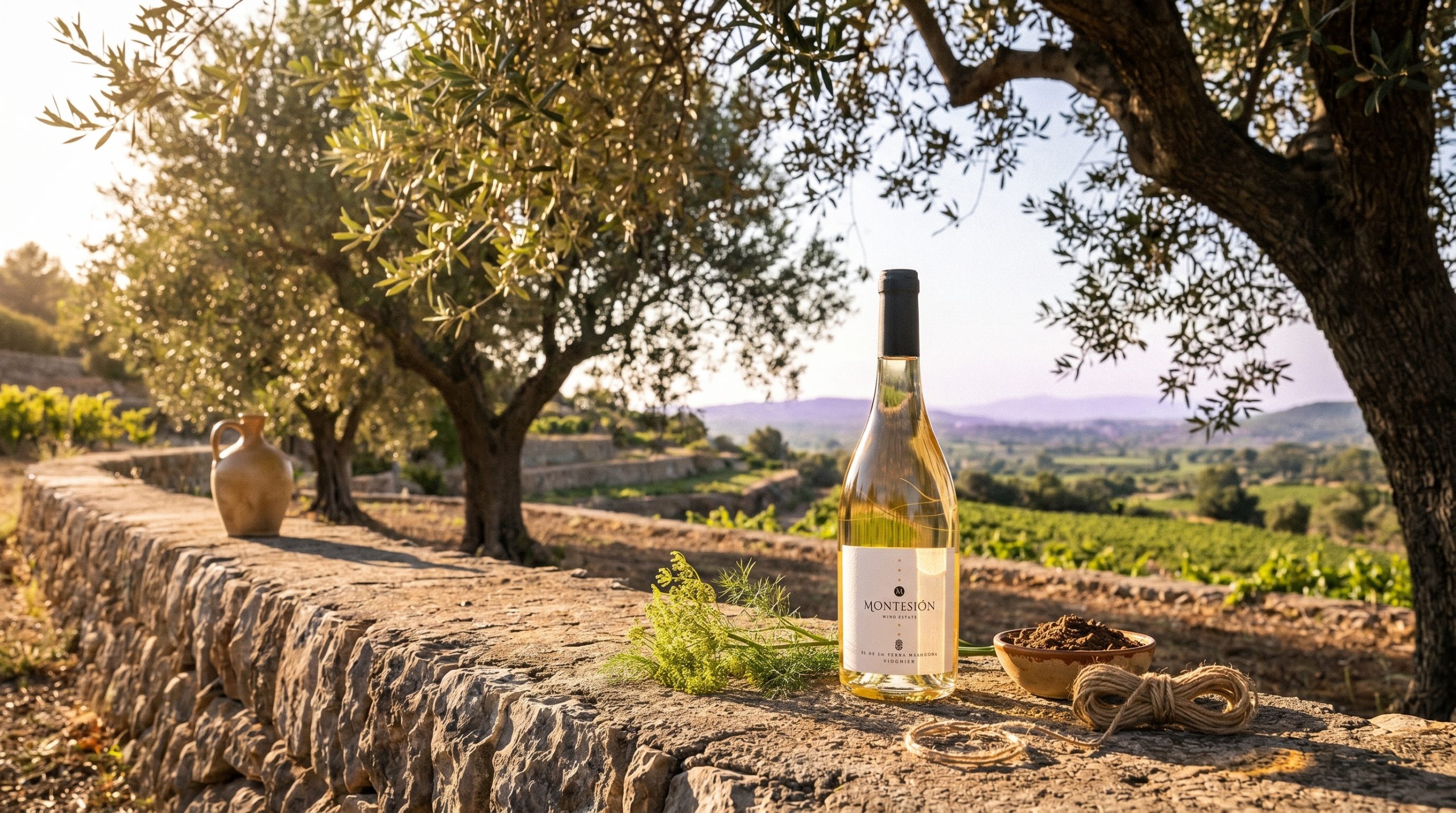
True ecological viticulture speaks through the glass, not just the label. When pouring a glass of Montesión Viognier 2025, the drinker experiences the aromatic intensity and floral balance born from living soils. The wine acts as a direct translator of the terroir. This authentic connection requires no exaggerated marketing claims because the vibrancy of the land speaks clearly.
Follow these exact steps to audit your brand effectively:
- Gather all physical and digital marketing materials currently in circulation. You must review back labels, tasting notes, website copy, and social media templates.
- Highlight every adjective related to the environment, nature, or climate. Pay special attention to words like “conscious,” “friendly,” or “green.”
- Cross-reference these highlighted terms against your official credentials. If you produce organic wine Spain, use the official EU leaf logo, but never invent supplementary eco-terminology.
- Integrate your Demeter certification directly into your regional story. Explain how crafting authentic Mallorca wine requires strict biodynamic practices to manage intense sun exposure and maritime winds.
- Delete any claim lacking a direct paper trail to an independent auditor. If you cannot prove it with a certificate, remove it entirely.
This rigorous self-audit often reveals uncomfortable truths about past habits. Yet, cleaning up your messaging now prevents costly legal disputes later.
Quick Checklist for the ECGT Directive Wine Transition
Preparing for the ECGT directive wine regulations requires immediate, highly organized action. You cannot wait until 2026 to begin adjusting your supply chain and marketing materials. Label approval processes and printing schedules often take several months to complete successfully. Holding a legitimate biodynamic certification suddenly becomes your strongest commercial asset, provided you communicate it correctly at Montesion Wine Estate.
- Remove all unverified environmental adjectives from your website immediately to establish a clean digital footprint.
- Redesign your upcoming vintage labels to feature only official, third-party certification logos prominently on the front.
- Stop using the phrase “carbon neutral” unless you possess current, verified carbon offset documentation from a recognized auditor.
- Ensure your biodynamic wine marketing explicitly references the specific certifying body, such as Demeter Spain, rather than using generic terminology.
- Audit your third-party distributors to guarantee they represent your vino biodinámico accurately across their respective online platforms.
- Train your sales team on the specific legal differences between certified and uncertified ecological claims.
- Document your entire agricultural process meticulously to prepare for increased regulatory scrutiny from local authorities.
- Highlight your regional commitment by explaining how your verified practices protect the fragile ecosystems required to produce premium Balearic Islands wine.
Preparing Your Vineyard for a Transparent Future
The era of unchecked environmental marketing has officially concluded. Vineyards can no longer rely on clever copywriting to mask conventional farming practices. This regulatory shift fundamentally levels the playing field for estates that have quietly invested in genuine ecological agriculture, effectively ending the era of greenwashing wine. By enforcing strict verification standards, the European Union protects both the consumer and the honest producer.
Your immediate priority involves purging all vague terminology from your commercial assets. You must treat your marketing copy with the same rigorous scrutiny you apply to your cellar practices. Furthermore, elevating your official certifications from the back label to the forefront of your brand narrative remains essential.
Ultimately, this legislation transforms a potential marketing crisis into a profound opportunity. Estates with verified credentials now hold a distinct, legally protected advantage over their conventional neighbors. True agricultural integrity finally carries the commercial weight it has always deserved.
Frequently Asked Questions
What exactly constitutes greenwashing wine under the new EU rules?
Greenwashing wine involves using vague, unsubstantiated environmental claims on labels or marketing materials to appear more ecological than reality dictates. Under the new EU rules starting in September 2026, terms like “eco-friendly,” “climate positive,” or “green” are strictly prohibited unless backed by recognized, third-party certification. Regulators will actively penalize vineyards that attempt to mislead consumers with generic sustainability buzzwords lacking scientific proof or official audits.
How does the ECGT directive impact existing wine labels in circulation?
The Empowering Consumers for the Green Transition (ECGT) directive requires all wine labels to comply with the new anti-greenwashing standards by September 2026. Any existing packaging featuring unverified environmental claims must be phased out or redesigned before this strict deadline. Vineyards failing to update their labels face immediate product recalls, severe financial penalties, and the legal prohibition of selling non-compliant bottles across any European Union member state.
Does a Demeter certification automatically satisfy the new EU anti-greenwashing laws?
Yes, holding a valid Demeter certification provides full compliance with the incoming EU anti-greenwashing regulations regarding ecological claims. Because Demeter represents a rigorous, independent, and third-party audited standard, vineyards can legally display this logo to prove their biodynamic practices. This official verification shields the estate from greenwashing accusations and allows producers to confidently market their genuine commitment to regenerative agriculture without fearing regulatory backlash.
Can vineyards still use the term “natural wine” after 2026?
The term “natural wine” faces intense scrutiny under the new 2026 regulations because it currently lacks a unified, legally binding definition across the European Union. Unless a specific member state establishes a formal, audited standard for natural winemaking, using this phrase may trigger greenwashing penalties. Vineyards should pivot toward promoting specific, verifiable practices-such as native yeast fermentation or zero added sulfites-rather than relying on the increasingly risky “natural” umbrella term.
