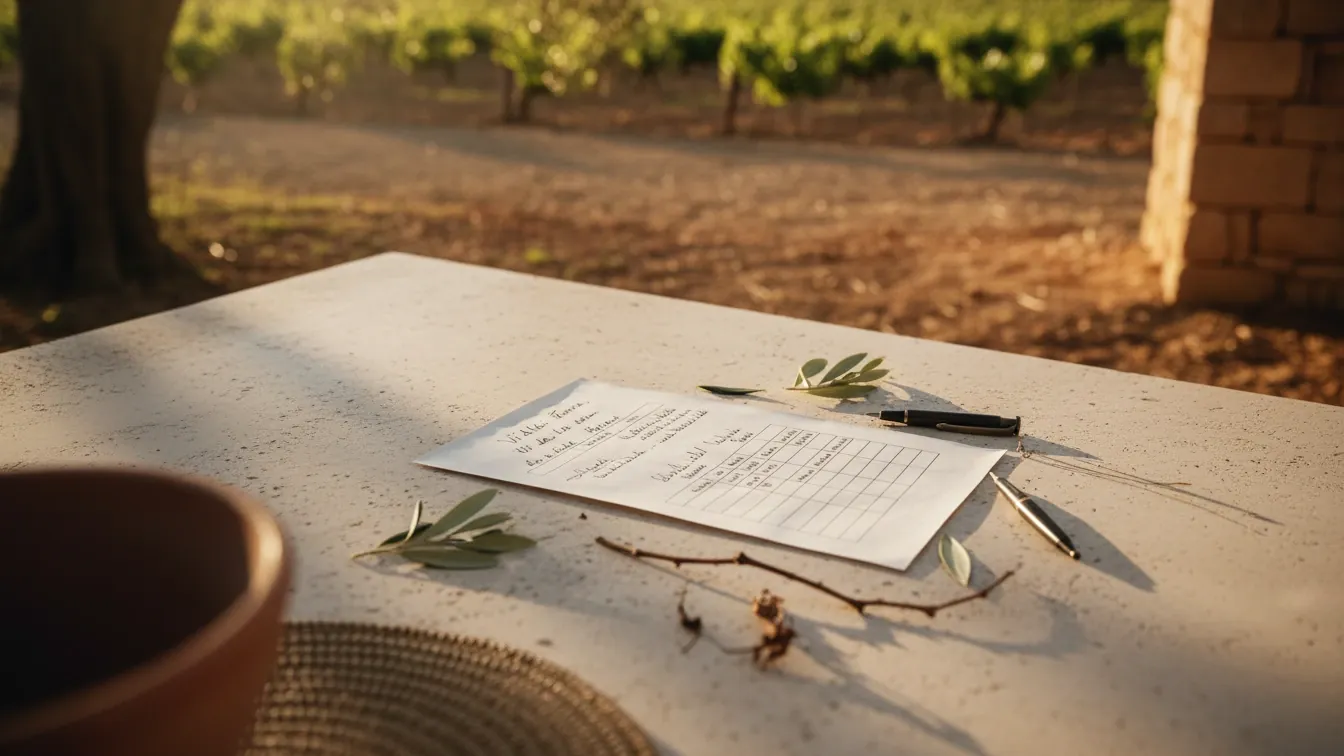
Wine tasting sheets turn a glass of wine into a clear sequence of observations. They help you record appearance, aroma, structure, flavour, balance, and finish without relying on vague impressions. This wine tasting guide explains how to read each section, what the terms mean, and how to build wine tasting notes that remain useful long after the bottle is empty.
A well-designed tasting sheet can look more technical than it really is. Most forms simply divide the tasting process into five stages: appearance, aroma, palate, structure, and overall assessment. The order matters because each stage prepares you for the next one.
A wine tasting sheet also gives beginners permission to slow down. Instead of asking whether a wine is good or bad, you ask what it shows and how those elements work together. That shift creates better observations and more confident conversations.
This guide suits curious beginners and developing wine professionals. You will learn how to identify the purpose of each section, separate aroma from flavour, recognise balance, and write precise notes. You will also practise with examples from Mediterranean wines, including aromatic Viognier, traditional Mallorcan varieties, and wines shaped by spontaneous fermentation.
What should you learn before using a wine tasting sheet?
By the end of this lesson, you should be able to complete a standard tasting sheet with calm, consistent attention. You do not need advanced certification or an unusually sensitive palate. You need a clean glass, a quiet few minutes, and a willingness to describe what you notice rather than what you think you should notice.
The following objectives create a practical learning path. Each one includes a skill, a suitable level, an estimated time, and the basic requirement needed to practise it.
- Identify visual characteristics: beginner level, 5 minutes, requiring a clear glass and a light background.
- Separate primary and secondary aromas: beginner level, 10 minutes, requiring one still wine and a clean environment.
- Describe palate structure: beginner to intermediate level, 10 minutes, requiring small sips and deliberate pauses.
- Judge balance and finish: intermediate level, 10 minutes, requiring attention after swallowing or spitting.
- Write useful wine tasting notes: beginner level, 10 minutes, requiring a tasting sheet or notebook.
- Compare two wines fairly: intermediate level, 15 minutes, requiring similar serving temperatures and matching glassware.
A useful sheet is not an exam paper. It is a memory tool. For example, writing ripe strawberry, dry finish, and moderate acidity gives you more information than writing pleasant rosé. Specific language helps you remember the wine and compare it with another bottle later.
Mini-exercise: Take any bottle available at home and read its label without tasting it. Predict its colour, body, likely fruit profile, and serving temperature. Keep those predictions separate from your tasting notes, then compare them with the wine in the glass.
Step one: How do you read the appearance section?
The appearance section records what the wine reveals before you smell or taste it. Look at the colour, clarity, intensity, and movement in the glass. Hold the glass by the stem, tilt it over a white surface, and examine the centre and rim. Natural daylight works best, although a neutral lamp can also help.
Colour gives clues, but it does not provide a complete verdict. A pale rosé may still carry concentrated aroma and flavour. A deep red may feel elegant rather than heavy. Clarity can indicate that the wine is bright and clean, while slight haze may result from minimal intervention or natural winemaking choices. Avoid treating appearance as proof of quality.
The rim often shows age and development. Young red wines commonly display purple or violet tones, while mature reds can move toward ruby, garnet, or brick. White wines may range from greenish yellow to gold. Rosé wines can show salmon, onion skin, copper, or bright pink hues.
| Observation | What to record | What it may suggest |
|---|---|---|
| Colour | Greenish yellow, gold, ruby, violet, onion skin | Variety, age, extraction, or winemaking |
| Intensity | Pale, medium, deep, opaque | Concentration and skin contact |
| Clarity | Bright, clear, hazy, dull | Filtration, condition, or freshness |
| Tears | Slow or quick rivulets on the glass | Alcohol, glycerol, sugar, or temperature |
For example, a young rosé with a pale onion skin colour and visible tears may suggest careful extraction and moderate alcohol. The observation does not prove the wine will taste rich. It simply creates a useful starting point.
Mini-exercise: Describe a wine using only four visual terms. Do not mention quality, flavour, or grape variety. Then compare your description with the label and technical information.
Step two: What do wine tasting notes reveal about aroma?
The aroma section usually contains the richest vocabulary on a wine tasting sheet. Begin with the glass still, then swirl it gently and smell again. The first smell may show delicate or volatile notes. Swirling releases more aromatic compounds and can reveal fruit, flowers, herbs, spices, minerals, or fermentation characters.
Aromas fall into three broad groups. Primary aromas come from the grape and often include fruit, flowers, and fresh herbs. Secondary aromas develop during fermentation, creating notes such as bread, cream, yoghurt, or pastry. Tertiary aromas emerge with ageing and may include tobacco, leather, dried fruit, smoke, toast, or earth.
You do not need to identify every aroma. Choose the clearest family first. Is the wine citrus-led, stone-fruited, tropical, red-fruited, or black-fruited? Then add one or two precise details. For instance, ripe strawberry is more useful than fruit, while lychee tells you more than floral.
Aromatic intensity describes how strongly the wine speaks, not whether the aromas are pleasant. A Viognier can show very high intensity through lychee and flowers. A restrained Callet may offer ripe red fruit with a quieter, earthy edge. Both styles can be expressive in different ways.
The Montesion Viognier 2025 provides a clear practice example. Its profile combines floral aromas with exotic fruit, especially lychee, while spontaneous fermentation in a temperature-controlled stainless-steel tank protects freshness. When writing notes, you might record high aromatic intensity, lychee, white flowers, and fresh finish.
Mini-exercise: Smell the wine before swirling. Write one impression. Swirl, smell again, and add two more impressions. This simple comparison shows how movement changes aromatic perception.
Step three: How should you describe the palate?
The palate section records what happens when the wine enters your mouth. Take a small sip and move it across your tongue. Notice the first impression, the middle palate, and the finish. You can swallow or spit, but professional tasters often spit to preserve concentration across several wines.
Start with sweetness, acidity, alcohol, body, tannin, flavour intensity, and texture. Sweetness describes residual sugar, not fruitiness. A dry wine can smell like ripe fruit. Acidity creates freshness and salivation. Alcohol can create warmth. Body describes the wine’s weight, while texture explains whether it feels silky, chalky, creamy, angular, or firm.
Tannin matters mainly in red wines, although some white and rosé wines can show grip. Tannins create a drying or lightly rough sensation, especially along the gums. Young Petit Verdot or Cabernet Sauvignon may show firm tannins, while extended ageing can make them feel more integrated.
Flavour confirms or challenges the aromas. A wine may smell of ripe black fruit but taste more savoury and mineral. Another may smell floral yet finish with a slight bitterness that adds tension. Record the most persistent flavours rather than listing every passing association.
| Palate feature | Question to ask | Example wording |
|---|---|---|
| Sweetness | Does the wine feel dry or sweet? | Dry, with ripe fruit character |
| Acidity | Does it make your mouth water? | Fresh, lively acidity |
| Body | How much weight does it carry? | Medium-bodied and rounded |
| Tannin | Does it dry or grip the gums? | Fine, firm tannins |
| Texture | How does it feel? | Silky, creamy, chalky, or structured |
| Flavour length | How long does flavour remain? | Persistent finish with ripe fruit |
Mini-exercise: Taste the wine once without naming flavours. Focus only on sweetness, acidity, body, texture, and tannin. Taste again and add flavour details. Structure becomes easier to judge when fruit does not distract you.
Step four: Why do balance and finish matter?
Balance describes the relationship between the wine’s main components. A balanced wine does not need every element to feel equal. Instead, acidity, alcohol, sweetness, fruit, tannin, and oak support one another. A full-bodied red can remain balanced when its acidity keeps the palate alert and its tannins feel proportionate.
Finish describes what remains after the wine leaves your mouth. A short finish disappears quickly. A medium finish lasts several seconds. A long finish continues through persistent fruit, spice, bitterness, acidity, or mineral character. Length alone does not guarantee quality, because an unpleasant flavour can also linger.
Consider a red aged in French oak. You may notice ripe black fruit first, followed by smoky or roasted notes. If the oak dominates the fruit and structure, the wine can feel disconnected. If the oak supports the fruit and tannin, the wine may feel polished and complete.
A rosé offers a different lesson. Freshness often defines its balance, while excessive alcohol or sweetness can make it feel heavy. A vibrant rosé with ripe strawberry, balsamic hints, and a clean finish can remain refreshing even when its aromas show considerable intensity.
Use the overall assessment section to connect the parts. Write fresh and balanced, dense but lifted, or aromatic with a firm finish. Avoid unsupported judgments such as excellent or sophisticated. Explain what creates the impression.
Mini-exercise: After swallowing or spitting, wait 20 seconds. Record the final flavour, the level of freshness, and whether the wine feels more or less complete than it did at the first sip.
How do you write a wine tasting guide that stays precise?
Good notes follow a repeatable order. Start with the strongest evidence and avoid decorative language. A useful sentence might read: Pale ruby colour; ripe red fruit and liquorice on the nose; medium-bodied, dry, fresh, and silky; persistent finish with gentle spice. The sentence works because each detail has a clear place.
Use familiar references, but keep them realistic. Wine does not need to smell exactly like a strawberry or a cedar chest. Aroma descriptions are comparisons. They help communicate perception between people who cannot share the same glass.
Specificity also depends on concentration. If you smell five different fruits, choose the two most convincing. If you taste a faint mineral note, mark it as subtle rather than presenting it as dominant. Honest uncertainty creates better records than forced confidence.
The following structure works for most tasting sheets:
- Record colour, intensity, and clarity.
- Identify the main aroma family.
- Add two specific aromatic details.
- Describe sweetness, acidity, body, tannin, and texture.
- Confirm or revise the aromas on the palate.
- Judge balance, length, and overall character.
Temperature changes perception. A wine served too cold may hide aroma and exaggerate acidity. A warm red may emphasise alcohol. Therefore, note the serving temperature when it affects your judgment. The recommended range for many aromatic whites sits around 8-10°C, while structured reds often show better integration around 15-17°C.
Mini-exercise: Rewrite one vague note three times. Change pleasant red wine into pale ruby, ripe cherry, medium body, fresh acidity, fine tannin, and a clean finish. The second version can be shorter, but it should remain specific.
Which mistakes make a tasting sheet less useful?
The most common mistake is tasting too quickly. People often look, smell, sip, and decide within ten seconds. That pace favours first impressions and misses the wine’s development. Allow the glass to rest, then return to it after a few minutes.
Another error involves confusing personal preference with technical quality. You may dislike high acidity, firm tannin, or aromatic intensity. That preference is valid, but it does not describe whether the wine is balanced. Keep the two judgments separate.
Glassware and surroundings also matter. Strong perfume, cooking aromas, smoke, and scented candles can distort the nose. Dirty glasses create false flavours. Loud conversation can reduce concentration, especially when comparing several wines.
Avoid reading the back label before tasting if you want an independent assessment. Technical details can prime your expectations. However, reading the information afterward can help explain what you experienced. For example, knowledge of spontaneous fermentation or barrel ageing may clarify texture and aroma without replacing your own observation.
| Common mistake | Why it causes trouble | Better approach |
|---|---|---|
| Calling fruitiness sweetness | Fruit aroma does not prove residual sugar | Judge sweetness on the palate |
| Overlisting aromas | Long lists hide the dominant character | Choose two or three clear notes |
| Ignoring temperature | Temperature changes aroma and structure | Record and adjust serving conditions |
| Treating colour as proof | Appearance cannot confirm quality | Use colour as initial evidence only |
| Judging too early | First impressions can change | Taste again after several minutes |
A particularly useful correction is to taste the same wine on two days. Small changes in air exposure, temperature, and attention can reveal which observations remain stable. Those repeated observations deserve a place on the final sheet.
Mini-exercise: Ask another taster to describe the same wine without sharing notes. Compare structure words first, then aroma words. You will usually find more agreement about acidity and body than about specific fruit.
How can you compare Mallorca wine with confidence?
A fair comparison requires similar conditions. Serve both wines at suitable temperatures, use identical glasses, and pour similar amounts. Taste the wines in a sensible order, moving from lighter and fresher styles toward fuller, more tannic examples. Strong wines can overwhelm delicate ones if the order is reversed.
Mallorca offers an especially interesting setting for comparison because Mediterranean light, warm days, dry conditions, and local varieties shape a diverse wine landscape. Callet can provide red-fruited, earthy character. Prensal Blanc may show freshness and a distinctive island identity. Viognier adds floral and exotic aromatic intensity.
Biodynamic wine also invites a broader reading of the sheet. The wine tasting sheet still records measurable sensory features, yet farming and cellar choices can provide context. Hand harvesting, spontaneous fermentation, controlled temperatures, and ageing vessels influence how a wine feels and develops.
Compare one aromatic white with one structured red, or compare barrel ageing with stoneware ageing. The goal is not to declare a winner. The goal is to understand how grape variety, climate, vessel, and time create different expressions.
For a practical session, pair an aromatic white with a simple dish. A fresh Viognier can work with fish, rice, pasta, or an aperitif. Then compare a fuller red with poultry or game. Food changes acidity, tannin, bitterness, and perceived fruit, making the sheet more dynamic.
Mini-exercise: Create a two-column comparison. Record three similarities and three differences. Finish with one sentence explaining which occasion suits each wine, without calling either wine universally better.
Can a self-assessment test improve your tasting skills?
Self-assessment works best when it tests observation rather than prestige vocabulary. You should be able to explain why you selected a term. If you write high acidity, identify the physical evidence: increased salivation, freshness, or a lifted finish. If you write full-bodied, describe the wine’s weight and concentration.
Use the questions below after completing a tasting sheet. Answer without checking the solutions. Then review the reasoning, not just the score. A wrong answer often reveals a useful distinction that will improve your next tasting.
- A wine smells strongly of ripe strawberry but tastes dry. Which observation is correct?
- A red wine dries the gums but has fresh acidity and persistent fruit. Which structural terms apply?
- A white wine smells floral and tropical, then finishes clean and lively. Which aroma and palate notes should you record?
- A wine tastes hot, heavy, and low in freshness. Which element may be out of balance?
- Why should you taste again after several minutes?
Answers:
- Record ripe strawberry as an aroma or flavour, and dry as the palate’s sweetness level. Fruit character does not equal sweetness.
- Record tannin, acidity, fruit persistence, and likely medium to full body. The drying sensation alone does not mean the wine lacks balance.
- Record floral and tropical aromas, then describe fresh acidity, body, texture, and finish. Keep aroma and palate observations distinct.
- Alcohol may dominate the wine, or the wine may lack sufficient acidity and fruit freshness to support its weight.
- Air, temperature, and attention can change the wine’s expression. Repeated observations help separate stable character from a fleeting first impression.
A strong result is not a perfect score. It is a clearer method. With practice, you will move from naming isolated details to explaining relationships between them.
What terms belong in a practical wine tasting glossary?
A compact glossary makes technical language easier to use. These definitions are intentionally plain because a tasting sheet should help communication, not create distance.
- Acidity: The fresh, mouth-watering quality that gives wine energy.
- Aging: The period during which wine develops in bottle or another vessel.
- Aroma: A smell perceived from the wine, often linked to grape, fermentation, or ageing.
- Balance: The harmonious relationship between acidity, alcohol, sweetness, tannin, fruit, and oak.
- Body: The impression of weight and volume on the palate.
- Finish: The flavour and sensation remaining after swallowing or spitting.
- Intensity: The strength of a wine’s aroma, colour, flavour, or structure.
- Minerality: A descriptive impression associated with freshness, salinity, chalk, stone, or tension.
- Primary aroma: A scent linked mainly to the grape variety and fruit.
- Secondary aroma: A scent created during fermentation or other production stages.
- Tannin: A drying or gripping sensation found especially in red wines.
- Texture: The physical feel of wine, such as silky, creamy, firm, or chalky.
- Tertiary aroma: A scent developed through maturation, such as tobacco, leather, toast, or dried fruit.
- Varietal character: Sensory traits associated with a grape variety.
- Volatile aroma: A readily released scent that can appear strongly when the glass is moved.
The term mineral is often misunderstood. It does not mean that wine contains a literal flavour of crushed rock. Instead, it describes a sensory impression, frequently involving tension, salinity, firmness, or a cool finish.
Likewise, smooth does not automatically mean low tannin. A wine can have firm tannins with a polished texture when the tannins are ripe and integrated. Context turns vocabulary into useful analysis.
What resources help you practise after this lesson?
The best resource is repetition under controlled conditions. Keep a notebook with the date, wine, serving temperature, glass type, food pairing, and your final notes. Add a second entry the next day if the wine remains open. This record will show which impressions persist.
A simple tasting kit includes two identical glasses, a neutral cloth, water, plain bread or crackers, a spittoon, and a white sheet of paper. You do not need expensive equipment. Consistency matters more than luxury.
For structured practice, use one grape variety across different regions. Then reverse the exercise by comparing different varieties from the same region. Mallorca provides a rewarding framework because local Callet and Prensal Blanc can be studied alongside Viognier, Merlot, Cabernet Sauvignon, Syrah, or Petit Verdot.
Food comparison adds another layer. Taste the wine alone, then with salty, fatty, acidic, sweet, and spicy foods. Note how each pairing changes the perception of acidity, tannin, body, and finish. This approach explains why a wine that seems restrained alone may become expressive at the table.
Useful learning resources include winery technical sheets, reputable wine education books, guided tastings, and sensory comparison groups. Treat tasting apps as memory aids rather than authorities. Your own repeated observations remain the central evidence.
A thoughtful wine tasting experience at Montesion Wine Estate can also connect sensory learning with place. When a tasting includes local olive oil, Mallorcan biscuits, fresh cheese, or traditional dishes, the sheet becomes part of a wider study of landscape and culture. That is one reason wine activities in Mallorca can feel more memorable than a formal classroom exercise.
How do you turn a completed sheet into a lasting conclusion?
A completed sheet should answer three practical questions. What does the wine taste and smell like? How does it feel in the mouth? When would it be most enjoyable? Those questions transform description into understanding without reducing the wine to a score.
The five-step method creates a reliable habit: inspect appearance, explore aroma, assess the palate, judge balance and finish, then write a concise summary. Each step prevents a common error. Visual attention slows you down, aroma work separates families, palate analysis reveals structure, and the final summary tests whether your observations agree.
The most useful notes remain specific but readable. Ripe strawberry, pale onion skin colour, fresh acidity, and a clean finish communicate more than a page of fashionable adjectives. Similarly, ripe black fruit, soft tannin, smoky oak, and long persistence create a clear portrait of a mature red.
At Montesion Wine Estate, a Demeter-certified estate in Porreres, the sheet can also reflect a deeper relationship between farming, cellar practice, and place. Hand-picked grapes, spontaneous fermentation, and careful temperature control are not merely technical details. They form part of the story behind the wine’s expression.
Once you understand that relationship, the sheet becomes more than a form. It becomes a disciplined way to notice Mallorca, from Callet’s island identity to Viognier’s aromatic lift and the Mediterranean character held in every glass.
Frequently asked questions
What is a wine tasting sheet used for?
A wine tasting sheet records a wine’s appearance, aroma, palate, structure, balance, and finish in a consistent format. It helps tasters remember what they experienced and compare different wines fairly. The sheet also separates personal preference from sensory description. Beginners can use it as a learning framework, while professionals use it to support accurate evaluation.
How do I fill out a wine tasting sheet for the first time?
Begin with colour, clarity, and intensity before smelling the wine. Next, identify the main aroma family, then add two or three specific details. On the palate, record sweetness, acidity, body, tannin, texture, flavour intensity, and finish. Finally, write one sentence about balance and the occasion that suits the wine.
What is the difference between aroma and flavour in wine?
Aroma describes what you perceive through the nose before and during tasting. Flavour combines taste, aroma, and mouthfeel after the wine enters your mouth. A wine can smell of ripe strawberry yet taste dry, fresh, and lightly bitter. Recording the two stages separately creates more precise wine tasting notes.
How do I know whether a wine is balanced?
A balanced wine allows its acidity, alcohol, sweetness, fruit, tannin, and oak to support one another. No single element should dominate in a distracting way. Freshness can lift a full-bodied wine, while ripe fruit can soften firm tannin. Balance describes harmony, not a requirement that every component feels equally strong.
Can beginners learn how to taste wine without professional training?
Beginners can learn how to taste wine by following the same sequence each time and practising with simple comparisons. Start with one wine, then repeat the exercise at different temperatures or alongside food. Use clear descriptions rather than impressive vocabulary. Over time, repeated observations build confidence and improve sensory memory.
Which wine works well for practising aroma descriptions?
An aromatic white such as Viognier offers an accessible starting point because floral and exotic fruit notes can be easy to recognise. A young rosé can then develop skills in freshness, red fruit, colour, and finish. Structured reds such as Cabernet Sauvignon or Syrah are useful later, once you feel comfortable describing tannin and body.
