
Wine tourism in Mallorca gives first-time visitors a stronger sense of place than Rioja because the island combines short distances, native grapes, Mediterranean light, and genuinely intimate estate experiences. At Montesion Wine Estate, that sense of place becomes a direct introduction to the island’s landscape and wine culture. Rioja remains a superb destination for classic reds and historic bodegas. However, Mallorca offers a more varied introduction to Spanish wine without requiring several days of driving between appellations.
Why Wine Tourism in Mallorca Wins for First-Time Trips
A first-time wine journey often succeeds or fails on logistics. Mallorca makes the learning curve unusually gentle: visitors can leave Palma and reach the island’s central wine country in well under 30 minutes, then return for dinner by the sea. That compact geography creates more time for vineyards, conversations, and food rather than transfers. winetoursoftheworld.com describes this balance as one of the island’s practical advantages.
The comparison with Rioja deserves fairness. Rioja has deeper international recognition, grand ageing traditions, and an impressive concentration of established producers. Yet recognition is not the same as suitability for a first visit. Mallorca introduces travellers to indigenous varieties, biodynamic farming, island cuisine, and contrasting landscapes within a manageable itinerary. This article tests that argument through accessibility, diversity, climate, intimacy, and the quality of the experience itself.
Why Mallorca Wine Creates a Better First Impression
Rioja teaches visitors about a powerful regional identity, especially through Tempranillo, oak ageing, and long-established classifications. That focus can be rewarding, although it may also narrow a beginner’s first understanding of Spanish wine. Mallorca presents a broader opening. Callet, Prensal Blanc, Manto Negro, Viognier, and Mediterranean-grown international varieties show how place changes a grape’s expression.
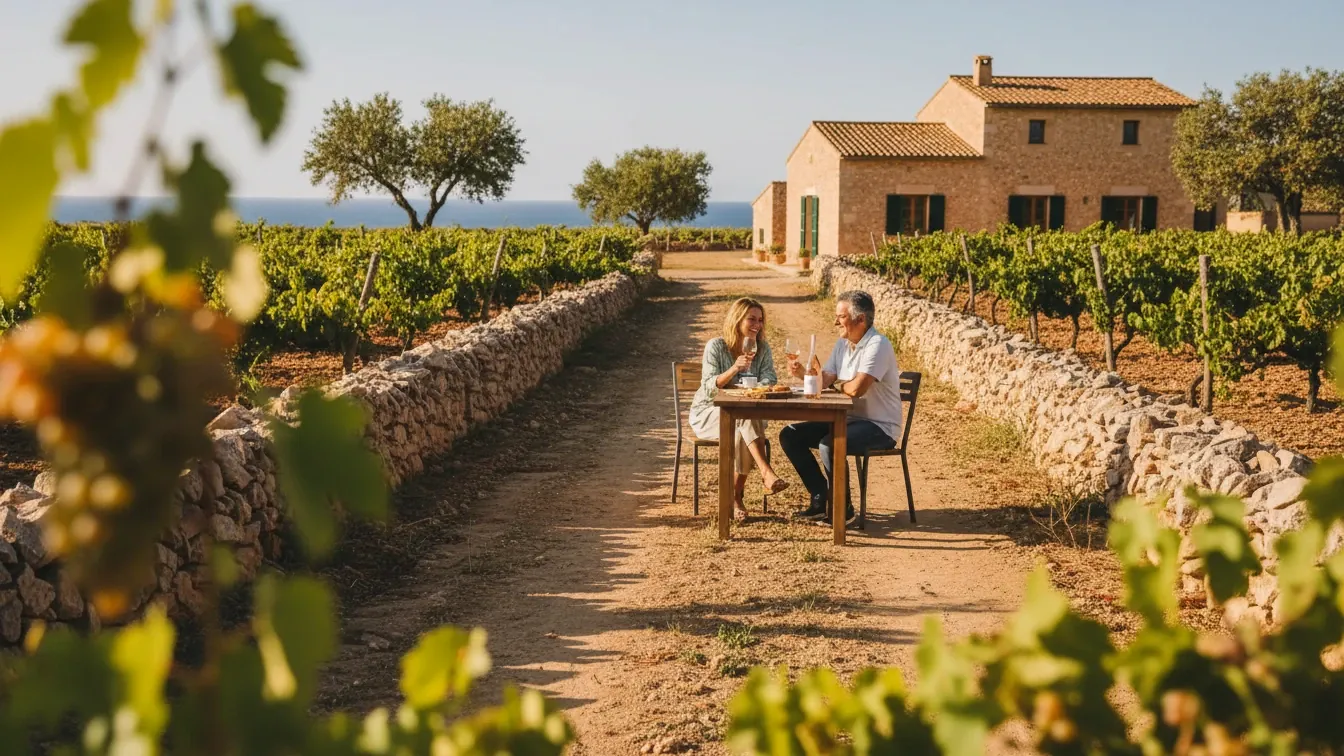
Moreover, Mallorca’s wine landscape is not confined to one visual template. Central plains, dry-stone walls, almond trees, coastal air, and low hills appear within a short drive. Decanter reports that the island has close to 100 wineries, alongside four recognised geographical designations and a growing culture of wine tourism. decanter.com That scale offers discovery without making the visitor feel lost in a large industrial region.
A useful comparison looks like this:
| First-visit factor | Mallorca | Rioja |
|---|---|---|
| Typical visual identity | Island agriculture, dry stone, Mediterranean light | Vineyards, historic towns, and large cellar architecture |
| Learning range | Native grapes, biodynamics, food, and climate | Tempranillo, oak, ageing, and classification |
| Travel rhythm | Compact day trips from Palma | Longer routes between subregions and estates |
| Visitor atmosphere | Often personal and appointment-led | Frequently more established and structured |
For a traveller who wants context rather than a checklist, Mallorca often makes the stronger first impression. The island feels less like a museum of wine and more like a working agricultural landscape.
Are Mallorca Wine Tours Easier to Organise Than Rioja Visits?
Distance shapes memory more than many travellers expect. In Rioja, the main wine areas spread across La Rioja, Álava, and Navarra, with meaningful differences between subregions. That complexity rewards repeat visitors, but a newcomer may spend valuable hours navigating roads, timetables, and reservations. Mallorca’s central wine areas sit close enough to Palma for a half-day visit, a full day, or a flexible sequence of short excursions.
That convenience does not make the island superficial. Instead, it allows visitors to compare estates without exhausting themselves. A morning tasting can focus on soil and grape varieties, while an afternoon visit can explore food, olive oil, or the relationship between dry farming and heat. Travel becomes part of the interpretation rather than an obstacle between appointments.
The best wine activities in Mallorca also suit mixed groups. A committed wine enthusiast can examine fermentation choices and vineyard management. A partner who prefers food can focus on local cheese, bread, olives, or rice dishes. Families and first-time drinkers benefit from the landscape and agricultural story, even when they do not yet recognise the varieties in the glass.
For planning purposes, the most reliable sequence is simple:
- Choose one central base, usually Palma or a nearby rural town.
- Reserve one substantial estate visit rather than several rushed tastings.
- Add a meal or local food stop that reflects the island’s agriculture.
- Leave enough time to compare two grape varieties rather than collecting bottles.
This approach is less ambitious on paper. In practice, it creates a clearer and more enjoyable understanding of Mallorca wine.
Does Biodynamic Wine Add More Than a Sustainability Label?
Biodynamic wine tourism becomes especially compelling when visitors can observe farming decisions directly. The difference lies in the level of explanation. An estate that discusses cover crops, compost preparations, soil moisture, biodiversity corridors, and Demeter standards gives the visitor a working framework. Sustainability stops being a label and becomes a series of daily choices.
The island’s dry Mediterranean climate makes those choices visible. Cover crops can help regulate soil temperature and retain moisture. Beneficial insects can reduce reliance on pesticides. Spontaneous fermentation, hand harvesting, and careful vineyard observation connect the finished wine to a larger agricultural system. These details are easier to remember after walking through the vineyard than after reading a tasting note.
Demeter certification also creates a useful point of comparison with conventional organic farming. Organic certification restricts specified inputs. Biodynamic certification adds a broader farm philosophy, including preparations, ecological balance, and a more integrated view of the holding. The two approaches overlap, but they are not interchangeable.
| Farming approach | Central emphasis | What a visitor can observe |
|---|---|---|
| Conventional | Yield, efficiency, and targeted treatment | Machinery and production routines |
| Organic | Restricted synthetic inputs | Weed control, soil care, and approved treatments |
| Biodynamic | Whole-farm balance and ecological cycles | Preparations, habitats, compost, and biodiversity |
Visitors sometimes question lunar calendars or horn preparations. That objection deserves a serious answer: not every biodynamic claim carries the same level of scientific evidence. Still, the practical value of a vineyard visit can remain strong when the estate demonstrates measurable soil care, habitat protection, and transparent production methods. The experience invites curiosity without requiring blind agreement.
Why Indigenous Grapes Make Balearic Islands Wine Memorable
First-time visitors often arrive expecting Spain to mean Tempranillo, Garnacha, or familiar international grapes. Mallorca complicates that expectation in the best way. Callet offers a distinctive route into island red wine, while Prensal Blanc can provide freshness, texture, and a sense of local identity. Viognier adds aromatic lift, especially when handled with restraint in a warm climate.
These varieties also create better conversation at the table. A visitor may taste a grape for the first time, then connect its character with the landscape seen earlier that day. That moment is more memorable than another familiar Cabernet Sauvignon poured in a handsome cellar. The grape becomes a geographic clue.
For example, a Callet-led red can show ripe fruit, earthy tones, balanced acidity, and moderate tannins. Those traits suit the island’s cuisine, including grilled meats, stews, mature cheese, and dishes built around olive oil. Prensal Blanc and Viognier can work with fish, seafood, rice, fresh cheeses, and vegetable-led plates. The pairings feel coherent because they belong to the same food culture.
A thoughtful tasting might move through three questions:
- Which aromas reflect the variety itself?
- Which sensations come from the Mediterranean climate?
- Which choices in the cellar preserve or reshape that identity?
That structure turns wine activities Mallorca visitors can enjoy into a small lesson in geography. It also explains why the most interesting bottle is not always the most powerful one.
Can an Intimate Estate Compete With Rioja’s Grand Cellars?
Rioja’s monumental cellars have genuine theatrical power. Architecture, barrel halls, and decades of vintage history can make a visit feel significant. However, scale can create distance. A large operation may offer excellent interpretation while still giving visitors a carefully managed view of production.
Mallorca’s smaller estates often provide a closer encounter with agricultural reality. Guests can see the soil between vine rows, discuss harvest timing, compare plots, and understand how a limited number of people make decisions throughout the year. The experience resembles visiting a working studio rather than touring a heritage monument.
That intimacy becomes tangible when a tasting follows a vineyard walk. A glass of Montesión Viognier 2025 can be understood through its hand-harvested fruit, spontaneous fermentation, floral aromas, and fresh finish. Its lychee character is not simply a flavour description. It becomes part of a conversation about variety, ripeness, temperature, and the role of aromatic grapes in Mallorca.
The same logic applies to structured reds. A full-bodied wine with firm tannins may seem impressive in isolation, yet it gains meaning when visitors understand the heat, harvest conditions, oak, and intended cuisine behind it. Wine tourism works best when the bottle answers a question raised in the vineyard.
Therefore, the island’s advantage is not that every estate is better than every Rioja producer. Its advantage is proportionality. The visitor can often get enough personal attention to connect farming, winemaking, and tasting in one continuous story.
What Are the Serious Objections to Choosing Mallorca?
The strongest objection is that Rioja offers a more mature tourism infrastructure. That is true in many cases. Rioja has a longer global reputation, more widely recognised labels, and a clearer place in the education of international wine drinkers. Travellers seeking classic Tempranillo, extensive oak ageing, or formal cellar architecture may reasonably prefer it.
A second objection concerns consistency. Mallorca’s smaller estates can vary in opening hours, appointment systems, and visitor facilities. Planning requires more care, particularly outside the main travel season. Visitors who expect walk-in access at every winery may find the island less convenient than a highly developed wine route.
A third objection involves climate. Mallorca’s heat can produce generous fruit and alcohol, but it also challenges freshness and balance. Skilled growers manage those pressures through site selection, harvest decisions, canopy work, and cellar discipline. The climate is an advantage only when the estate treats it as a technical problem, not as a marketing story.
Even with those limitations, the comparison remains favourable for many first-time visitors. Mallorca combines accessibility with genuine complexity. It rewards planning, but it does not demand specialist knowledge before arrival. The visitor can begin with curiosity and leave with a more precise understanding of Spanish wine.
The More Persuasive First Visit Is Smaller and More Specific
Wine tourism in Mallorca beats Rioja for first-time visitors when the goal is a complete introduction rather than a pilgrimage to famous names. The island’s short travel distances protect time for conversation. Its indigenous varieties make the tasting distinctive. Its biodynamic estates connect the glass to soil, weather, biodiversity, and farm practice.
Rioja remains the better choice for travellers focused on historic prestige, Tempranillo, and cellar architecture. Mallorca offers a different kind of authority. It demonstrates that a wine region can be understood through a dry-stone wall, a handful of local grapes, a plate of island food, and a two-hour conversation beside the vines.
Montesion Wine Estate shows how first-time travellers can follow that story through Callet, Prensal Blanc, Viognier, and biodynamic principles rather than treating tourism as a tasting-room transaction.
The most useful lesson is not that one region defeats another. It is that first-time travellers need proportion, contrast, and a story they can follow. Mallorca gives them all three, particularly when an estate works with indigenous grapes and biodynamic principles.
Written by Carlos Feliu
Three practical actions follow from this comparison:
- Select one Mallorca estate where vineyard farming forms part of the visit.
- Taste at least one indigenous grape beside a better-known international variety.
- Judge the destination by the depth of the experience, not by the fame of its appellation.
