
Wine activities in Mallorca become far more rewarding when you plan the visit around the vineyard, the season, and the people who care for the land. Choose an estate with a clear agricultural story, reserve the right format, and leave enough time for soil, vines, food, and wine. The result feels less like a tasting appointment and more like a useful encounter with Mallorca’s living wine culture.
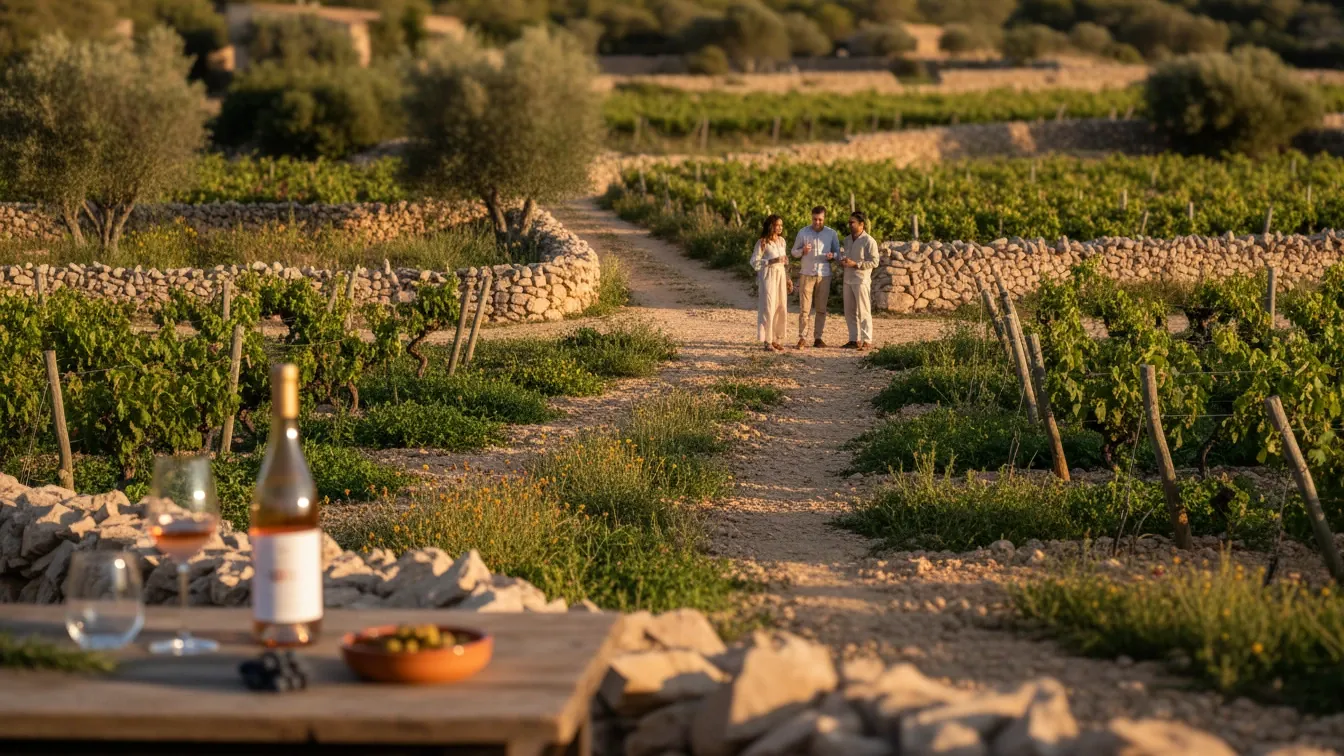
A two-hour visit can reveal more than a flight of wines if you arrive with the right questions and a realistic plan. In Porreres, vineyards sit within a landscape shaped by dry summers, limestone, traditional agriculture, and centuries of cultivation. Historical records connect local vineyard licences with the period after the conquest of King James I in 1229, giving the area a wine heritage far older than modern wine tourism.
Today, the strongest visits also explain how farming decisions affect the glass. A Demeter-certified biodynamic estate may discuss cover crops, compost preparations, spontaneous fermentation, and biodiversity corridors rather than treating sustainability as a decorative label. Visitors can compare indigenous Callet and Prensal Blanc with varieties such as Viognier, then taste how climate and soil influence texture.
This guide shows how to plan the experience step by step. It covers timing, booking, clothing, costs, questions, food pairings, and practical checks. It also explains why a vineyard walk often provides the missing context behind Mallorca wine.
Step 1: Choose the right wine estate experience
Begin by deciding what you want to understand, not simply what you want to drink. A classic tasting suits a short visit, while a vineyard walk suits travellers who want to see farming decisions in context. Families, curious beginners, and experienced collectors may all enjoy wine, but they need different levels of detail and time. At Montesion Wine Estate, this choice can help shape a visit around your interests from the outset.
Look for an estate that explains its farming openly. Organic certification addresses chemical inputs, while biodynamic certification adds a wider agricultural system with specific preparations, ecological relationships, and documentation. Demeter certification therefore gives visitors a useful framework for asking how the estate works throughout the year. The Montesion Wine Estate experiences list formats ranging from a three-wine tasting with Mallorcan biscuits to food-led and private options.
What to do: select one purpose for the visit, such as learning about biodynamic farming, understanding local grapes, or exploring food pairings. How to do it: compare the advertised duration, number of wines, meal content, language, and private-tour supplement before reserving. Expected result: you arrive with an experience that matches your curiosity rather than an appointment that feels too brief or too formal.
The frequent mistake is choosing only by price. A €35 introductory tasting may offer excellent value, but it cannot provide the same agricultural depth as a private format lasting several hours. Conversely, a long food experience may overwhelm someone who only wants to understand the difference between Callet and Prensal Blanc.
Step 2: Select the season and time of day
Season changes the character of a vineyard visit. Spring reveals fresh growth, cover crops, and the first signs of the coming harvest. Summer shows how vines cope with heat and limited water, although midday exposure can become uncomfortable. Early autumn brings harvest activity and stronger sensory connections between ripe fruit, warm soil, and the finished wine.
Winter offers a quieter view of the estate. Bare vines make pruning easier to understand, and the absence of heavy visitor traffic often creates more time for technical questions. However, some vineyard activities in the Balearic Islands depend on weather, labour, and the agricultural calendar. A promised outdoor walk may need adjustment after rain or during unusually hot conditions.
What to do: choose a morning slot from late spring through early autumn whenever possible. How to do it: check the forecast three days before travelling and confirm whether the visit includes outdoor terrain. Expected result: you experience the estate at a comfortable temperature and see farming in its proper seasonal context.
The frequent mistake is treating Mallorca as uniformly warm. Coastal breezes do not always reach inland vineyards, and September afternoons can still feel intense. Wear closed shoes, bring water, and carry a light layer for cellars or shaded tasting rooms. A simple hat can be more useful than formal clothing.
Step 3: Book the visit with precise questions
Good booking creates a better visit because it gives the estate enough information to prepare. State the number of guests, dietary needs, preferred language, mobility requirements, and whether anyone will avoid alcohol. Ask whether the experience includes a vineyard walk, cellar access, food, olive oil, or only seated tasting.
Also confirm the duration and total price per person. Published examples include a classic three-wine format at €35, a wine and olive oil tasting at €40, a Mallorcan flavours experience at €50, and a tapas and wine format at €85. Private tastings may add a 40–50 percent premium, while a private blend-your-own-wine experience is listed at €120 per person.
What to do: send a short booking message with practical details and three focused questions. How to do it: ask about arrival instructions, cancellation terms, transport, and the balance between indoor and outdoor time. Expected result: fewer surprises and a visit shaped around the group rather than a generic schedule.
The frequent mistake is assuming that every advertised experience runs every day. Special pairings, including Cabernet with cheese, Syrah with chocolate, and barrel-versus-amphora comparisons, may require advance arrangement. Group size can also alter the pace, especially when guests want detailed agricultural explanations.
A useful booking checklist includes:
- Date, arrival time, and number of guests.
- Outdoor walking distance and terrain.
- Wine styles and approximate tasting volume.
- Food ingredients, allergens, and vegetarian options.
- Transport arrangements and responsible-driving plans.
- Whether photographs or children are permitted in working areas.
Step 4: Prepare for the vineyard, not only the tasting room
A vineyard visit rewards practical preparation. Expect uneven ground, dust, stones, sun, and changing temperatures. Comfortable shoes protect your footing and keep the group moving. Water, sun protection, and a modest layer improve concentration, especially when the guide discusses soil profiles rather than pouring another glass.
Bring a notebook or use your phone to record grape names, harvest dates, serving temperatures, and questions. Avoid strong perfume because it masks delicate aromas. If you plan to taste several wines, eat a light meal beforehand and arrange transport that does not depend on driving after the visit.
What to do: pack for a two-hour outdoor activity followed by a seated tasting. How to do it: wear breathable clothing, carry water, and keep tasting notes in a simple four-column format covering appearance, aroma, texture, and finish. Expected result: you remember the relationship between the vineyard and the wine instead of recalling only a few isolated flavours.
The frequent mistake is dressing for a restaurant. Elegant shoes can become uncomfortable on gravel, while heavy clothing makes summer tasting tiring. Another error is wearing lipstick or eating intensely flavoured sweets before the session. These details seem minor, yet they can distort aroma and palate perception.
A useful mental comparison is to treat the vineyard like a kitchen before service. The tasting room shows the finished dish, but the vineyard reveals the ingredients, tools, weather, and decisions behind it. That perspective makes even a short walk feel substantial.
Step 5: Build the visit around wine and food pairings
Food can turn a technical tasting into a memorable local experience. Olive oil, bread, cheese, sobrasada, olives, seafood, rice, and seasonal vegetables each reveal different aspects of acidity, alcohol, bitterness, and tannin. Mallorcan pairings also provide cultural context that a generic cheese plate cannot reproduce.
Begin with lighter wines when the format allows it. A fresh Viognier at approximately 8–10°C can work as an aperitif or alongside fish, pasta, and rice. Its floral and exotic-fruit character offers a clear contrast with a structured red served around 15–17°C. A rosé can bridge the two, particularly with fish, rice dishes, white meat, or no pairing at all.
What to do: choose one pairing that reflects local food and one comparison that tests the wine’s structure. How to do it: notice how salt, fat, acidity, sweetness, and smoke change the same sip. Expected result: you understand why pairing is an interpretive tool rather than a decorative extra.
The frequent mistake is ordering the most elaborate meal without considering the wines. Rich tapas can dominate a delicate white, while a powerful red may flatten beside a very spicy dish. Ask the guide to explain the sequence and taste a small amount of wine before committing to a full pairing.
For a more focused experience, compare a barrel-aged red with a wine matured in Italian stoneware. The contrast can reveal how vessels influence aroma, tannin, oxygen contact, and texture. This side-by-side approach often teaches more than tasting five unrelated bottles.
Step 6: Ask questions that reveal the farming philosophy
The best questions move from principle to evidence. Instead of asking whether an estate is sustainable, ask what the team does when disease pressure rises, how it protects soil moisture, and which tasks change during a dry year. Specific questions produce useful answers and help distinguish a working agricultural system from vague marketing language.
Ask how Demeter certification affects vineyard work, cellar decisions, and record keeping. You might also ask why a plot suits Callet, how limestone or clay changes Prensal Blanc, or what makes Viognier ripen successfully in the local climate. These questions invite the guide to connect place, grape, and technique.
What to do: prepare five questions before arrival and leave room for the guide’s answers. How to do it: ask one question about soil, one about biodiversity, one about fermentation, one about local varieties, and one about vintage variation. Expected result: you leave with a clear explanation of how the estate’s philosophy becomes measurable practice.
The frequent mistake is asking only which bottle is the best. There is no universal answer because preference, food, vintage, and occasion matter. Instead, ask which wine best shows the estate’s indigenous identity, which wine changes most with food, and which bottle demonstrates the effect of ageing.
One useful reference point is the Montesion Selección Privada 2021. Its full-bodied, velvety profile and firm tannins create a practical discussion about ripeness, structure, and serving temperature. The bottle becomes more informative when tasted after visitors have seen the soils and vines that frame its production.
Step 7: Check the experience with measurable observations
A thoughtful visit should leave you with more than photographs. Use simple measures to test whether the experience delivered what was promised. Record the actual duration, the number of wines tasted, the number of vineyard or cellar areas visited, and the number of questions answered in detail.
You can also score the experience from one to five in four categories: agricultural explanation, wine clarity, food relevance, and practical organisation. A strong visit does not need perfect scores in every category. It should, however, match the format and price described at booking.
What to do: complete a short review immediately after leaving. How to do it: compare the promised inclusions with what happened, then note one concrete fact you learned about the estate. Expected result: you can judge value accurately and remember the visit beyond its social-media appearance.
The frequent mistake is judging value by wine quantity. A smaller tasting with a detailed vineyard walk may teach more than a large flight delivered without context. Quality also includes pacing, hospitality, accessibility, local food, and the honesty of the agricultural explanation.
Use this practical verification checklist:
- Confirm the advertised price against the final charge.
- Count the wines and note their serving temperatures.
- Record whether food or olive oil matched the description.
- Note the minutes spent outdoors and indoors.
- Identify at least one specific farming practice explained clearly.
- Score the experience from one to five in four categories.
| Common error | Likely consequence | Practical solution |
|---|---|---|
| Booking only by price | The format may not match your interests | Compare duration and inclusions |
| Arriving without transport planning | Tasting becomes rushed or unsafe | Reserve a taxi, driver, or transfer |
| Visiting at the hottest hour | Fatigue reduces attention and enjoyment | Choose morning or a shaded format |
| Wearing unsuitable shoes | Uneven ground limits the vineyard walk | Wear closed, comfortable footwear |
| Asking only about the best bottle | You learn little about place or farming | Ask about soil, grape, and vintage |
| Ignoring food sequence | Strong flavours hide delicate wines | Follow the recommended tasting order |
Making the visit part of Mallorca’s wider wine culture
The most rewarding Mallorca wine tours connect an estate with the landscape around it. Porreres offers that connection through rural roads, long agricultural history, and vineyards shaped by Mediterranean conditions. Other routes across the island may combine old villages, stone walls, olive groves, and views toward the Serra de Tramuntana.
A sustainable itinerary should avoid rushing between distant appointments. Leave time for lunch, a village stop, or a quiet walk rather than treating the island as a checklist. Sustainable wine tourism guidance for Mallorca also emphasises rural landscapes and vineyard routes, reinforcing the value of slower travel illesbalears.travel.
The practical result is a stronger wine estate experience. You begin to understand why dry farming, cover crops, native varieties, and biodiversity matter beyond one property. You also see how wine, olive oil, food, and architecture form part of the same agricultural culture.
A visit to a biodynamic estate should therefore feel grounded rather than theatrical. You may see soil preparation, flowering margins, old vines, or the constraints of a hot season. Those details create a more credible memory than polished scenery alone.
A better way to remember the glass
Planning wine activities in Mallorca well requires four decisions: choose the right format, match the season, prepare for the vineyard, and ask evidence-based questions. Then add food or olive oil when you want a deeper connection with local culture. The visit becomes richer when every tasting has a reason.
The most useful benchmark is not the number of bottles poured. It is whether you can explain what you saw, what you tasted, and how one affected the other. A fresh white may show climate and timing, while an aged red can open a discussion about tannin, oak, or vessel choice.
For that reason, a Demeter-certified estate offers more than a sustainable label. It provides a framework for understanding soil health, biodiversity, seasonal risk, and cellar discipline. In Porreres, that framework sits within a wine tradition documented since 1229 and still expressed through modern agricultural choices.
The memorable visit ends with a clearer sense of place. You remember the heat on the path, the texture of limestone, the aroma of ripe fruit, and the way a local dish changed the finish of the wine. At Montesion Wine Estate, that is the difference between tasting in Mallorca and truly meeting its vineyards.
Frequently asked questions
What should I expect from a wine estate visit in Mallorca?
Expect a combination of welcome, vineyard or cellar explanation, guided tasting, and sometimes local food or olive oil. The exact format depends on the estate, season, group size, and booking category. A short tasting may focus on three wines, while a longer visit can include farming practices, soil discussion, and pairings. Comfortable shoes and advance questions make the experience more useful.
How much does a wine tasting in Mallorca cost?
Prices vary by duration and inclusions, but published estate experiences can begin around €35 per person for three wines with Mallorcan biscuits. Wine and olive oil, local flavours, and tapas formats may cost approximately €40, €50, and €85 respectively. Private tastings can add 40–50 percent, while specialised private experiences may cost more. Always confirm the final price and inclusions before travelling.
What is the best time of year for Mallorca wine tours?
Spring is useful for seeing vine growth and cover crops, summer highlights Mediterranean heat, autumn may coincide with harvest, and winter reveals pruning and the quieter structure of the estate. Morning visits generally offer better comfort from late spring through early autumn. Weather and agricultural work can change the outdoor itinerary, so confirm conditions shortly before arrival.
What questions should I ask at a biodynamic wine estate?
Ask how certification changes vineyard work, how the estate protects soil moisture, which plants support biodiversity, and how weather affects harvest decisions. You can also ask why a particular plot suits Callet, Prensal Blanc, or Viognier. Specific questions reveal measurable practices and create a clearer connection between farming, fermentation, and the wine in your glass.
