

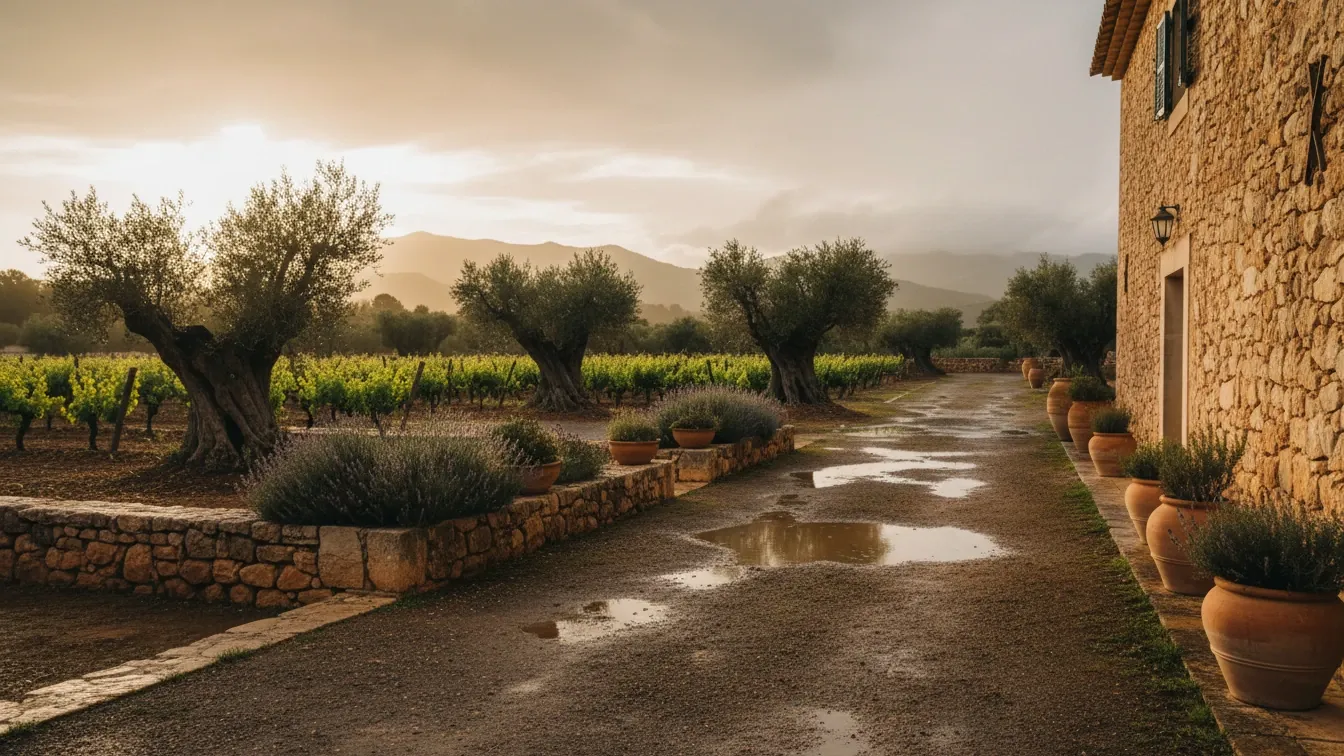
What to do in Mallorca on a rainy day becomes much easier to answer when you move from exposed attractions to the island’s wine estates. A guided tasting offers shelter, local culture, and a structured experience without relying on clear skies. For most visitors, it is the best all-round alternative because it combines place, food, and conversation in one relaxed indoor visit.
A sudden shower can change a Mallorca itinerary within minutes, particularly between November and April, when coastal plans become less dependable. Beaches lose their appeal, mountain paths turn slippery, and outdoor viewpoints offer little reward beneath low cloud. Yet the island’s agricultural landscape remains compelling in wet weather.
Wine estates provide a different perspective on Mallorca. Inside a cellar or tasting room, visitors can understand how soil, varieties, fermentation, and ageing shape the wines in their glass. The experience also suits couples, families with older children, and professional groups because it does not require specialist knowledge or athletic ability.
This guide compares the strongest alternatives to outdoor sightseeing on a rainy day. It explains what each option involves, how it differs from a beach or walking route, likely pricing, practical advantages, limitations, and the situations when staying with your original plan makes more sense.
Why wine tasting works when Mallorca weather turns wet
Rain changes the rhythm of a holiday. Instead of moving quickly between viewpoints, visitors often want one destination that feels worthwhile for several hours. A winery visit answers that need through a sequence of indoor activities: arrival, cellar or vineyard explanation, guided tasting, and regional food.
The difference is more than practical. A beach visit asks the weather to provide the experience. A tasting creates the experience through attention. You notice the contrast between a floral white, a structured red, and a wine shaped by oak or amphora. Meanwhile, a knowledgeable guide connects those details to Mallorca’s dry climate, maritime winds, and local farming traditions.
Montesion Wine Estate’s published experiences show how this format can work. Its classic tasting costs €35 per person and includes three wines with Mallorcan biscuits. Other options combine three wines with Demeter olive oil, local food, or a broader tapas selection. The estate also lists a barrel-versus-amphora tasting, which gives curious visitors a particularly useful comparison during a wet afternoon. montesionwineestate.com
This makes a tasting one of the strongest wine activities in Mallorca for visitors who want substance without rushing. A rainy forecast is not merely an inconvenience here; it creates the right atmosphere for slowing down and paying attention.
Best overall: a guided winery tasting and cellar visit
What it is: A hosted visit that usually includes an introduction to the estate, an explanation of production, and a tasting of several wines. Some visits add local snacks, olive oil, or a meal. Depending on the estate, the tour may include a short sheltered walk between buildings, but the main experience takes place indoors.
How it differs from outdoor sightseeing: A beach, viewpoint, or village walk depends on visibility and dry ground. A winery visit remains engaging when rain limits movement. It also gives visitors direct access to a working part of Mallorca rather than presenting the island only as a scenic backdrop.
Price: Expect roughly €25 to €60 per person for a standard tasting, with premium food pairings and private formats costing more. At Montesion Wine Estate, listed experiences range from €35 for the classic tasting to €85 for the tapas and wine experience. Prices, availability, and inclusions should be checked before travelling.
Pros:
-
It combines culture, food, and regional wine in one stop.
-
It works for couples, small groups, and mixed-interest travellers.
-
Indoor spaces make it reliable during showers.
-
A tasting can introduce indigenous varieties such as Callet and Mediterranean-adapted Viognier.
-
It offers a calm alternative to crowded attractions.
Cons:
-
Many wineries require advance reservations.
-
A rural estate may be difficult to reach without a car or taxi.
-
Guests who dislike wine may find the central activity less appealing.
-
Driving after several tastings requires careful planning.
Verdict: This is the best general alternative to outdoor plans. It delivers the strongest balance of shelter, local identity, education, and food, especially when the forecast is uncertain rather than continuously stormy.
The best rainy-day tastings also reward comparison. A bright Viognier can show floral and exotic-fruit notes, while a full-bodied red reveals the effects of tannin, ripeness, and barrel ageing. For a more serious tasting, the Montesion Selección Privada 2021 offers a richer style with intense colour, firm tannins, and a velvety texture.
Best value: a museum, gallery, or historic indoor visit
What it is: A visit to an art gallery, local museum, historic house, or heritage building that lets you explore Mallorca’s culture under cover. Palma offers the broadest choice, while smaller towns may provide compact museums with a more focused story.
How it differs from outdoor sightseeing: Instead of interpreting the island through scenery, you encounter it through objects, architecture, art, and social history. The experience is less dependent on conversation with a guide and more flexible for visitors who prefer to move at their own pace.
Price: Many public museums cost between €3 and €10, while major exhibitions or guided heritage visits may cost more. Some sites offer free periods or reduced admission, although schedules change by season.
Pros:
-
It is usually one of the least expensive rainy day activities in Mallorca.
-
Visitors can arrive without arranging a food or tasting menu.
-
It suits people who do not drink alcohol.
-
A museum visit can fit neatly between lunch and evening plans.
Cons:
-
Popular venues may become crowded when rain affects the whole city.
-
Opening hours can be limited outside peak season.
-
The experience may feel brief unless combined with another indoor stop.
-
It offers less direct connection to Mallorca’s agricultural landscape.
Verdict: Choose this option when budget matters most, your group has different interests, or nobody wants a wine-centred activity. It is a dependable cultural fallback, although it usually feels less distinctive than visiting a working estate.
Museums also provide a useful contrast with wine tourism. A gallery presents finished objects; a winery shows an ongoing relationship between land and craft. That difference matters to travellers seeking organic wine in Spain or a deeper understanding of how island agriculture shapes taste.
What to expect from wine tasting in Mallorca weather
Visitors searching for wine tasting Mallorca weather advice often wonder whether rain changes the quality of the visit. In most cases, it changes the logistics rather than the tasting itself. Cellars and tasting rooms operate under controlled conditions, and the host can explain the wines without relying on outdoor views.
Arrive with practical clothing and shoes that can handle wet ground. Rural estates may have gravel paths, uneven surfaces, or short exposed walks between the car park and tasting room. A light waterproof layer is more useful than an umbrella alone, especially when wind moves across open farmland.
The tasting itself may begin with a white or rosé before moving to fuller reds. This progression helps the palate follow changes in texture and intensity. A fresh Viognier can bring floral and fruit-driven detail, while a mature Callet or oak-aged Cabernet Sauvignon offers more structure and depth.
Do not assume that poor weather makes a vineyard visit visually disappointing. Rain can sharpen colour, deepen the smell of the soil, and reveal how carefully a property manages water and ground cover. The landscape may look less postcard-perfect, but it often feels more agricultural and immediate.
Featured: The Wine Experience
When rain interrupts an outdoor itinerary, you may want a slower way to connect with Mallorca’s character. The Wine Experience at Montesion Wine Estate brings together the land, the wines, and the spirit of Porreres in an intimate, gastronomic setting that feels especially inviting on a wet afternoon. It is well suited to couples, curious travellers, and anyone looking for a memorable indoor alternative.
Why a rainy day can reveal more of Mallorca’s wine culture
A clear day encourages visitors to look outward, from beaches to cliffs and villages. Rain turns attention inward, toward the cellar, the table, and the decisions that shape a bottle. That shift can make a wine visit feel more connected to the island’s working identity.
The strongest estates treat wine as part of a wider agricultural system. Organic and biodynamic farming, local olive oil, traditional food, and adapted grape varieties all belong to the same story. In Porreres, for example, a tasting can connect the glass with the land rather than presenting wine as an isolated luxury.
That is why a winery remains the best general answer to what to do in Mallorca on a rainy day. It protects the itinerary from poor weather while preserving a genuine sense of place. The experience is warm, social, and specific, whether the group chooses a €35 introduction or a more elaborate private format.
The key is to match the alternative to the people travelling. Choose a public tasting for balanced value, a museum for flexibility, and a private estate experience for large groups. When the forecast changes, a considered substitution can reveal a quieter and more authentic side of Mallorca.
Frequently asked questions
What is the best thing to do in Mallorca on a rainy day?
A guided winery tasting is one of the best rainy-day choices in Mallorca because it combines shelter, local culture, regional food, and a structured activity. Visitors can learn about island varieties and winemaking without depending on clear views or dry paths. A standard tasting often lasts long enough to anchor an afternoon, while private formats suit larger groups.
Are Mallorca wineries open when it rains?
Many Mallorca wineries continue operating during rain because tastings take place indoors, but opening hours and outdoor access vary by estate. Visitors should confirm the booking, arrival route, and whether vineyard walks remain available before travelling. Severe storms can affect rural roads even when the tasting room itself remains open.
How much does a wine tasting in Mallorca cost?
A standard wine tasting in Mallorca commonly costs about €25 to €60 per person, depending on the number of wines, food pairings, and length of the visit. Montesion Wine Estate lists a classic three-wine tasting with Mallorcan biscuits at €35 per person. Private tastings and larger gastronomic experiences cost more and normally require advance arrangements.
What should I wear for a rainy winery visit in Mallorca?
Wear a light waterproof layer and comfortable shoes with good grip, even when the tasting itself takes place indoors. Rural estates may include gravel, wet paving, or short exposed walks between the car park and cellar. Avoid delicate footwear and bring an extra layer if you expect to spend time in a cool production area.
Can I book a Mallorca wine tour at the last minute because of rain?
Last-minute bookings are sometimes possible, particularly for small groups on weekdays outside peak summer. Contact the winery directly with your group size, arrival time, dietary needs, and transport plan. Confirm the price, duration, cancellation terms, and wet-weather arrangements before leaving your accommodation.
