
Biodynamic vs organic wine is not a simple choice between strict and gentle methods. Choose biodynamic wine if you value a whole-farm system with Demeter oversight; choose organic wine if regulated farming and cellar rules matter most; choose natural wine if minimal intervention and expressive variation are your priorities. These categories overlap, but they do not mean the same thing, and none guarantees that every bottle will suit your palate.
A single vineyard can sit at the centre of all three conversations. The vines may grow without synthetic pesticides, the farm may follow biodynamic principles, and the cellar team may use native fermentation with few additions. Yet the legal status, farming philosophy, and taste of the resulting wine remain separate questions. That distinction matters more now, as shoppers face labels that use organic, biodynamic, natural, and low-intervention language with very different levels of accountability. In Spain, the difference also links directly to European Union wine law, private Demeter certification, and the Mediterranean realities of Mallorca. This comparison explains what each term means, how the methods affect wine, and which bottle makes sense for a particular occasion.
Biodynamic, organic, and natural wine at a glance
The three approaches share an interest in healthier vineyards and more transparent wine, but their authority comes from different places. Organic wine relies on legally defined standards. Biodynamic wine adds a demanding ecological philosophy and private certification. Natural wine describes a cellar practice rather than a legally protected category.
| Criterion | Organic wine | Biodynamic wine | Natural wine | Winner |
|---|---|---|---|---|
| Legal definition | Yes, under European Union rules | No government definition; Demeter provides certification | No universal legal definition | Organic |
| Farming restrictions | No synthetic pesticides, herbicides, or fertilisers | Organic foundation plus biodynamic preparations and whole-farm rules | Varies by producer | Biodynamic |
| Cellar regulation | Permitted processes and sulphite limits | Demeter rules add further restrictions | Producer-defined minimal intervention | Organic |
| Certification clarity | Government-recognised control bodies | Demeter or Biodyvin certification | Usually none | Organic |
| Added sulphites | Lower legal ceilings than conventional wine | Not automatically zero | Often none, but not guaranteed | No universal winner |
| Native fermentation | Allowed, not required | Common and permitted under standards | Usually central to the philosophy | Natural |
| Consistency for buyers | High | High when certified | Variable | Organic |
That table offers a practical starting point, not a quality ranking. A certified organic wine can be elegant or dull, while a natural wine can be thrilling or unstable. Farming, harvest conditions, hygiene, grape variety, and the winemaker’s judgement still shape the final glass.
What does organic wine actually certify?
Organic wine begins in the vineyard, where producers avoid synthetic herbicides, pesticides, and fertilisers. In the European Union, the term organic wine also covers regulated cellar practices, not only organically grown grapes. EU rules set limits for permitted additions and sulphites, with lower ceilings than conventional wine. The Spanish certification system uses accredited regional or national control bodies and requires inspections of farming and winemaking.
A key distinction is the conversion period. A vineyard generally needs three years of organic management before its grapes can support fully certified organic claims. Annual checks then examine fieldwork, records, inputs, and cellar procedures. The EU organic leaf therefore offers a traceable legal signal, whereas a phrase such as organic grapes may describe farming without confirming the wine’s complete production method.
Organic does not mean intervention-free. A producer may still use selected yeasts, filtration, temperature control, or other permitted techniques. The method aims to guide the wine within defined limits, rather than remove every technical decision. For buyers seeking the clearest regulated category, organic wine is the winner, with more than 10 years of EU wine rules supporting the current framework. Independent wine-certification guidance can explain how those rules differ from informal natural-wine claims.
Why does biodynamic wine go beyond organic farming?
Biodynamic wine starts with organic principles and then treats the vineyard as a living organism. Its focus extends beyond vine health to soil, livestock, biodiversity, compost, water, and the rhythm of farm work. Biodynamic producers may use specialised preparations, cover crops, compost, and planting or harvesting calendars linked to lunar cycles. These practices are part of a wider agricultural philosophy developed from Rudolf Steiner’s work in the 1920s.
Certification makes the approach more meaningful. Demeter standards examine the farm as a whole and can include stricter rules for inputs, biodiversity, livestock integration, and cellar practices. Demeter is a private certification organisation, not a government regulator, so it complements rather than replaces European Union organic certification. A Demeter bottle can therefore communicate both regulated organic status and a broader whole-farm commitment.
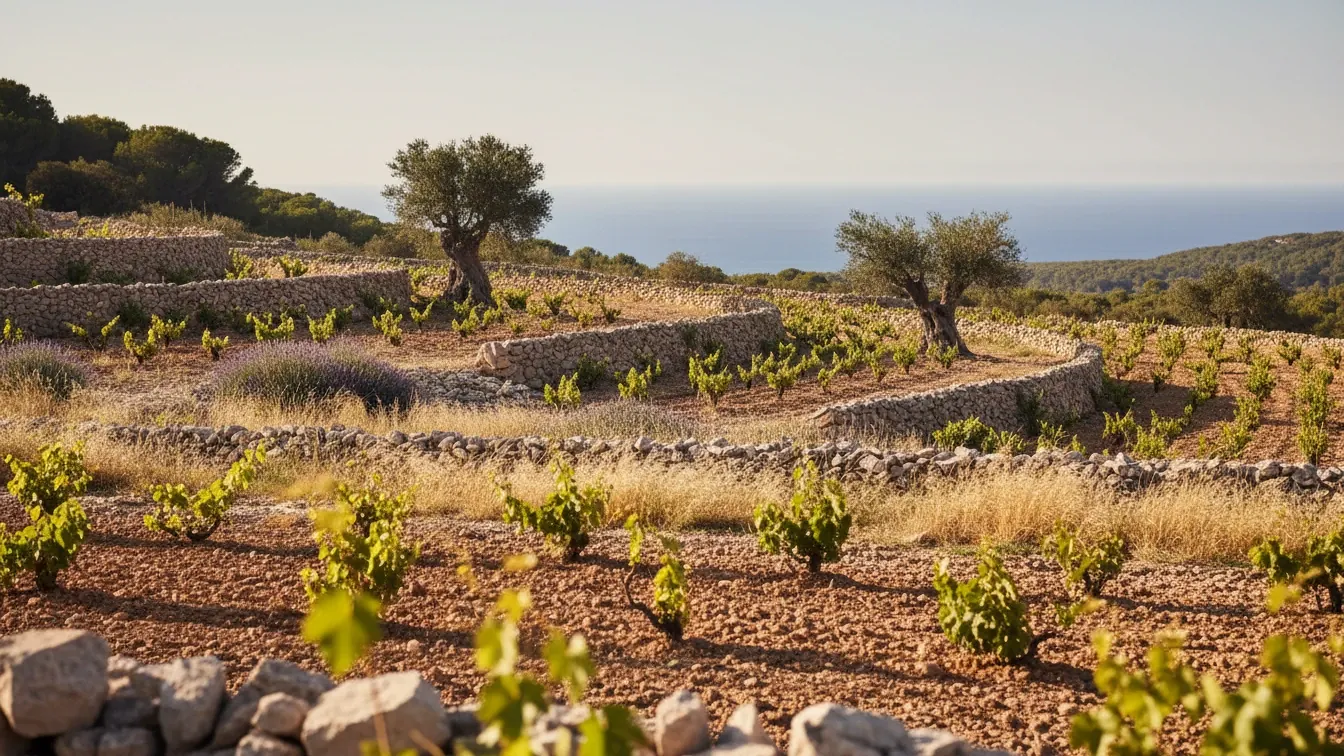
The biodynamic winner is the producer that wants the most comprehensive farming system, not the drinker expecting a guaranteed flavour profile. Biodynamics does not automatically mean zero sulphites, cloudy wine, or spontaneous fermentation. In Mallorca, the approach can feel especially tangible because dry summers, limestone soils, wind, and water management make vineyard resilience more than an abstract idea. Montesion Wine Estate provides a local example of this organic-to-biodynamic progression.
Natural wine versus biodynamic wine: where is the cellar difference?
Natural wine is best understood as a low-intervention philosophy. Producers commonly favour native yeasts, gentle handling, little or no fining, limited filtration, and few cellar additions. However, no single international law defines the term. One natural producer may add a small amount of sulphur; another may bottle without added sulphites. A third may farm organically but hold no certification.
Biodynamic wine answers a different question. It primarily describes how the farm operates, although Demeter also regulates parts of winemaking. A biodynamic producer can make a polished, filtered wine with measured sulphur. Conversely, a natural wine can come from uncertified vineyards and conventional farming. This is the central natural wine versus biodynamic distinction: one centres on cellar intervention, while the other begins with the agricultural system.
Native fermentation can connect the two approaches. Healthy biodynamic grapes may arrive at the cellar with balanced acidity and a strong microbial environment, making spontaneous fermentation more practical. Still, natural fermentation requires careful monitoring. Without sound fruit, low-intervention winemaking can magnify volatility, oxidation, or unwanted aromas. Natural wine wins for minimal cellar handling, while biodynamic wine wins for documented farm-wide practice.
Which approach gives you the lowest sulphite level?
Sulphites occur naturally during fermentation, so no wine can be assumed to contain absolutely none. The useful distinction is between naturally occurring sulphur compounds and sulphites added by the producer. Organic certification sets lower maximum additions than conventional wine, but it does not require a zero-sulphite bottle. Demeter certification also does not automatically mean that no sulphites are used.
Natural wine often aims for no added sulphites or a very small addition at bottling. Yet the label may not provide a binding guarantee because natural wine lacks a universal legal standard. Buyers with strong sulphite concerns should therefore ask for the producer’s actual analysis or cellar policy rather than rely on the word natural alone.
For practical certainty, organic certification is the winner because it gives the buyer enforceable maximum levels. For the lowest intended addition, natural wine may lead, but the result depends on the individual producer. Biodynamic wine occupies the middle ground: its certification says more about farming and permitted practices than about a single sulphite number. Natural, organic, and biodynamic wine should not be treated as interchangeable labels.
Will the three methods taste different?
The farming category alone cannot predict flavour. Grape variety, ripeness, soil, climate, harvest date, vessel, extraction, ageing, and bottle condition exert greater immediate influence. A biodynamic Callet from Mallorca may taste earthy, dark-fruited, and structured, while a biodynamic Viognier may show floral intensity and stone-fruit freshness. The certification explains the production framework, not the exact sensory result.
Natural wines often show more variation because native fermentation, limited filtration, and low sulphur leave fewer buffers against vintage differences. That can produce vivid fruit, savoury complexity, or a slight haze. It can also produce reductive, volatile, or oxidative notes when the process loses balance. Organic wines can taste remarkably conventional because the certification does not demand a particular aromatic style.
Biodynamic wines may express a strong sense of place when healthy soils and balanced vines reduce the need for correction. Consider a warm island setting: drought, sea air, and intense light can create concentrated fruit, yet careful farming can preserve freshness. The most useful tasting test is not whether a wine sounds natural or biodynamic. It is whether its acidity, fruit, texture, and finish remain coherent in the glass.
Which certification differences matter when buying Spanish wine?
Spanish buyers and visitors should separate three kinds of evidence. The EU organic leaf points to regulated farming and cellar rules. A Demeter mark signals compliance with a private biodynamic standard. The word natural usually communicates intention, but it does not itself identify an inspector, legal threshold, or mandatory production method.
Those differences affect shopping decisions. A person wanting documented organic wine Spain can look for the EU logo and the certifying body. Someone seeking biodynamic farming should check for Demeter or another recognised biodynamic mark. Someone searching for natural wine should investigate the producer’s fermentation, filtration, fining, and sulphite practices because the label alone leaves important details unanswered.
Certification differences also help avoid a common error: assuming that a more demanding philosophy guarantees better wine. It does not. Certification verifies a method, not the quality of the harvest or the skill of the cellar team. In that respect, organic and biodynamic marks offer accountability, while natural wine requires more direct trust and producer research.
Which wine should you choose for a real drinking occasion?
Choose organic wine when you want a clearly regulated purchase for dinner, a gift, or a mixed group with different preferences. It offers a useful balance of environmental standards and predictable labelling. Choose biodynamic wine when the story of the whole farm matters, especially if you value soil life, biodiversity, and estate-scale responsibility. Choose natural wine when you enjoy texture, vintage variation, and a less polished expression of fermentation.
For a warm Mallorca meal, a fresh biodynamic white can connect naturally with seafood, rice, or soft cheeses. A bottle such as Montesión Viognier 2025 illustrates how the categories meet without becoming identical: the wine uses hand-selected grapes, spontaneous fermentation, and Demeter-defined methods, while its floral, lychee-led profile remains generous and balanced. Its identity comes from variety and place as much as from certification.
For a richer table, full-bodied red wines with firm tannins suit grilled meats, stews, or aged cheese. Natural wine is not automatically the best choice for these foods, and biodynamic wine is not automatically more austere. Match the bottle to the meal, the drinker’s tolerance for variation, and the information you want the label to guarantee.
The clearest way to understand these wine categories
Organic wine is the strongest choice for legal clarity. European Union rules define the farming and cellar framework, lower sulphite ceilings, and inspection process. Biodynamic wine builds on that foundation with a whole-farm philosophy and private certification such as Demeter. Natural wine focuses on minimal cellar intervention, but its lack of a universal legal definition makes producer transparency essential.
The most revealing comparison is therefore not a contest for one universal winner. It is a question of priorities: regulated proof, ecological completeness, or expressive restraint. A Mallorca estate working with varieties such as Callet, Prensal Blanc, and Viognier can show how climate and native grapes shape the final result beyond the label category.
For that reason, Montesion Wine Estate’s Demeter-certified approach is most relevant as an example of continuity between farming and wine, not as a promise that every certified bottle tastes alike. The best choice combines a credible production method with sound fruit, careful cellar work, and a style that fits the moment.
Frequently asked questions
Is biodynamic wine better than organic wine?
Biodynamic wine is not automatically better than organic wine because certification describes production methods rather than personal taste or technical quality. Biodynamic farming extends organic principles through whole-farm management, preparations, biodiversity goals, and private certification such as Demeter. Organic wine offers a legally regulated framework with defined cellar rules and sulphite limits. The better choice depends on whether you value broader agricultural philosophy or clearer government-recognised standards.
What is the difference between natural wine and biodynamic wine?
Natural wine generally describes minimal intervention in the cellar, often including native fermentation, little filtration, and no or very low added sulphites. Biodynamic wine describes a certified agricultural system that treats the vineyard as a connected ecosystem and builds on organic farming. A biodynamic wine can be filtered and contain permitted sulphites, while a natural wine can come from uncertified or conventionally farmed grapes. The two approaches may overlap, but neither term replaces the other.
Is organic wine in Spain legally certified?
Organic wine in Spain follows the European Union organic framework and must pass inspection through an approved control body. The rules cover both vineyard management and permitted cellar practices, including lower maximum sulphite levels than conventional wine. A fully certified bottle normally carries the EU organic leaf and identifies the relevant certification system. The phrase organic grapes alone does not necessarily prove that the finished wine meets the same complete standard.
Does biodynamic wine contain sulphites?
Biodynamic wine may contain sulphites because Demeter certification does not mean zero sulphites in every bottle. Fermentation naturally creates small amounts, and some producers add limited quantities to protect the wine during transport or ageing. Buyers seeking no added sulphites should check the specific producer and vintage rather than infer the answer from biodynamic certification. Biodynamic status mainly verifies a demanding farming and production philosophy.
Does natural wine always taste cloudy or funky?
Natural wine does not always taste cloudy, volatile, or unconventional, although limited filtration and native fermentation can create those characteristics. The category includes many different producers, grapes, climates, and cellar choices because no universal legal definition controls the term. Some bottles taste clean and precise, while others show more savoury or earthy variation. The producer’s stated methods offer a better guide than the label alone.
