

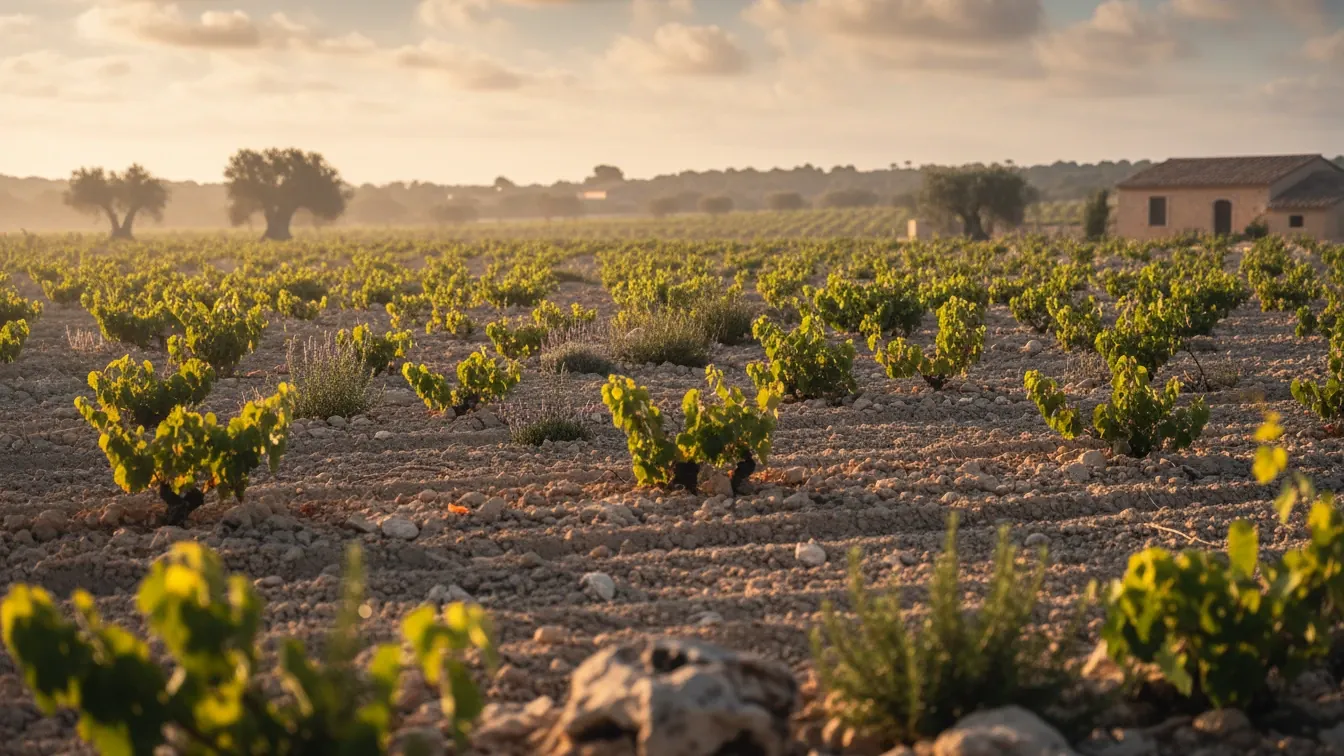
Prensal Blanc is an indigenous white grape variety that brings freshness, gentle perfume, and island character to Mallorca wine. Also known as Moll, it grows across the Balearic Islands, especially in Binissalem and Pla i Llevant. Its wines usually show pear, green apple, citrus, fennel, and white flowers, with a light to medium body that suits Mediterranean food. At Montesion Wine Estate, this native variety forms part of the wider conversation about Mallorca’s distinctive wine identity.
A single grape can reveal an entire landscape. Prensal Blanc developed in Mallorca’s dry climate, deep calcareous soils, and bright coastal light, where water management matters as much as harvest timing. That setting explains why the variety rarely tastes heavy, even under strong summer sun. Instead, it gives winemakers a delicate but useful foundation for fresh whites and regional blends.
The grape also carries a revealing history. For decades, growers valued its productivity more than its individuality, and many wines used it mainly to provide volume. Modern producers now take a closer look at vineyard location, crop levels, skin condition, and gentle fermentation. This article explains its identity, aromatic profile, uses, strengths, limitations, and place within contemporary Balearic winemaking.
What is Prensal Blanc, and where does it come from?
Prensal Blanc is a native Mallorcan white grape with several regional names. Moll remains the best-known synonym on the island, while other references use Pensal Blanca or Premsal. The grape has existed in Mallorca for centuries, although its precise origin remains uncertain. It belongs to the wider family of Mediterranean varieties shaped by heat, wind, limestone, and long agricultural traditions.
Its strongest association lies with DO Binissalem-Mallorca, one of the island’s historic wine regions. It also appears in Pla i Llevant and other inland vineyards. According to Viniou, the grape’s regional expression benefits from warm conditions and calcareous soils. Those conditions help preserve perfume and balance during a long, bright growing season.
Vineyard geography changes the result. Deep red clay soils can give a broader, rounder impression, while stony limestone sites often sharpen the palate. Loose bunches and relatively thick skins help the fruit cope with Mallorca’s dry conditions. However, excessive water near ripening can increase the risk of rot, so growers must manage irrigation and canopy density carefully.
How do Prensal Blanc characteristics shape its aroma?
The most recognisable Prensal Blanc characteristics are subtle rather than explosive. Fresh pear and green apple often lead the nose, followed by lemon peel, white flowers, and a faint citrus-blossom note. In warmer years, the fruit can suggest ripe pear, apricot, or soft yellow apple. Fennel, anise, and Mediterranean herbs add a distinctly Mallorcan accent.
On the palate, the grape generally feels light to medium-bodied. Its freshness supports seafood, grilled fish, shellfish rice, salads, and soft cheeses. A faint almond-like bitterness may appear at the finish, adding grip without making the wine harsh. That small bitter note can resemble the finish of a green almond rather than the bitterness of an over-extracted wine.
The winemaking method strongly affects aroma. Stainless-steel fermentation preserves citrus and orchard-fruit notes, while lees ageing can add texture and soften the profile. Some producers blend Prensal Blanc with more aromatic grapes to increase fragrance or structure. As a result, two bottles from the same island can differ significantly while still showing the variety’s quiet herbal core.
Is Moll the same grape as Prensal Blanc?
Yes. Moll and Prensal Blanc refer to the same white grape variety, although local usage depends on the island and producer. “Moll” is especially common in Mallorca, while “Prensal Blanc” helps distinguish the grape in international wine writing. The names describe one variety, not two separate grapes with different genetic identities.
The distinction matters because labels can shape expectations. A bottle marked Moll may feel deeply local, while Prensal Blanc gives international readers a clearer search term. In both cases, the expected profile remains similar: modest floral perfume, pear and apple fruit, refreshing acidity, and a light herbal or mineral finish.
For comparison, the following table places Moll beside another familiar Mediterranean white grape:
| Feature | Moll or Prensal Blanc | Chardonnay |
|---|---|---|
| Main identity | Native Mallorcan variety | International variety |
| Typical fruit | Pear, apple, citrus | Apple, lemon, peach |
| Herbal notes | Fennel and Mediterranean herbs | Usually less distinctly herbal |
| Body | Light to medium | Light to full, depending on élevage |
| Common role | Young whites and regional blends | Varietal wines and blends |
| Regional meaning | Strong link to Mallorca | Broad global distribution |
The comparison is useful, but it should not imply that Prensal Blanc lacks sophistication. Its appeal lies in proportion and place. It speaks softly, much like a local ingredient that makes a dish recognisably Mallorcan without dominating every other flavour.
How is Prensal Blanc wine made today?
Modern Prensal Blanc wine can take several forms. Producers may bottle it alone, blend it with indigenous grapes, or combine it with international varieties. Young stainless-steel wines highlight its freshness and delicate fruit, while lees contact can provide a fuller texture. Sparkling versions are also possible when the base wine retains enough freshness and balance.
Harvest timing is decisive. Pick too early, and the wine may seem thin or sharply green. Pick too late, and the grape can lose its lift, developing softer fruit and lower tension. Careful producers therefore seek a narrow window between ripe orchard fruit and useful acidity. In Mallorca’s climate, that decision can be more consequential than a dramatic cellar technique.
Biodynamic wine production adds another layer of attention to the vineyard. A Demeter-certified estate considers soil vitality, biodiversity, seasonal rhythms, and reduced external inputs as part of the farming system. That approach does not create a fixed flavour, but it can encourage healthier soils and clearer differences between sites. The same principle supports organic wine Spain initiatives, although organic and biodynamic certification are not identical. Montesion Wine Estate applies this place-conscious perspective to its work with Mallorca’s native varieties and vineyard ecosystem.
At a Mallorca estate, the desire for a fresh island white often meets a practical challenge: Prensal Blanc can be understated on its own. A carefully balanced blend offers a natural solution. For example, Montesión Cuvée Blanc 2025 combines Chardonnay, Sauvignon Blanc, and Viognier through separate temperature-controlled fermentations before blending. It does not contain Prensal Blanc, but it illustrates the same modern Mallorcan aim: preserve freshness while building aromatic detail and structure.
Which Balearic white wine varieties compare with it?
Prensal Blanc sits within a larger family of Balearic white wine varieties. Viognier can bring lychee, white flowers, and a richer texture. Chardonnay may contribute apple, citrus, or creaminess, depending on fermentation and ageing. Sauvignon Blanc often adds sharper herbal and tropical notes. These varieties can complement Moll, but they express Mallorca through different aromatic lenses.
The contrast is clearest at the table. A delicate Prensal Blanc suits grilled prawns, steamed shellfish, and fresh salads because its flavours do not overwhelm the food. A richer Viognier can handle spiced fish or creamy sauces. Sauvignon Blanc works well with herbs and goat cheese, while Chardonnay can support roasted poultry or richer rice dishes.
Visitors exploring wine activities in Mallorca often taste these differences side by side. Such comparisons reveal that grape identity is only one part of the result. Soil depth, exposure, crop yield, fermentation temperature, vessel, and serving temperature all shape the final glass. The best wine in Mallorca is therefore not a single universal style; it depends on the meal, place, season, and drinker.
What are the strengths and limits of Prensal Blanc?
The grape’s greatest strength is versatility. It can produce a clean aperitif wine, a seafood companion, or a textured blend with enough freshness for warm-weather drinking. Its gentle perfume also leaves room for food, making it practical for Mediterranean cuisine. Furthermore, its local identity gives Mallorca wine a clear sense of origin that international varieties cannot provide alone.
Its limitations are equally real. Prensal Blanc can seem simple when yields are too high or harvest decisions lack precision. Naturally modest aroma means it may need careful vineyard selection and restrained cellar work. Excessive ripeness can reduce freshness, while excessive blending can erase the variety’s individual character.
The most convincing examples balance those tensions. They do not imitate Sauvignon Blanc or Chardonnay. Instead, they show pear, citrus, fennel, and a fine mineral edge in a restrained register. That restraint is precisely why the grape works so well with food and why it deserves closer attention beyond the island.
Why does Prensal Blanc matter to Mallorca’s wine identity?
Prensal Blanc matters because it connects modern winemaking with Mallorca’s agricultural memory. The grape survived periods when producers often preferred more internationally recognisable varieties. Today, its return reflects a wider interest in native grapes, site-specific farming, and wines that cannot be separated from their landscape.
That renewed interest also fits the Balearic Islands wine movement, where regional varieties provide distinction in a crowded market. A biodynamic estate can deepen that identity by treating soil, vines, insects, and surrounding vegetation as one living system. The result is not a fashionable label alone. It is a practical expression of island conditions in the glass.
Three details define its importance:
- It is native to Mallorca and known locally as Moll.
- Its profile combines orchard fruit, citrus, flowers, fennel, and Mediterranean herbs.
- Its freshness and moderate body make it especially suited to seafood and island cuisine.
Prensal Blanc will probably remain less famous than Chardonnay. That may be an advantage. Its character rewards attention rather than spectacle, offering a precise taste of Mallorca for drinkers who value origin over volume.
Frequently asked questions
Is Prensal Blanc a white wine grape?
Yes, Prensal Blanc is a white wine grape native to the Balearic Islands, particularly Mallorca. It is also called Moll, and both names describe the same variety. The grape usually produces pale, fresh wines with pear, apple, citrus, fennel, and white-flower aromas. Producers may bottle it alone or blend it with local and international grapes.
What does Prensal Blanc taste like?
Prensal Blanc usually tastes fresh and relatively light, with flavours of green apple, pear, lemon zest, and white stone fruit. Delicate floral notes may appear, followed by fennel, anise, or Mediterranean herbs. Some wines finish with a subtle almond-like bitterness and a mineral impression. The exact profile changes with harvest date, soil, yield, and winemaking method.
Is Moll the same as Prensal Blanc?
Moll is the principal Mallorcan name for Prensal Blanc, so the two terms refer to one grape variety. International wine references often use Prensal Blanc, while local labels and conversations may use Moll. Both names describe a native Mallorcan white grape associated with fresh, food-friendly wines. They do not indicate separate varieties.
What food pairs well with Prensal Blanc wine?
Prensal Blanc wine pairs especially well with seafood, grilled white fish, shellfish rice, salads, soft cheeses, and lightly spiced tapas. Its freshness cuts through olive oil and keeps delicate dishes lively. The restrained aroma also allows herbs, lemon, and coastal ingredients to remain clear. Serve it well chilled, but not so cold that its herbal and floral notes disappear.
Where is Prensal Blanc grown?
Prensal Blanc is grown mainly in Mallorca, with strong historical associations with DO Binissalem-Mallorca and Pla i Llevant. It also appears in vineyards across the island, where limestone and deep red clay soils influence its expression. Mallorca’s warm Mediterranean climate supports ripeness, while careful vineyard management protects freshness. The variety remains far more common in the Balearic Islands than outside Spain.
Can Prensal Blanc be made as a biodynamic wine?
Yes, Prensal Blanc can be grown and made under biodynamic farming standards when a producer follows the relevant certification requirements. Biodynamic practice focuses on soil vitality, biodiversity, seasonal timing, and limited external inputs. It does not guarantee one fixed flavour profile, because site and cellar decisions still matter. However, the approach can support a clearer expression of Mallorca’s vineyard conditions.
