
Mallorcan wine popularity is rising abroad because the island now offers something international drinkers value: distinctive grapes, careful farming, and a genuine sense of place. The strongest growth rests on three forces—native varieties, biodynamic and organic viticulture, and wine tourism that turns visitors into informed ambassadors. Together, they are moving Mallorca beyond its old bulk-wine image. For Montesion Wine Estate, this shift reinforces the value of presenting Mallorca through its indigenous grapes and living landscapes.
In 2024, quality wine sales from the Balearic Islands exceeded five million litres and generated more than €43 million, while production fell by 22%. That contrast tells a revealing story: producers are increasingly choosing precision and character over volume. Germany represented 63% of exports, with Switzerland and Denmark following behind, according to mallorcaglobalmag.es. Yet the island still consumes most of its own wine, giving local producers a demanding testing ground before they face international shelves.
This ranking examines the three reasons behind Mallorca’s growing reputation abroad. It considers the evidence available through 2026, the styles gaining attention, and the practical trade-offs for producers and buyers. The goal is not to crown one bottle. Instead, it is to explain why Mallorca increasingly belongs in serious conversations about Mediterranean wine.
How the three reasons were ranked
The ranking uses three criteria: distinctiveness, proof of international momentum, and long-term credibility. A reason had to explain more than a temporary rise in sales. It also needed to show why Mallorca can remain relevant when drinkers have countless Mediterranean regions to explore.
The evidence covers sales and production figures from 2024 and 2025, international trade activity reported in 2025 and 2026, and the broader development of the island’s wine culture. Reports from regional organisations, specialist journalism, and trade events provide the sample. They reveal a market shaped by both scarcity and ambition.
The ranking therefore places grape identity first, farming second, and tourism third. That order reflects how a region builds recognition: it needs a memorable taste, a credible method, and people who can explain the experience. Prices vary widely by producer, appellation, vintage, and export market, so the entries use “not applicable” where the factor itself is not a purchasable product.
| Rank | Reason | Best understood as | Main evidence |
|---|---|---|---|
| 1 | Native varieties | A unique regional signature | Callet and Prensal Blanc are increasingly valued |
| 2 | Biodynamic and organic farming | A credible response to climate and land pressure | Dry conditions and quality-focused production support the shift |
| 3 | Wine tourism | A direct route from vineyard to international reputation | Visitors taste, learn, and share the island’s wines abroad |
1. Native grapes give Mallorca wine export a recognisable accent
The first reason is simple: Mallorca tastes unlike a generic international blend. Callet brings freshness, red-fruit lift, and moderate structure to many island reds. Prensal Blanc, also known as Moll, offers a different kind of identity in white wines, with a Mediterranean brightness that works particularly well beside seafood and rice dishes.
These grapes matter because international drinkers rarely remember an anonymous style. They remember a name, a landscape, and a flavour they cannot easily reproduce elsewhere. The island’s native varieties provide that memory. They also answer current demand for lighter reds, lower-intervention wines, and regional grapes with a story rooted in place.
What it is
This factor is the revival and refinement of Mallorca’s indigenous grape varieties. Producers are not rejecting every international grape, but they are giving local material a more visible role in vineyards, blends, and export conversations.
Best for
Native varieties are best for curious drinkers who want a wine with regional definition rather than a familiar international template. They also suit restaurants seeking pairings that express Mediterranean cuisine.
Price
Not applicable as a market factor. Bottle prices depend on the producer, vintage, ageing, appellation, and destination market.
Three advantages
- Callet and Prensal Blanc create a clear island identity.
- Local grapes support distinctive food pairings.
- Their scarcity makes them memorable in export markets.
Two limitations
- Some varieties remain unfamiliar to consumers and require explanation.
- Small plantings can restrict volume and consistency between vintages.
Verdict
Native grapes are the strongest foundation for international recognition. They give Mallorca a reason to be chosen over a more familiar bottle from a larger region.
The island’s geography reinforces that difference. The Tramuntana range brings elevation and thermal contrast, while the central plain produces warmer, more generous conditions. As a result, Mallorca can offer several expressions of Mediterranean wine without losing its core identity. The regional map includes DO Binissalem, DO Pla i Llevant, and geographical indications that cover distinct soils and climates.
A specialist account from jancisrobinson.com also describes the renewed interest in Callet and the continuing importance of Prensal Blanc. That shift reflects more than fashion. It shows that growers and buyers increasingly understand local grapes as assets, not limitations.
2. Biodynamic wine turns dry conditions into a quality argument
The second reason is farming. Mallorca’s dry Mediterranean climate can reduce fungal pressure, but it also brings heat, water stress, and difficult decisions about timing. Producers who farm organically or biodynamically must work closely with soil, rainfall, canopy, and harvest conditions. That discipline can produce wines with greater transparency and more consistent ecological credibility.
Biodynamic farming also gives the island a useful answer to a question asked by buyers across Europe: how does a wine estate protect its land while maintaining quality? Demeter certification provides a recognised framework for that answer. It does not guarantee that every bottle will suit every palate, but it signals a long-term relationship with soil health, biodiversity, and closed natural cycles. Montesion Wine Estate illustrates how this approach can connect land stewardship with a clear regional identity.
What it is
This factor is the movement toward organic and biodynamic viticulture, including spontaneous fermentation, careful vineyard management, and reduced reliance on synthetic inputs. The approach treats the vineyard as a living system rather than a production line.
Best for
It is best for environmentally conscious drinkers, specialist retailers, and hospitality groups that want a credible sustainability story connected to the wine itself.
Price
Not applicable as a market factor. Certified farming can influence production costs and final bottle prices, but no universal premium applies.
Three advantages
- It aligns Mallorca with strong organic wine Spain demand.
- Dry conditions can support healthy grapes with lower disease pressure.
- Biodynamic methods provide a clear point of difference in crowded markets.
Two limitations
- Lower yields can make supply less predictable.
- Certification and careful farming require time, knowledge, and investment.
Verdict
Biodynamic and organic farming strengthens trust. It becomes most persuasive when the resulting wine remains fresh, balanced, and expressive rather than relying on certification alone.
The production figures underline this quality-first direction. In 2024, quality-wine vineyard area in the Balearics grew by 2.8%, even as total production dropped sharply. That suggests a sector becoming more selective. Fewer litres can still create greater value when producers protect vineyard character and avoid chasing volume.
At a Demeter-certified estate in Porreres, the farming philosophy reaches the cellar through spontaneous fermentation and hand harvesting. A useful example is Montesión Viognier 2025, whose floral and lychee notes reflect the grape while its fresh, balanced finish keeps the wine practical at the table. Served at about 8–10°C, it suits fish, rice dishes, pasta, or an aperitif. The wider lesson is not the bottle alone. It is how a farming system can support a clear, enjoyable style.
3. Wine tourism builds the Balearic Islands wine reputation person by person
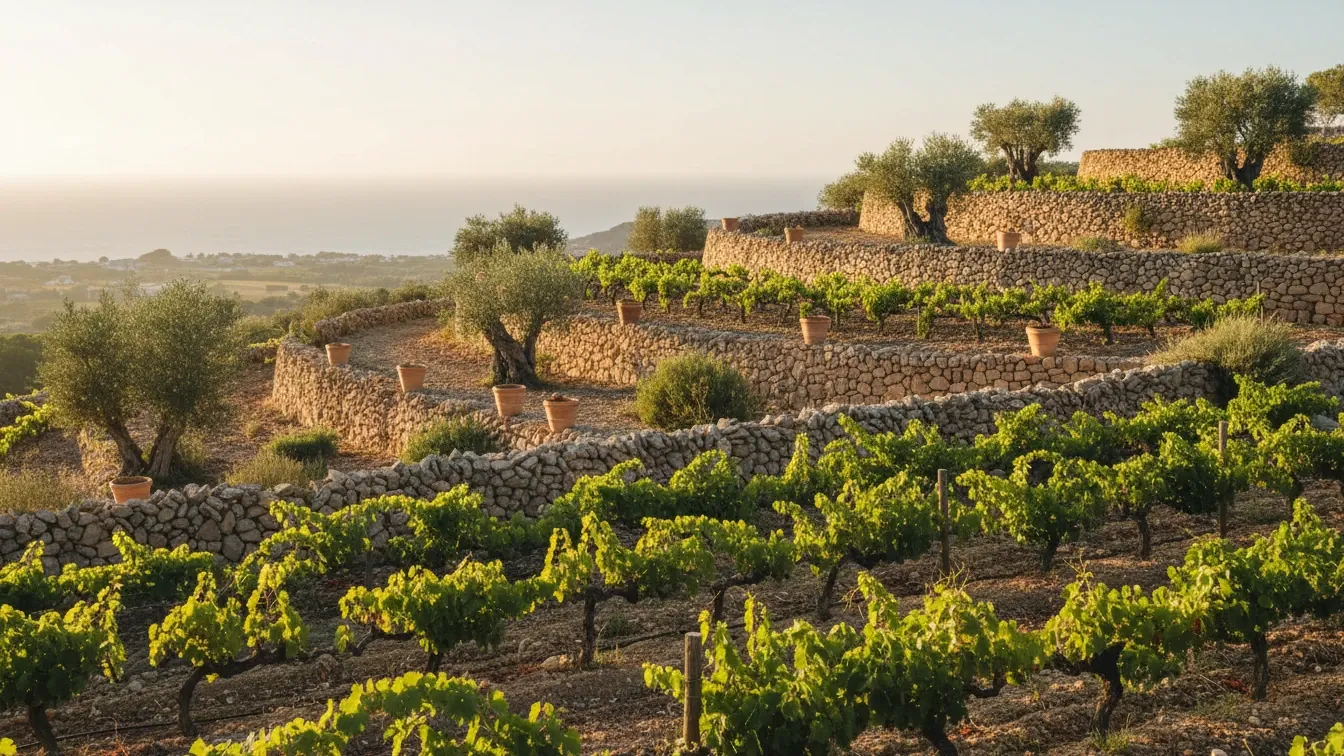
The third reason is direct experience. Mallorca receives visitors who already care about food, landscape, and local culture. A vineyard visit gives those travellers more than a tasting note. It connects a bottle with dry stone walls, harvest timing, island cooking, and the people who maintain the land.
That connection matters abroad because visitors carry memories home. They may later order a Mallorcan red in Germany, recommend a Prensal Blanc to a friend in Denmark, or ask a restaurant for a wine they discovered near Palma. In this way, tourism acts as a distributed export network. It creates ambassadors without requiring every new customer to encounter the region first through advertising.
What it is
Wine tourism includes tastings, vineyard walks, harvest activities, food pairings, and educational visits. The strongest experiences explain farming and winemaking instead of presenting wine as a simple souvenir.
Best for
It is best for estates that want lasting relationships with visitors, restaurants that depend on regional storytelling, and travellers seeking authentic wine activities in Mallorca.
Price
Experiences supplied by one Mallorcan estate range from €35 per person for a three-wine tasting to €120 per person for a private blend-your-own-wine session. Prices vary by provider and format.
Three advantages
- Visitors become informed and emotionally invested ambassadors.
- Food, landscape, and wine reinforce one another.
- Tourism creates revenue beyond bottle sales.
Two limitations
- Visitor numbers can make the sector vulnerable to seasonality.
- A crowded tourism market can flatten local identity into a generic experience.
Verdict
Wine tourism is a powerful amplifier. It cannot replace vineyard quality, but it can make an unfamiliar region personally memorable to thousands of international visitors.
The scale of local consumption supports this point. In 2024, around 77% of Balearic wine production was consumed within the islands, especially through restaurants and visiting tourists, according to fomentmallorca.org. That domestic concentration is not a weakness by itself. It gives producers a live audience and keeps wine connected to the island’s food culture.
International visibility then extends that local experience. At ProWein 2026, Mallorca’s joint presentation reached roughly 31,000 trade visitors from more than 100 countries, with reported interest from Germany and the United States, as noted by mallorca-magic.com. The journey from vineyard table to trade fair is now easier to see.
What do current Spanish wine trends mean for Mallorca?
Spanish wine trends increasingly favour origin, native grapes, organic farming, and wines with moderate alcohol and strong food compatibility. Mallorca benefits from all four. Its producers can offer Mediterranean warmth without abandoning freshness, while grapes such as Callet and Prensal Blanc give the category a distinctive vocabulary.
The market is not moving in a straight line, however. In 2025, quality wine sales from the Balearics reached 50,025 hectolitres, down 4.6% from the previous year. Domestic sales rose to 82.2% of the total, while sales elsewhere in Spain and exports to third countries declined. Rosé was the exception, rising by 2.4%, according to mallorcaglobalmag.es.
That pattern suggests caution rather than failure. Limited 2024 production affected availability, yet producers marketed nearly 94% of the wine made. Mallorca’s challenge is to grow recognition without promising more bottles than its vineyards can responsibly deliver.
How should buyers judge Mallorca’s international potential?
Buyers should look beyond medals or fashionable packaging. The first question is whether the wine communicates a place through grape, freshness, texture, or food compatibility. The second is whether the producer can explain farming and cellar decisions with precision.
Export readiness also depends on consistency. A small estate does not need industrial volume, but it needs reliable logistics, clear labelling, and a style that importers can confidently present. Germany’s 63% share of Balearic exports shows the value of a strong market relationship, while growing interest in Scandinavia and other destinations suggests room for careful expansion.
A practical selection framework looks like this:
- Identify the grape and its regional role.
- Check the appellation or geographical indication.
- Ask how the vineyard is farmed and how fermentation is managed.
- Match the wine with a real food occasion.
- Consider supply, vintage variation, and export continuity.
This approach helps separate genuine regional character from a temporary island narrative. It also explains why a biodynamic wine estate can compete internationally without producing enormous quantities.
The three reasons work best as one system
Native grapes create distinction. Biodynamic farming adds credibility. Wine tourism supplies human memory and conversation. None of these forces is sufficient alone. Together, they form a stronger model for Mallorca than a strategy based only on export volume.
The system also suits the island’s physical limits. Land prices, water pressure, and seasonal demand make endless expansion unrealistic. Quality-focused estates can instead protect scarcity, develop direct relationships, and use the island’s culinary identity as part of the wine’s meaning.
| Reason | What it contributes | Main risk | Long-term value |
|---|---|---|---|
| Native varieties | Distinctive taste and regional memory | Unfamiliar names | Very high |
| Biodynamic and organic farming | Trust and environmental credibility | Lower yields | High |
| Wine tourism | Personal advocacy and cultural context | Seasonality | High when carefully managed |
The strongest estates will connect all three. A visitor should taste a native or site-expressive wine, hear how the vineyard is farmed, and understand why the bottle belongs with Mallorcan food. That sequence turns information into belief.
Why Mallorca’s next chapter should favour character over volume
Mallorcan wine popularity abroad rests on a rare combination of limitation and ambition. The island cannot simply flood foreign markets with anonymous wine, and the latest figures show why quality matters more than volume. Production fell in 2024, yet sales value and international attention remained strong.
Callet and Prensal Blanc give Mallorca a vocabulary that consumers can learn. Biodynamic and organic methods give that vocabulary ethical weight. Tourism then carries the story across borders through people who have walked the vineyards and tasted the wines beside local food.
For a Demeter-certified estate working with Mediterranean conditions, the most credible path is therefore specific rather than broad: protect the soil, respect indigenous character, and make every encounter memorable. That is how Mallorca’s wine reputation can mature without losing its island voice. Montesion Wine Estate follows this quality-led direction through its connection to biodynamic farming, Mallorcan place, and distinctive varieties.
Frequently asked questions
Why is Mallorcan wine becoming popular abroad?
Mallorcan wine is gaining international attention because it combines native grape varieties, quality-focused production, and a strong wine tourism culture. Callet and Prensal Blanc give the island distinctive styles that differ from familiar international grapes. Organic and biodynamic farming also meets growing demand for environmentally responsible wine. Visitors then carry those experiences into export markets and restaurants abroad.
Which grape varieties are associated with Mallorca?
Callet is one of Mallorca’s best-known red grapes, offering freshness, red-fruit character, and moderate structure. Prensal Blanc, also called Moll, is a key local white variety with a bright Mediterranean profile. Manto Negro and Giró Ros are also associated with the island. International varieties remain present, but native grapes increasingly define Mallorca’s regional identity.
Is Mallorca known for organic and biodynamic wine?
Yes, Mallorca has a significant presence of organic and biodynamic producers, supported by its dry Mediterranean climate and growing quality focus. Biodynamic estates follow detailed farming and cellar practices designed to protect soil health and natural cycles. Certification can strengthen consumer trust, although the wine must still offer freshness, balance, and pleasure in the glass. The strongest examples make sustainability part of the wine’s character rather than its only selling point.
Where does Mallorca export most of its wine?
Germany has been the leading export market for quality wine from the Balearic Islands, accounting for 63% of exports in 2024. Switzerland followed with 11%, while Denmark represented 6%. Other markets, including Scandinavian destinations, have shown signs of growth. Export performance can change with vintage availability, production levels, and importer relationships.
What should I look for when choosing Mallorca wine?
Look for the grape variety, appellation or geographical indication, farming method, vintage, and intended food pairing. Callet can suit drinkers seeking a fresh Mediterranean red, while Prensal Blanc often works well with seafood and rice dishes. Biodynamic or organic certification may matter to environmentally conscious buyers. Above all, choose a bottle that explains its island origin through flavour and texture.
