

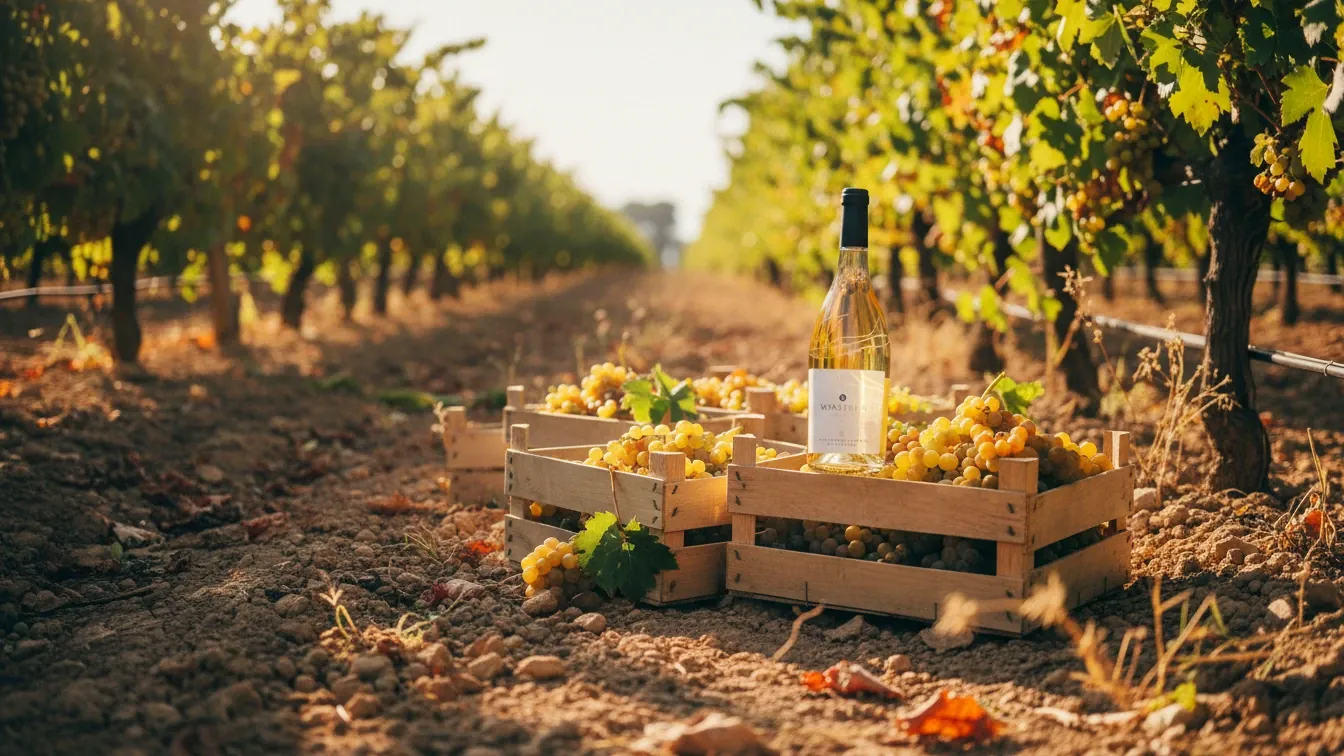
Manual harvest wine begins with a decision made one bunch at a time: pick only fruit that has reached the right balance of ripeness, health, and freshness. This slower method costs more than machine harvesting, yet it gives growers far greater control over grape selection, gentle handling, and timing. At Montesion Wine Estate, these advantages help protect both wine quality and the living character of the soil in a biodynamic vineyard.
A vineyard can change noticeably within a single week. In Mallorca, late-summer heat may push sugar levels upward while acidity declines, and a brief storm can alter the condition of exposed bunches overnight. Harvest teams therefore work with weather forecasts, berry samples, vineyard maps, and their own senses. They taste fruit, inspect skins, and look beneath the canopy before deciding where to begin.
This guide explains what hand harvesting involves, how it influences must and wine, where it makes the greatest difference, and when mechanisation may be the more responsible choice. It also examines labour, cost, biodynamic practice, common mistakes, and the practical measures that turn traditional work into a repeatable quality system.
Contents
- What manual harvesting actually means
- Why hand picking grapes changes the raw material
- How biodynamic harvest methods shape timing
- Manual and mechanical harvesting compared
- Which harvesting method suits each vineyard
- The economics behind a wine quality harvest
- A practical implementation plan
- Mistakes that quietly damage harvest quality
- Why hand harvest remains relevant in Mallorca
- A harvest decision that respects both craft and evidence
- Frequently asked questions
What manual harvesting actually means
Manual harvesting is the removal of grape bunches by people using shears or knives, followed by inspection, sorting, and transport to the winery. It is not simply a slower version of machine picking. A skilled team makes decisions at cluster level, often leaving unripe, diseased, sunburned, or damaged fruit on the vine. The method turns harvest into both collection and selection.
The work begins before the first cut. Vineyard managers identify blocks, assess ripeness, check access routes, and decide how many pickers each parcel requires. Teams may harvest into small crates, buckets, or lugs that limit pressure on the fruit. The chosen container matters because a deep, overloaded bin can crush lower bunches before they reach the cellar.
Manual harvesting also allows workers to handle different vineyard structures. Old goblet-trained vines, narrow rows, steep slopes, irregular plots, and headlands around trees may challenge machines. In those places, a picker can reach fruit without striking trunks, compacting soil, or tearing foliage. The same flexibility helps when a block contains uneven ripeness.
The term can cover several levels of selectivity:
- Standard hand harvest: workers cut sound bunches and remove obvious defects.
- Selective hand harvest: workers choose only fruit within a defined ripeness range.
- Multiple-pass harvest: teams return to the block several times as clusters mature.
- Berry selection: whole bunches go through a second table, where individual berries are assessed.
These approaches suit different wines and budgets. A fresh white wine may need speed and low temperature more than extreme selection. A structured red from low-yielding vines may justify several passes and an additional sorting table. The method must serve the intended wine rather than act as a badge of tradition.
Research from Romania illustrates why the distinction matters. A comparative investigation reported higher reducing sugars, alcohol, and dry extract in manually harvested samples, while machine-harvested fruit showed higher catechin levels and slightly higher volatile acidity. The outcome depended on variety and handling, not on a universal rule that one method always wins. The full study is available from the published research.
Why hand picking grapes changes the raw material
Hand picking grapes affects the condition of fruit before fermentation begins. Clippers can separate bunches cleanly from the cane, while careful placement reduces berry bruising. Intact fruit gives the winemaker more control over pressing, maceration, and extraction. That control is especially valuable in warm climates, where damaged berries can begin fermenting quickly.
The first quality gain comes from visual judgement. Pickers can identify rot, hail damage, insect injury, shrivelled berries, and leaves that machines may carry into the receiving area. They can also distinguish between fruit exposed to the sun and fruit protected inside the canopy. Those differences may influence acidity, phenolic ripeness, and aromatic freshness.
A second gain comes from preserving whole bunches. Whole fruit generally releases less juice during transport than crushed fruit. That reduces the time during which oxygen, wild microorganisms, and grape solids interact with the juice. A winery source describes this advantage clearly, noting that intact grapes can reduce premature oxidation and fermentation before the fruit reaches the winery.
Temperature remains a crucial part of the equation. Grapes harvested at dawn may arrive cooler than fruit collected in the afternoon. Small crates, shaded staging areas, and short transport routes help preserve that advantage. If the winery receives warm, bruised grapes, even excellent vineyard selection loses some of its value.
The influence on wine depends on variety and style. Thin-skinned white grapes can show oxidation or loss of delicate aromas when damaged. Red grapes may benefit from cleaner fruit and more deliberate extraction. However, gentle handling does not guarantee a better wine by itself. Fermentation choices, pressing pressure, sulphur management, vessel hygiene, and storage conditions still determine the final result.
At a biodynamic estate, selection also protects the meaning of place. A mixed load of healthy fruit, rot, leaves, and underripe berries can blur the expression of a site. A carefully selected load gives native varieties such as Callet and Prensal Blanc a clearer starting point. It allows the cellar to interpret the vineyard rather than correct a poor harvest.
How biodynamic harvest methods shape timing
Biodynamic harvest methods begin with a living view of the vineyard. The grower considers soil condition, plant balance, biodiversity, weather, and the maturity of each parcel. Demeter certification adds defined standards for farming and cellar practice, yet biodynamic work remains practical rather than ceremonial. The team still needs accurate sampling, reliable logistics, and sound food safety.
Timing is the central decision. Sugar level alone cannot tell the whole story. A vineyard team may measure acidity, pH, berry weight, and potential alcohol, then taste the skins and seeds. They also assess colour, texture, flavour, and the condition of stems. For white grapes, aromatic freshness may matter more than maximum sugar. For red grapes, ripe tannins can justify waiting several days, provided weather and plant health allow it.
Weather makes timing more complex in Mallorca. Heat can accelerate sugar accumulation, while coastal winds may preserve freshness in exposed sites. A rain event can dilute must or increase disease pressure, particularly in dense canopies. Manual harvesting gives a team the option to remove compromised bunches immediately, but it cannot reverse a prolonged period of poor vineyard conditions.
Biodynamic work also places value on soil life. Heavy harvesting equipment can compact wet ground, reducing pore space and limiting air and water movement around roots. Manual teams create less traffic, especially when crews use planned routes and carry fruit from difficult sections. That does not make human labour impact-free; transport, worker welfare, and repeated foot traffic still require management.
A thoughtful harvest plan therefore combines observation with measurement:
- Divide the vineyard into blocks with similar exposure, soil, variety, and vine age.
- Sample berries from several rows rather than relying on an easy-to-reach edge.
- Record sugar, acidity, pH, berry condition, and sensory maturity.
- Compare each block with the intended wine style.
- Set a harvest window with a weather contingency.
- Brief the team on selection standards before work begins.
The human element remains essential. Pickers learn how a ripe Callet bunch feels in the hand, how sunburn appears on a berry, and how a healthy cluster should sound when placed into a crate. That knowledge develops through repetition. It is one reason experienced harvest teams can protect quality even when conditions vary sharply from one vintage to the next.
Manual and mechanical harvesting compared
Mechanical harvesting uses a machine that shakes or strips grapes from the vine, then collects fruit through conveyors and cleaning systems. Modern machines can work quickly and accurately in suitable vineyards. They reduce the need for large seasonal crews and can harvest at night, when cooler temperatures may protect freshness. For broad, accessible, uniformly planted blocks, mechanisation can offer strong operational value.
Manual harvesting offers a different set of strengths. It works on irregular terrain, allows selective picking, and can keep sensitive bunches intact. It also creates direct employment and preserves practical vineyard knowledge. Neither method is automatically superior. The correct choice depends on terrain, vine training, grape variety, weather, labour supply, winery capacity, and the price the finished wine can command.
| Consideration | Manual harvest | Mechanical harvest |
|---|---|---|
| Selection | High cluster-level control | Depends on machine settings and later sorting |
| Speed | Slower and crew-dependent | Fast across suitable uniform blocks |
| Terrain | Works on slopes and irregular plots | Needs appropriate row spacing and access |
| Fruit handling | Usually gentler when crates are managed well | Greater risk of bruising and juice release |
| Temperature strategy | Can begin at dawn with small teams | Can operate at night at larger scale |
| Labour demand | High seasonal labour requirement | Lower picking labour, higher equipment dependence |
| Soil pressure | Lower traffic if planned carefully | Greater risk of compaction on wet ground |
| Cost structure | Mostly labour cost | Machinery, fuel, maintenance, and depreciation |
The Romanian study cited earlier found that manual harvesting reduced some quality risks but increased direct labour expense. Its reported figures showed manual labour near EUR 96 per tonne and mechanised labour near EUR 24, while total mechanised harvesting remained about 38 percent cheaper after fuel and depreciation. Those figures cannot transfer directly to Mallorca, where wages, terrain, scale, and regulations differ, but they demonstrate the central economic trade-off.
Mechanisation can also be a responsible choice. An industry perspective argues that machines may outperform hand crews when vineyard structure and wine style permit efficient, clean harvesting. That perspective is useful because it challenges the assumption that tradition always equals quality. A poorly trained, exhausted, or rushed manual crew may damage fruit more than a well-maintained harvester working at the correct speed.
The best estates often use a hybrid model. They may machine-harvest flat, uniform blocks for early-drinking wines, then hand harvest old vines, premium rows, or varieties requiring precise selection. A hybrid strategy directs human attention where it creates measurable value instead of applying the same method everywhere.
Which harvesting method suits each vineyard
Vineyard design often decides the question before the winery does. A machine needs adequate row width, turning space, consistent trellis height, and firm access roads. Goblet-trained vines, scattered parcels, terraces, and steep slopes favour hand work. Old vines may produce small, irregular bunches that require judgement rather than speed.
Variety also matters. Uneven ripening creates a strong case for selective picking. Some bunches may reach ideal maturity while others remain green or develop rot. A machine collects the block in one operation, whereas a manual team can remove only the suitable fruit. This is particularly relevant when a producer wants aromatic precision rather than maximum volume.
Wine style provides another filter. Consider the following examples:
- Delicate whites: prioritise cool fruit, low oxidation, and gentle transport.
- Rosé wines: require clean, fresh fruit because colour and phenolic extraction must remain controlled.
- Structured reds: may benefit from selective removal of underripe or damaged bunches.
- Late-harvest wines: often need several passes to identify fruit at the desired concentration.
- Everyday wines: may favour efficient mechanisation if the resulting fruit meets quality targets.
A vineyard near Porreres can include different soils, exposures, and vine ages within a relatively short distance. That variation makes block-level decisions more useful than estate-wide slogans. One parcel may need hand harvesting at dawn, while another can tolerate a faster method later in the day.
The same logic applies to the final wine. A bottle such as Montesión Viognier 2025 belongs to a style where aromatic lift, freshness, and clean fruit matter. Its hand-selected grapes, spontaneous fermentation, and controlled temperature reflect a chain of decisions rather than a single romantic gesture in the vineyard. Floral and exotic fruit notes depend on preserving the raw material from picking through fermentation.
For red wines, the contrast may be more structural. Hand selection can remove green or damaged fruit before extraction, allowing tannins to feel more integrated. Yet the winemaker still needs to decide how much maceration, oak, or vessel ageing the wine can support. Harvest technique establishes potential; it does not replace judgement in the cellar.
The economics behind a wine quality harvest
Manual harvesting costs more because it requires people, supervision, transport, equipment, food, training, and time. The visible expense is the picker’s wage, but the full calculation includes recruitment, accommodation where needed, insurance, crates, sorting space, and the opportunity cost of a longer harvest window. A winery must also coordinate intake so that fruit does not wait in the sun.
The return comes through several possible channels. Better fruit can reduce sorting losses, limit corrective cellar work, protect a premium wine style, and support higher prices. It may also preserve access to steep or fragmented plots that would otherwise become economically marginal. These benefits are real, although they must be measured rather than assumed.
A useful calculation compares the additional harvest cost with the value protected:
- Extra manual cost per tonne.
- Expected reduction in rejected or damaged fruit.
- Change in winery labour and processing costs.
- Difference in wine yield after sorting and pressing.
- Price premium supported by quality and consistency.
- Long-term value of maintaining difficult vineyard parcels.
Return on investment is not limited to the bottle price. A biodynamic estate may value soil protection, biodiversity, worker continuity, and resilience alongside immediate revenue. Those benefits can strengthen the vineyard over several seasons, although they still require transparent budgeting.
Labour economics also involve ethics. A low-cost harvest is not successful if crews work unsafe hours, lack shade and water, or receive inadequate training. Quality depends on alert people who can make careful decisions. Good planning therefore includes rest periods, protective equipment, clear pay terms, and realistic daily targets.
Scale changes the calculation. A small estate with high-value wines may justify hand harvesting across most parcels. A large producer may need machines to complete harvest before storms or overripe fruit arrive. Hybrid systems can balance both needs. They also reduce dependence on a single labour market or a single piece of machinery.
One unexpected comparison helps explain the economics: hand harvesting resembles selective editing rather than simple picking. A journalist may spend more time checking facts before publication because one inaccurate detail can damage the whole article. A vineyard team spends more time removing poor fruit because a small amount of rot or underripeness can influence an entire tank. The cost lies in attention, but the value lies in preventing a larger correction later.
A practical implementation plan
A successful manual harvest starts months before the first bunch is cut. Managers should estimate crop load, identify likely harvest dates, maintain access roads, inspect crates, and confirm winery capacity. The vineyard and cellar must share the same plan. Sending a large crew into a block without enough sorting space simply moves the bottleneck from field to winery.
The plan should define what acceptable fruit looks like. Workers need examples of healthy, ripe, damaged, and borderline bunches. A short demonstration prevents inconsistent decisions across the team. Supervisors can then check quality without slowing every picker.
A practical sequence looks like this:
- Map the blocks. Record variety, vine age, exposure, soil, training system, and access.
- Set sampling points. Walk interior rows and collect representative berries.
- Confirm maturity. Combine laboratory measures with skin, seed, pulp, and flavour assessment.
- Prepare people and equipment. Check shears, crates, gloves, transport, shade, water, and first-aid supplies.
- Harvest during the best window. Prefer cool periods when the wine style benefits from fresh fruit.
- Keep lots separate. Do not mix varieties or blocks before the cellar has evaluated them.
- Sort promptly. Remove unwanted material before crushing or pressing.
- Record the result. Track yield, rejected fruit, temperature, transport time, and fermentation performance.
Small crates can be especially helpful for fragile fruit. They reduce the weight pressing on lower layers and make stacking more stable. However, crates add washing, storage, and handling requirements. If they are dirty or overfilled, the intended quality advantage disappears.
The winery should receive fruit with a clear identity. Labels can record block, variety, harvest date, crew, and destination tank. That information supports traceability and helps the team compare hand-harvested lots over time. It also reveals whether extra selection actually improves the wine or merely increases cost.
Biodynamic practice adds another layer of coordination. The team may work around soil conditions, cover crops, animal activity, and the timing of preparations, while still responding to weather and grape maturity. The strongest approach respects those principles without allowing a calendar to override fruit health.
Mistakes that quietly damage harvest quality
The first mistake is treating hand harvesting as automatically gentle. Workers can cut bunches roughly, drop crates, overfill containers, or leave fruit in direct sun. Training and supervision matter as much as the presence of human hands. A careful method needs clear standards at every transfer point.
The second mistake is harvesting by sugar alone. A high reading may reflect dehydration rather than balanced ripeness. A grape can contain sufficient sugar while its acidity, flavour, or tannins remain unsuitable for the planned wine. Sampling must include the whole profile.
Another common error is mixing parcels too early. Fruit from a shaded block may have different acidity from fruit grown on an exposed slope. Combining everything before evaluation removes useful information and makes later correction more difficult. Separate lots give the winemaker options.
Poor logistics create hidden losses. Long queues at the receiving dock allow fruit to warm. Unwashed crates can carry spoilage organisms. Delayed transport can erase the freshness gained by dawn picking. The harvest plan should therefore treat roads, vehicles, shade, and cellar staffing as part of wine quality rather than administrative details.
Some estates also overuse selection. Removing every imperfect-looking berry can reduce yield without improving the wine. Selection standards should match the style and the actual risks. A premium, long-aged red may justify a stricter table than a fresh, high-volume wine.
Finally, producers can romanticise tradition. Manual harvesting deserves respect, but it does not excuse weak evidence. Compare lots, measure temperature, track volatile acidity, assess rejected fruit, and taste finished wines. A hand-harvest decision is strongest when craft and data support each other.
Why hand harvest remains relevant in Mallorca
Mallorca combines Mediterranean heat, strong sunlight, varied soils, and a distinctive collection of native varieties. Those conditions reward close observation. Callet can express red-fruit character and savoury structure, while Prensal Blanc can show freshness when picked at the right moment. Viognier brings aromatic intensity, but its perfume depends on protecting fruit from heat and oxidation.
The island’s vineyards also reflect a practical history of mixed agriculture and irregular parcels. Dry-farmed plots, old vines, narrow access routes, and goblet training can make machinery inefficient or impossible. Manual harvesting fits those landscapes because people can move around individual vines and adapt their pace to the block.
This is one reason that Mallorca wine should not be reduced to climate alone. Warmth can produce concentration, but quality depends on when fruit leaves the vine and how it reaches the cellar. Hand selection gives growers a tool for balancing Mediterranean ripeness with freshness, especially in biodynamic systems that aim to preserve soil vitality and site expression.
The approach also shapes wine activities in Mallorca. A vineyard visit during harvest reveals decisions that a tasting room cannot show: why one row is picked today, why another remains untouched, and how a picker recognises a sound bunch. The work connects wine with landscape, weather, and human skill without turning agriculture into theatre.
At Montesion Wine Estate, working under Demeter standards, the harvest can become a meeting point between ecological responsibility and sensory precision. Biodynamic wine is not defined by hand picking alone. It depends on a wider farming and cellar philosophy. Still, manual selection can support that philosophy when it protects soil, reduces unnecessary transport, and keeps quality decisions close to the vine.
The most convincing case for hand harvest is therefore specific, not absolute. It makes sense where selection, terrain, variety, freshness, and wine value justify the effort. It should be judged by the character and consistency of the wine, the condition of the vineyard, and the dignity of the people doing the work.
A harvest decision that respects both craft and evidence
Manual harvesting remains relevant because it gives a vineyard team control at the exact point when fruit becomes wine. Workers can select healthy bunches, adapt to uneven ripeness, and protect fragile grapes during transport. Those advantages are particularly valuable for old vines, irregular terrain, aromatic varieties, and premium lots.
The method carries real costs. Labour, logistics, training, and time can outweigh the benefit when a vineyard is flat, uniform, and intended for efficient production. Mechanical harvesting can deliver excellent results when operators match machine settings to the crop and move fruit quickly.
For biodynamic estates in Mallorca, the most intelligent answer is often selective rather than ideological. Hand harvest the parcels where human judgement changes the result. Use efficient equipment where it protects workers, soil, timing, or economic stability. Keep records, compare wines, and revise the plan after every vintage.
That balance reflects the character of a serious estate: respect for tradition, curiosity about evidence, and attention to the details that make a place recognisable in the glass. Whether the finished wine is built around Callet, Prensal Blanc, Viognier, or an adapted international variety, quality begins with a clear decision about what belongs in the crate.
Frequently asked questions
Is manual harvest better for wine?
Manual harvest can improve wine quality when workers select healthy fruit, handle bunches gently, and deliver grapes quickly. It is especially useful on steep sites, old vines, and blocks with uneven ripeness. However, machine harvesting can produce excellent fruit in suitable vineyards when the equipment and timing are well managed. The best method depends on the variety, terrain, wine style, and cellar logistics.
Why do biodynamic estates often hand harvest grapes?
Biodynamic estates may hand harvest because the method supports selective picking, lower machinery traffic, and close observation of plant and soil conditions. Hand work can suit irregular vineyards where machines would compact soil or damage vines. It does not define biodynamic farming by itself, since certification covers broader vineyard and cellar practices. The decision should still reflect fruit condition, worker welfare, and the intended wine.
Does hand picking grapes reduce oxidation?
Hand picking grapes can reduce oxidation when workers cut bunches cleanly, use small containers, keep fruit shaded, and transport it quickly. Whole bunches release less juice than crushed fruit, so oxygen has less contact with the must before processing. The benefit disappears if grapes wait in heat or if containers are overfilled. Temperature and transport time therefore matter as much as the picking method.
Is manual harvesting more expensive than machine harvesting?
Manual harvesting usually costs more directly because it requires a larger crew and more time. Machine harvesting has its own costs, including fuel, maintenance, depreciation, and suitable vineyard infrastructure. A producer may recover the extra manual cost through better selection, lower sorting losses, premium wine prices, or access to difficult parcels. A hybrid system often provides the most balanced economic result.
What makes a wine quality harvest successful?
A wine quality harvest combines balanced grape maturity, healthy fruit, suitable weather, trained workers, clean equipment, and rapid winery intake. Sugar readings alone cannot establish readiness, so teams should also assess acidity, pH, flavour, skin, seed, and berry condition. Separate lots and careful records help the cellar protect differences between vineyard blocks. Good harvest decisions begin with a defined wine style and end with measured results.
