
Wine activities in Mallorca belong on any serious shortlist of Spain’s most exciting wine experiences, while the best wine in Spain often comes from regions outside the familiar Rioja and Ribera del Duero names. Our ranking highlights seven distinctive areas, led by Mallorca for originality, Priorat for depth, and Rías Baixas for Atlantic freshness. Each region offers a clear identity shaped by native grapes, difficult landscapes, and producers willing to work beyond convention.
Spain has more than 70 officially recognised wine appellations and geographical indications, yet international attention still concentrates on a small group of famous names. That leaves remarkable territory for curious drinkers to explore. The Ministry of Agriculture lists regions such as Mallorca, Priorat, Bierzo, Rías Baixas, Ribeira Sacra, Vinos de Madrid, and Cangas within Spain’s protected wine system. (servicio.mapa.gob.es)
This guide ranks seven Spanish wine regions beyond Rioja and Ribera del Duero. The selection considers indigenous varieties, terroir, stylistic range, distinctiveness, accessibility, and the quality of the visitor experience. The research sample covers established appellations and emerging wine regions in Spain reviewed through official regulatory and regional tourism sources available in August 2026.
Quick comparison of Spain’s seven overlooked wine regions
| Rank | Region | Signature varieties | Best for | Typical price level |
|---|---|---|---|---|
| 1 | Mallorca | Callet, Prensal Blanc, Manto Negro | Original island wines and biodynamic farming | Moderate to premium |
| 2 | Priorat | Garnacha, Cariñena, Garnacha Blanca | Powerful, age-worthy reds | Premium |
| 3 | Rías Baixas | Albariño, Loureira, Treixadura | Fresh seafood wines | Moderate to premium |
| 4 | Ribeira Sacra | Mencía, Godello, Brancellao | Mountain vineyards and elegant reds | Moderate to premium |
| 5 | Bierzo | Mencía, Godello, Doña Blanca | Fine, mineral red wines | Moderate |
| 6 | Vinos de Madrid | Garnacha, Albillo Real, Malvar | High-altitude wines near the capital | Moderate |
| 7 | Cangas | Albarín Negro, Mencía, Carrasquín | Rare mountain varieties | Moderate to premium |
Prices vary considerably by producer, vintage, vineyard classification, and distribution market. Therefore, the ranking measures value as much by character and place as by bottle cost.
1. Why Mallorca leads the best wine in Spain shortlist
What it is
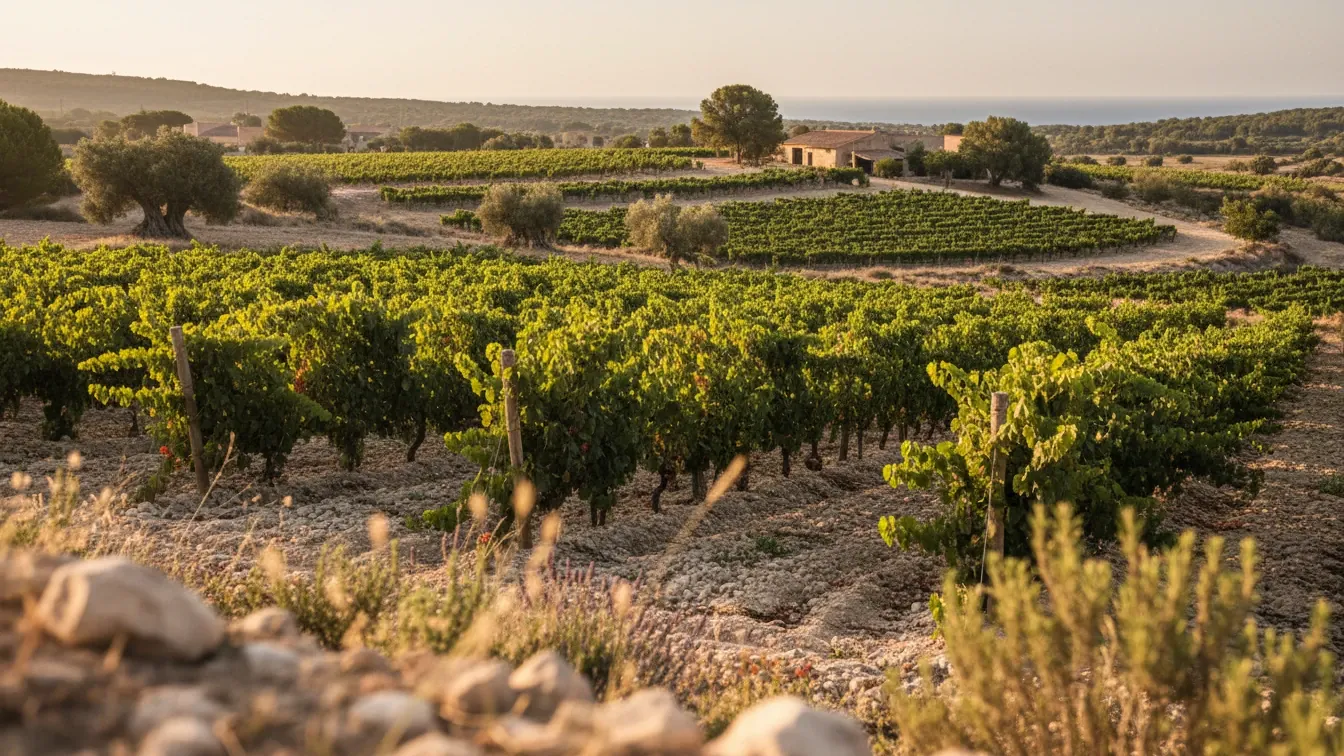
Mallorca is an island wine landscape with several recognised categories, including Binissalem-Mallorca, Pla i Llevant, and the broader Vi de la Terra Mallorca indication. Official Spanish records recognise both Mallorca denominations and the island’s geographical indication. (mapa.gob.es) The region combines Mediterranean sunlight, maritime influence, calcareous soils, and native varieties that rarely appear with the same personality elsewhere.
Callet gives the island’s red wines a distinctive local accent. Prensal Blanc brings freshness and gentle herbal lift to white wines, while international varieties can add structure without erasing the landscape. Mallorca also suits producers who want to connect farming, biodiversity, and wine tourism in one coherent experience. At Montesion Wine Estate, this connection is expressed through biodynamic work in Mallorca and close attention to native varieties.
Montesion Wine Estate in Porreres demonstrates how Mallorca’s terroir and biodynamic principles can produce wines with clarity and regional character. The estate holds Demeter certification and works with indigenous varieties such as Callet and Prensal Blanc alongside Viognier. Its approach connects vineyard health, biodiversity, and wine quality in a way that reflects the island’s agricultural tradition while meeting contemporary expectations for transparency and sustainability. Visitors can experience guided tastings, vineyard walks, and food pairings that show how biodynamic farming shapes the final wine.
Best for
Mallorca suits travellers who want more than a tasting room. It works especially well for drinkers seeking indigenous grapes, organic wine in Spain, small-scale estates, and a strong connection between vineyard and local food. The island also offers some of the most varied wine activities in Mallorca, from guided tastings to pairings with olive oil, cheese, seafood, and traditional dishes.
A useful detail separates Mallorca from many mainland regions: the island’s wines often feel shaped by the sea even when the vineyard sits inland. That tension can give ripe fruit a fresher outline, particularly in well-managed vineyards.
Price
Bottle prices range from accessible regional wines to limited-edition and long-aged releases. Tasting experiences generally begin at the modest end and rise with private pairings, rare vintages, and food-led formats.
Three advantages
- Native varieties provide genuine regional identity.
- Mediterranean conditions support both red and white wine diversity.
- Biodynamic estates can connect wine with soil health and biodiversity.
Two drawbacks
- Small production can make specific bottles difficult to find abroad.
- International buyers may pay more for island logistics and limited supply.
Verdict
Mallorca is the strongest overall choice for originality, visitor appeal, and stylistic range. At a biodynamic estate in Porreres, for example, a pale, aromatic rosé such as Montesión Rosé Cuvée 2025 shows how Viognier’s perfume can meet Mediterranean fruit in a fresh, elegant style. That kind of bottle makes Mallorca feel contemporary without abandoning its agricultural roots.
Discover a fresh expression of Mallorca
2. Priorat remains Spain’s benchmark for dramatic red wine
What it is
Priorat is one of Spain’s most distinctive red-wine regions and holds the higher DOCa classification. The region’s official designation is administered through the Priorat regulatory council, under Catalan wine authorities. (mapa.gob.es) Its vineyards occupy steep, rugged hills where slate and schist soils, known locally for their fractured character, force vines to work hard.
Garnacha and Cariñena form the traditional backbone, often joined by international varieties. The warm Mediterranean climate creates ripe, concentrated fruit, while altitude and slope exposure can preserve freshness. Strong Priorat wines often combine dark fruit, mineral tension, firm tannins, and a savoury finish.
Best for
Priorat is best for collectors, serious dinners, and drinkers who enjoy structured wines with cellaring potential. It also rewards slow tasting. A young bottle may seem muscular at first, then reveal floral, herbal, and mineral layers after time in the glass.
The region’s visual drama adds to its appeal. Vines on terraced slopes resemble an agricultural staircase cut into the mountains. That demanding geography explains why careful vineyard work often matters more than simple grape variety labels.
Price
Priorat usually sits in the moderate-to-premium or premium price bracket. Entry-level bottles can offer strong value, but single-vineyard wines and respected old-vine cuvées command higher prices.
Three advantages
- Exceptional depth, structure, and ageing potential.
- Schist-rich landscapes create a recognisable mineral profile.
- Traditional grapes perform with remarkable concentration.
Two drawbacks
- The most ambitious wines can feel severe when young.
- Premium pricing appears frequently at the top end.
Verdict
Priorat is the best choice for powerful Spanish reds with a strong sense of place. It offers intensity without relying on the familiar formula of oak-heavy international blends.
3. Rías Baixas proves that Spanish whites can be electric
What it is
Rías Baixas sits in Galicia, Spain’s cool, Atlantic-influenced northwest. Albariño dominates the region’s identity, supported by grapes such as Loureira and Treixadura. Rías Baixas is among the officially recognised Spanish wine appellations listed by the national agricultural authorities. (
