
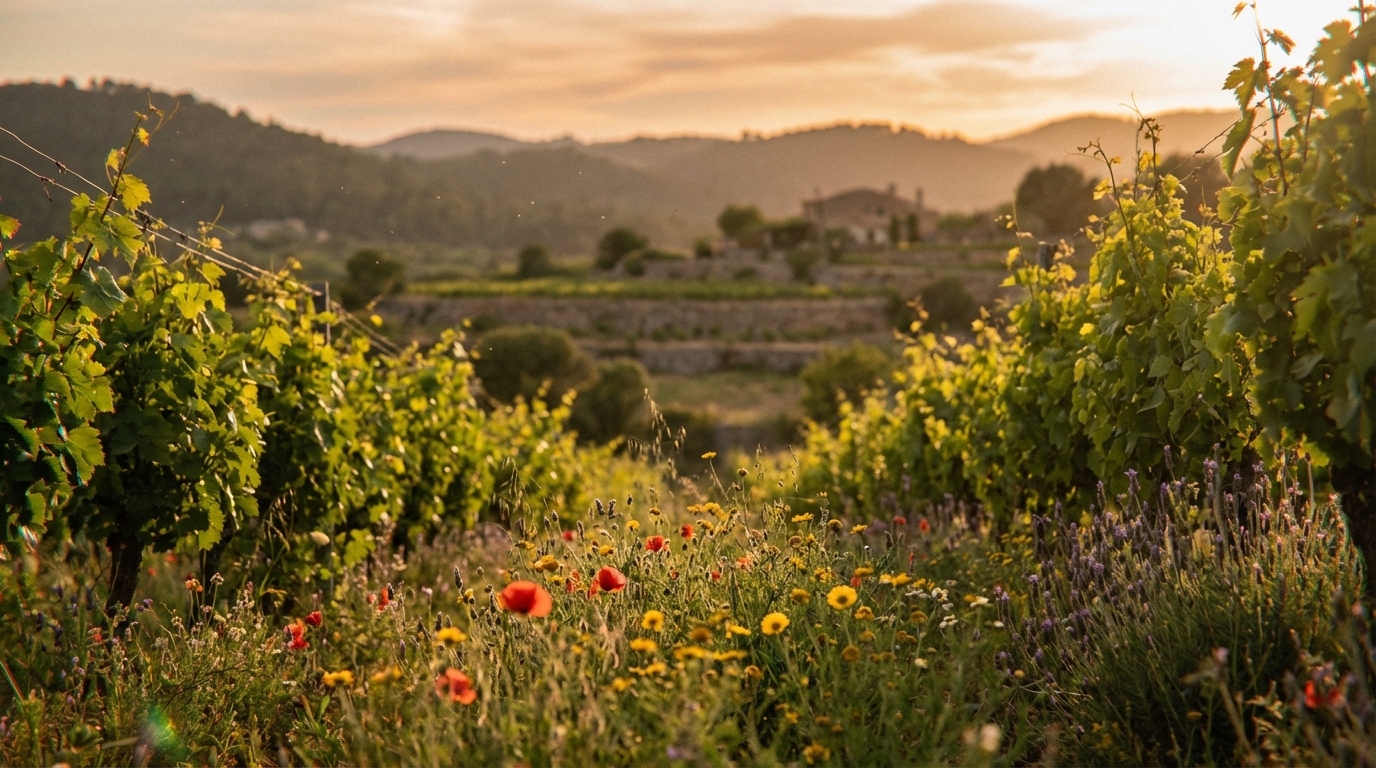
The revised 2026 standards for Demeter certification introduce rigorous new mandates for vineyard water management, mandatory biodiversity corridors, and precise documentation of soil vitality.
A changing global climate demands a radically different approach to farming, and the world’s most rigorous agricultural certifier has just raised the bar. The newly announced Demeter 2026 guidelines redefine what it means to practice true regenerative agriculture in the vineyard. Securing and maintaining Demeter certification will now require far more than eliminating synthetic chemicals; estates like Montesion Wine Estate must prove active ecological enhancement through measurable soil health metrics and strict water conservation protocols. You will learn exactly how these updated biodynamic wine standards alter daily vineyard operations, why preparation 500-508 applications face unprecedented scrutiny, and what this means for organic wine Spain produces.
The Core Philosophy: What Does Demeter Certification Actually Mean?
Before understanding the 2026 updates, it is crucial to understand the foundation of Demeter certification. As the international benchmark for biodynamic agriculture, it requires much more than simply avoiding synthetic chemicals or following basic organic rules. The central, guiding principle is profound: the farm must function as a self-sustaining living organism. This holistic approach integrates soil, plants, animals, people, and the surrounding nature into one perfectly balanced system.
To achieve this, certified estates must adhere to seven foundational pillars that elevate farming from mere production to active ecological stewardship:
1. The Farm as a Living Organism
In biodynamic philosophy, a farm is treated as an individual, self-contained ecosystem rather than a collection of separate crops. This means the estate must aim to produce most of its own fertility, ensuring nutrient cycles remain within the farm boundaries. By minimizing external inputs, the soil, animals, crops, and people develop a unique biological balance and deep resilience.
2. The Essential Integration of Animals
Animals are not optional in a biodynamic system; they are vital. They produce the manure essential for biodynamic compost, maintain soil fertility, and support biodiversity through natural grazing patterns. Whether an estate integrates sheep, chickens, horses, or cows, their presence completes the nutrient cycle. In fact, cow manure is the foundational ingredient for several key biodynamic preparations. If animals cannot be kept on-site, Demeter standards require close cooperation with nearby biodynamic farms.
3. Biodynamic Preparations
Demeter farms utilize specific, natural preparations made from herbs, minerals, and manure. Treatments like Horn Manure (Preparation 500) stimulate deep soil life, while Horn Silica (Preparation 501) improves plant vitality and light absorption. Applied in homeopathic quantities, these compost preparations—incorporating yarrow, chamomile, nettle, and oak bark—ignite biological processes in the earth and vines.
4. Closed Nutrient Cycles
A certified estate functions with minimal outside fertilizers. By relying on composted plant residues, crop rotation, green manure, and permanent soil cover, the goal is to build long-term, generational soil fertility rather than chasing short-term, extractive productivity.
5. Biodiversity and Landscape Stewardship
Demeter farms must dedicate a portion of their land strictly to ecological balance. Wildflower areas, hedgerows, forest edges, and wetlands support pollinators, birds, and beneficial predators. This natural infrastructure strengthens the immune system of the entire vineyard.
6. Respect for Natural Rhythms
Biodynamic agriculture aligns with cosmic and seasonal rhythms. Lunar and planetary cycles guide crucial vineyard decisions, from planting and pruning to harvesting and applying preparations. This practice aims to harmonize plant development with the broader rhythms of the natural world.
7. Uncompromising Animal Welfare
Demeter places a profound emphasis on animal dignity. Livestock must have access to open pasture, natural feeding conditions are strictly enforced, and practices that alter their natural state—such as the dehorning of cows—are generally prohibited.
In summary, Demeter certification creates farms that are self-sustaining, biologically diverse, and soil-building. But as the global climate shifts, these foundational principles are being pushed even further.
How Do the Demeter 2026 Standards Redefine Biodynamic Viticulture?
While biodynamic farming has always operated on the principle of the farm as a self-sustaining organism, the new framework shifts the focus toward quantifiable ecological regeneration. Historically, obtaining a biodynamic certification meant adhering to a strict calendar and applying specific compost preparations. The upcoming 2026 update transforms this qualitative philosophy into a highly measurable science, requiring concrete data demonstrating year-over-year improvements in local ecosystems.
This transition reflects a broader understanding that simply avoiding synthetic pesticides falls short of protecting vulnerable terroirs. The revised framework demands proof that agricultural practices actively sequester carbon, restore microbial life, and support native wildlife populations. For estates producing natural wine, this means implementing rigorous tracking systems that monitor ground cover density and insect diversity. The new mandates effectively close the gap between traditional agricultural wisdom and modern environmental science, forcing growers to adopt advanced monitoring technologies. By demanding empirical evidence of ecological vitality, the international governing body ensures the seal remains the ultimate benchmark for environmental stewardship.
Featured: Montesión Cabernet Sauvignon Amphorae 2021
Discover the unique character of our 2021 Cabernet Sauvignon, meticulously aged in traditional clay amphorae. This ancestral technique allows the wine to breathe naturally, offering a pure, fruit-forward expression born from our regenerative philosophy at Montesion Wine Estate.
Why Are Water Management and Biodiversity Corridors Taking Center Stage?
Scarcity of natural resources dictates the future of European agriculture, prompting the regulatory body to introduce aggressive new mandates for hydration and habitat preservation. The 2026 framework explicitly requires vineyards to establish interconnected biodiversity corridors spanning at least fifteen percent of the total farm acreage. These uncultivated zones serve as essential superhighways for beneficial predators, pollinators, and native flora, preventing the ecological isolation that plagues conventional monoculture farming.
Simultaneously, the updated protocols impose strict limitations on groundwater extraction and mandate advanced rainwater harvesting systems. Vineyards located in arid regions face intense scrutiny, requiring comprehensive hydration audits that prove long-term aquifer sustainability. In the Mediterranean basin, where producing Mallorca wine already involves navigating extreme summer drought conditions, these rules validate traditional dry-farming techniques. Estates cultivating indigenous varieties like Callet naturally hold an advantage, as these ancient vines have adapted over centuries to thrive on minimal rainfall. By integrating deep-rooted native vegetation alongside the vines, forward-thinking properties create a natural sponge effect, capturing winter rains and maintaining crucial subsurface humidity.
What Are the Stricter Rules for Biodynamic Preparations 500-508?
While preparations 500 through 508 have always been the absolute foundation of biodynamic soil health, the most technically demanding aspect of the revised guidelines involves their documentation. Under previous rules, estates merely recorded application dates. The 2026 mandate requires a granular chain of custody for every ingredient used, alongside precise meteorological data recorded at the exact moment of spraying.
Furthermore, mandatory soil vitality metrics must now validate the effectiveness of these treatments. The regulatory body requires vineyards to conduct annual microbiological assays to measure fungal-to-bacterial ratios and active carbon levels in the topsoil. This stringent tracking ensures that the silica and humus preparations actually stimulate root growth rather than serving as mere symbolic gestures. The administrative burden will challenge smaller operations, but it guarantees that the resulting vino biodinámico possesses the vibrant, living energy defining the category. The updated standards mathematically prove the efficacy of these century-old techniques.
Organic vs. Biodynamic 2026: How Do the New Rules Compare?
The incoming regulations dramatically widen the gap between standard ecological farming and advanced regenerative viticulture. While basic organic certification focuses primarily on a negative list—dictating which synthetic chemicals a farmer cannot use—the new biodynamic framework operates on a positive mandate, prescribing exactly what a farmer must actively do to heal the earth.
Understanding this distinction requires examining the specific operational requirements that separate these two agricultural approaches. Standard organic farming permits the importation of external organic fertilizers, whereas the 2026 guidelines strictly enforce closed-loop fertility, demanding all nutritional inputs originate from within the farm’s own ecosystem.
| Feature | Standard Organic (EU) | Demeter 2026 Updates |
|---|---|---|
| Biodiversity | 5% ecological focus area | 15% mandatory interconnected corridors |
| Water Management | Local municipality limits | Strict rainwater harvesting & aquifer audits |
| Fertility Inputs | External organic compost allowed | 100% closed-loop farm-generated compost |
| Soil Metrics | Basic nutrient testing | Annual microbiological & carbon sequestration assays |
| Preparations | None required | Mandatory 500-508 with precise meteorological logs |
This fundamental divergence means consumers seeking genuinely sustainable Balearic Islands wine must look beyond the basic green leaf logo. The updated requirements ensure certified properties function as pristine, self-regulating nature reserves.
The Future of Island Viticulture Under the New Framework
The implementation of these rigorous 2026 agricultural mandates marks a definitive turning point for the global wine industry, separating genuinely regenerative estates from those practicing basic sustainability. By enforcing strict water audits, mandating expansive biodiversity corridors, and requiring empirical proof of soil vitality, the international governing body has secured the integrity of its seal for the next generation.
These incoming regulations highlight a fascinating reality about traditional Mediterranean farming: the most advanced agricultural standards of the future closely mirror the ancient practices of the past. Estates like Montesion Wine Estate, cultivating deep-rooted Prensal Blanc and Viognier amidst native garrigue and ancient almond trees, naturally embody the interconnected ecosystem the new rules demand. Properties that have spent decades nurturing their specific island terroirs find themselves perfectly aligned with these demanding new environmental benchmarks. The true beneficiary remains the consumer, who receives absolute assurance that every bottle actively restores the natural world.
Frequently Asked Questions
What is the main difference between the old and new Demeter 2026 standards?
The primary difference centers on measurable ecological outcomes and strict water conservation. While previous standards focused heavily on the correct application of homeopathic preparations, the 2026 update mandates empirical proof of soil vitality, requires fifteen percent of the estate to function as biodiversity corridors, and demands comprehensive water audits.
How do biodynamic preparations 500-508 affect soil health?
Preparations 500 through 508 act as potent microbial inoculants that accelerate the formation of stable humus and stimulate root development. By applying fermented herbs directly to the compost, vineyards increase their fungal-to-bacterial ratios, which naturally enhances the vines’ immune systems and improves the earth’s ability to retain moisture.
Why are biodiversity corridors required in modern vineyards?
Biodiversity corridors are essential because they break up agricultural monocultures and create safe habitats for beneficial insects, birds, and natural predators. These uncultivated strips of native vegetation run directly through the vineyard blocks, allowing wildlife to migrate freely and naturally controlling pest populations without external organic pesticides.
Does a biodynamic certification guarantee a wine is natural?
Achieving this specific certification guarantees a wine meets the strictest definition of natural winemaking both in the vineyard and the cellar. The standards strictly prohibit commercial yeast additions, aggressive filtration, and synthetic additives, ensuring that the final product represents an unmanipulated, pure expression of the specific terroir.
