

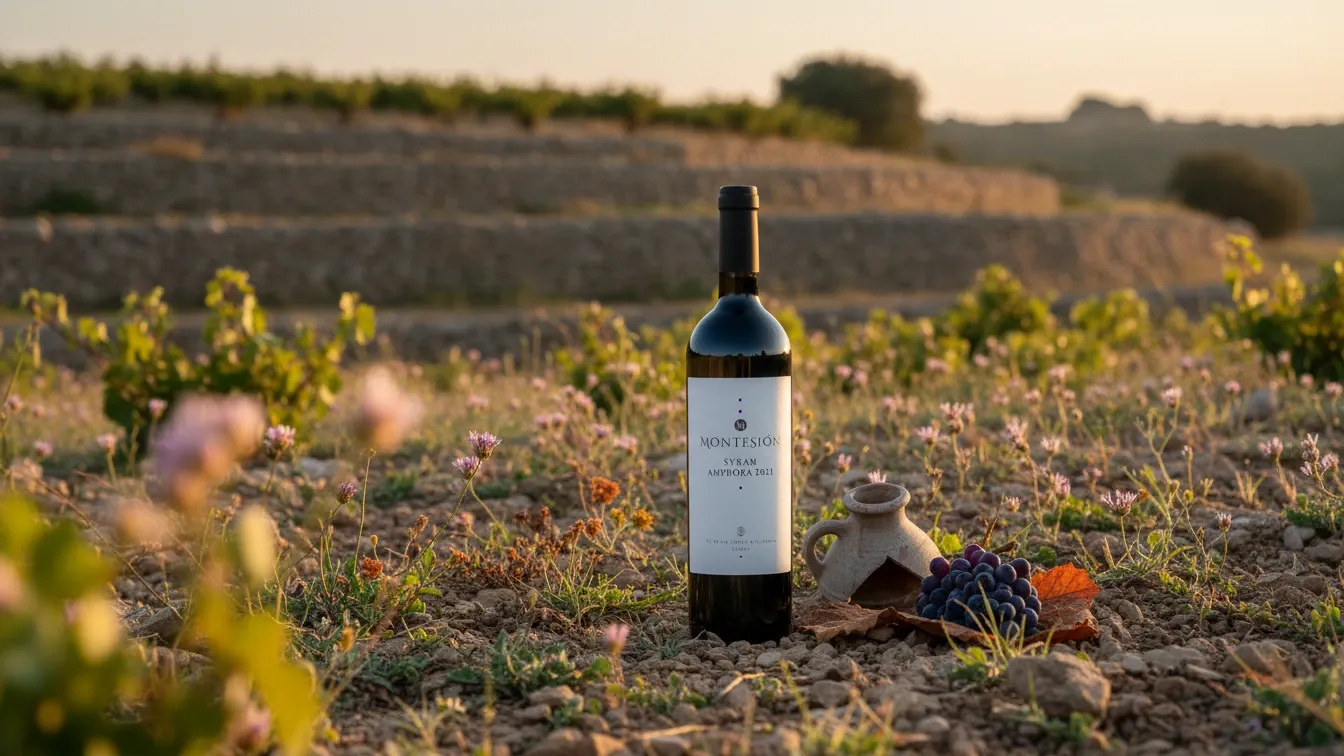
Demeter wine certification is a multi-year system that tests the whole estate, not a single harvest or attractive label. A producer must build a living farm ecosystem, follow defined biodynamic preparation and winemaking rules, pass inspections, and maintain compliance every year. The result is a verifiable agricultural and cellar practice rather than a marketing description. Montesion Wine Estate approaches this framework as a whole-estate discipline, connecting field management, cellar work, and traceability.
A vineyard can look healthy and still fall short of Demeter standards. Certification examines soil fertility, biodiversity, livestock integration, water management, records, harvest handling, cellar separation, and permitted processing methods. That breadth explains why the biodynamic wine certification process takes patience: the estate must demonstrate consistent practice across seasons, not simply announce an ambition.
For a wine producer, the challenge is practical as much as philosophical. Mallorca’s dry summers, intense sunlight, limited rainfall, and island logistics make water retention and biological balance especially important. The estate must translate broad principles into measurable decisions, from compost timing to storage labels. This guide breaks the work into clear steps, including likely timelines, tools, costs, inspections, and common mistakes. It also distinguishes certified farming from certified wine processing, two stages that buyers often confuse.
Step 1: Define the estate boundary and certification scope
What to do
Begin by mapping every parcel, building, storage area, livestock unit, orchard, and processing space connected to the farming business. Demeter certification applies to the farm as an integrated organism, so certifying only the most attractive vineyard block can create a serious gap. Record ownership, leases, grape varieties, acreage, irrigation points, neighboring land, and every product made on site.
The first decision concerns scope. A producer may seek certification for the farm, the winery, or both, but the certified claim must match what the standards allow. Grapes from a certified farm do not automatically make every finished bottle certified. The wine cellar must meet the relevant processing requirements as well.
How to do it
Use a scaled estate map, parcel register, photographic record, and digital spreadsheet. Mark organic transition dates, current inputs, grazing areas, compost sites, wells, waterways, and biodiversity zones. Then contact the relevant Demeter certification body before making expensive infrastructure changes. Standards and approved procedures can vary by jurisdiction, so the certifier’s interpretation should guide the implementation plan.
A useful internal audit asks one question: could an inspector trace every material entering the farm or cellar to a documented source? If the answer is no, create a record before the next growing season. The Demeter International standard provides the governing framework for production, processing, and labelling.
Expected result
You should finish with a defined certification boundary, a named responsible manager, and a written gap analysis. The gap analysis should rank issues by risk, cost, and time. For example, missing storage separation may require construction, while incomplete spray records may need only a new logging procedure.
Common error
The most frequent error is treating certification as a vineyard-only project. That approach overlooks the winery, roads, water systems, livestock, and adjacent production areas. Inspectors evaluate the relationship between those parts, because biodynamic farming treats the estate as a living, self-regulating organism.
Step 2: Build the biodynamic farm before applying
What to do
Convert the farm from an input-led system into a managed ecological cycle. Organic rules prohibit synthetic fertilizers, pesticides, herbicides, and fungicides, but biodynamic requirements go further. The estate must actively develop soil life, biodiversity, compost quality, water resilience, and useful relationships between plants and animals.
A certified farm normally needs a functioning biodiversity strategy. Demeter guidance commonly requires at least 10% of the total acreage to remain in biodiversity areas, such as hedges, grassland, woodland, wetlands, or riparian habitat. The exact interpretation should be confirmed with the certifier, especially where parcels contain roads, buildings, or protected land.
How to do it
Create a seasonal farm plan covering cover crops, pruning residues, compost, grazing, mowing, irrigation, pest observation, and erosion control. Use soil tests at consistent depths and locations. Track organic matter, pH, electrical conductivity, moisture, and selected nutrient indicators over time rather than relying on a single result.
Biodynamic preparations require disciplined handling. The estate should document preparation materials, preparation dates, storage vessels, application rates, weather conditions, treated blocks, and operators. Preparation protocols often include composted manures and plant-based preparations associated with yarrow, chamomile, nettle, oak bark, dandelion, and valerian. These practices should be recorded as farm operations, not presented as unmeasured magic.
The cosmic calendar also needs a realistic interpretation. Some estates use lunar, planetary, or seasonal rhythms to plan sowing, pruning, spraying, or harvesting. A useful record states which calendar informed the decision, what work occurred, and what field conditions required adjustment. The calendar cannot replace agronomic observation, disease monitoring, or worker safety.
Expected result
The estate should demonstrate a repeatable annual cycle. Soil tests should show a clear monitoring baseline, biodiversity areas should appear on the map, and preparation records should link each application to a vineyard block. Staff should understand not only what they do, but why the action belongs to the farm’s ecological design.
Common error
A common mistake is buying preparations without building the wider system around them. Biodynamic viticulture requirements concern the whole farm. A few sprays of a preparation cannot compensate for bare soil, weak biodiversity, unmanaged runoff, or dependence on unrecorded external inputs.
Step 3: Prove the transition with records and time
What to do
Treat the conversion period as evidence-building, not administrative waiting. Demeter certification generally requires at least three years for land farmed conventionally before certification, while organically managed land may qualify after at least one year under the applicable standard. The certifier determines the final status after reviewing the farm’s history and inspection findings.
During this period, keep records detailed enough for another person to reconstruct the season. Include input invoices, field diaries, machinery cleaning, spray logs, compost batches, harvest quantities, animal movements, water use, pest observations, and sales documents. If a material is uncertain, quarantine it from certified production until the certifier confirms its status.
How to do it
Use one controlled record system. A paper field notebook can work, but a digital system reduces lost pages and makes parcel-level comparisons easier. Each entry should include the date, location, operator, material or activity, quantity, weather, equipment, and reason for the decision.
Set a monthly records review. The farm manager should compare actual work with the annual plan and note deviations. For instance, a heatwave may force an irrigation change, or a disease event may alter mowing. A documented deviation is stronger than a perfect-looking plan with no evidence of real decisions.
Budget for both visible and hidden costs. Visible costs include certification fees, laboratory testing, mapping, compost infrastructure, biodiversity planting, and cellar modifications. Hidden costs include staff training, lower short-term yields, separate transport, record administration, and time spent reviewing suppliers. A small estate should model at least three years of cash flow before beginning.
Expected result
At the end of the transition, the estate should hold a coherent evidence trail. Records should show declining dependence on external inputs, improving soil observation, protected biodiversity, and consistent use of approved methods. The business should also know the cost per certified hectare and the administrative hours required each month.
Common error
Backfilling records after harvest creates weak evidence. Inspectors can often detect identical handwriting, implausible dates, missing quantities, or entries that do not match invoices. Record decisions when they happen, including mistakes and corrective action.
Step 4: Prepare the winery for certified processing
What to do
Separate certified grapes, wine, materials, equipment, and records from anything outside the certified system. Demeter production and processing standards aim to prevent contamination, substitution, and accidental mixing. A winery that handles conventional, organic, and Demeter products needs an approved separation protocol.
This step matters because certified farming and certified processing are different claims. A Demeter-certified farm can produce certified grapes, yet the finished wine may fall into another category if cellar practices exceed the permitted level of manipulation. Processing rules define which additives, treatments, yeast options, and sulphur limits apply to each label category.
How to do it
Write a cellar flow diagram from grape reception to dispatch. Mark weighing, crushing, fermentation, maturation, bottling, cleaning, storage, and waste handling. Assign tanks and barrels by status. Use visible batch codes that connect the vineyard block, harvest date, vessel, analysis, and bottling lot.
Schedule the Demeter production run before other production when required by the approved protocol. Clean equipment using documented products and concentrations. Record the person responsible, cleaning time, rinse or verification method, and release approval. Keep certified products in clearly identified storage zones with separate pallets or shelves where practical.
The cellar team should also understand allowed processing. Demeter wine categories may permit limited sulphites, approved yeast nutrients, bentonite, or certain fining materials, while prohibiting outside aromatic yeasts, added enzymes, tannins, and malolactic bacteria in the most rigorous category. Confirm current limits with the certifier rather than relying on an old recipe.
The practical difference becomes clear in a wine such as Montesión Syrah Amphora 2021, described as using spontaneous fermentation and 12 months in Italian stoneware vats. Its story is not simply about the vessel. It connects hand harvesting, native agricultural conditions, fermentation choices, and maturation into one traceable production narrative.
Expected result
The winery should have an approved separation protocol, clean batch traceability, controlled storage, and a processing recipe that matches the intended certification category. An inspector should be able to select a bottle and trace it backward to the vineyard, harvest records, tank, analyses, cellar actions, and release approval.
Common error
The usual failure is assuming that spontaneous fermentation alone makes wine Demeter-certified. Fermentation method is only one part of processing. Contamination controls, permitted inputs, labelling, sulphur management, records, and the certified status of the grapes all matter.
Step 5: Prepare for inspection and measurable verification
What to do
Treat the inspection as a test of the operating system, not a ceremonial visit. Inspectors may review fields, buildings, inputs, records, livestock, storage, water practices, product labels, and unresolved corrective actions. Annual inspection remains part of ongoing certification, so preparation should become routine.
Before the visit, compare the farm’s documents with physical reality. Walk every parcel. Count compost bays. Check biodiversity areas. Photograph preparation storage and cellar labels. Reconcile grape weights with tank volumes and sales records. Then sample a finished batch and follow its trail in both directions.
How to do it
Use measurable internal checks at least twice each year. Suggested indicators include:
-
Percentage of estate acreage managed as biodiversity habitat.
-
Number of external inputs purchased and their approval status.
-
Compost batches produced, used, and remaining.
-
Soil organic matter and moisture trends by block.
-
Irrigation volume per hectare and rainfall totals.
-
Percentage of certified lots with complete traceability.
-
Cleaning records completed before each certified production run.
-
Corrective actions closed by their stated deadline.
Laboratory analysis can support, but not replace, farm records. Test wine and soil where relevant, retain certificates of analysis, and explain unusual results. Verification works best when the estate can show a trend and a reason, rather than presenting isolated numbers.
Expected result
A strong inspection file contains the current map, annual plan, input approvals, preparation records, invoices, harvest reports, cellar logs, cleaning protocols, staff training records, laboratory results, labels, and corrective-action register. The estate should know who answers each topic and where each document is stored.
Common error
Many businesses focus on visible fields while neglecting labels, invoices, or cleaning products. Yet the Demeter standard specifically addresses contamination prevention, separate production runs, storage, and clear labelling. A missing document can undermine a practice that was actually carried out correctly.
Featured: Montesión Syrah Amphora 2021
When the challenge is understanding how a careful cellar process carries the character of its origins, Montesión Syrah Amphora 2021 offers a focused point of reference. Its spontaneous fermentation and stoneware maturation invite a layered, earthy tasting moment that suits a thoughtful dinner or a close look at craft.
Step 6: Maintain certification after the first approval
What to do
Certification is a continuing management discipline. Each vintage brings new weather, suppliers, staff, pests, harvest pressures, and cellar decisions. The estate must preserve the system when conditions become difficult, not only when the season is calm.
Renewal requires updated records and another review of compliance. Changes such as acquiring land, adding a new crop, installing a tank, changing a cleaning agent, or outsourcing bottling may affect the certification scope. Notify the certification body before making a change that could alter traceability or processing status.
How to do it
Hold a post-harvest review with vineyard, cellar, and administrative staff. Compare planned and actual inputs, yields, disease pressure, water use, biodiversity work, and cellar losses. Identify one or two improvements for the following season, such as better shade management, stronger batch coding, or a more reliable compost temperature log.
Train seasonal workers before they enter certified blocks. A short briefing should cover prohibited materials, equipment cleaning, harvest separation, personal protective equipment, and who to contact when a mistake occurs. Keep attendance records and translated instructions where necessary.
Use a corrective-action table to protect institutional memory:
|
Error |
Consequence |
Solution |
|---|---|---|
|
Unapproved input applied to a certified block |
The parcel or harvest may lose certified status |
Isolate the affected area, document the incident, and ask the certifier for a written ruling |
|
Certified grapes mixed with another lot |
Traceability breaks and the wine claim may be withdrawn |
Stop movement, quarantine the batch, reconcile weights, and record the final decision |
|
Cleaning product lacks approval evidence |
Contamination risk and an inspection finding |
Replace or approve the product before the next certified run |
|
Biodiversity area falls below the planned level |
The farm may fail a landscape requirement |
Update the map, restore habitat, and document the recovery timeline |
|
Cellar recipe exceeds the permitted processing category |
The finished wine may need a different label status |
Review the recipe with the certifier before bottling |
|
Records are completed weeks after the work |
Evidence appears unreliable |
Enter data at the time of work and review it monthly |
Expected result
The estate should move from annual crisis management to continuous control. Staff know the rules, suppliers provide documentation, batch records reconcile, and corrective actions close quickly. That stability is the strongest practical sign that certification has become part of the farm rather than a one-time project.
Common error
The most expensive mistake is treating approval as the finish line. A new product, contractor, or cellar shortcut can change compliance within one afternoon. Annual certification rewards consistency, but consistency requires daily decisions.
What Demeter certification changes in the finished wine
Demeter certification does not promise that every certified wine will taste the same. It sets a production framework that limits inputs, protects farm identity, and reduces unnecessary manipulation. Vintage, variety, soil, climate, vessel, and winemaking choices still shape the glass.
That distinction helps explain why terms such as biodynamic wine, organic wine Spain, and Mallorca wine should not be treated as interchangeable. Organic certification establishes one set of rules. Demeter adds a wider farm philosophy, defined preparations, biodiversity expectations, and specific processing controls. A bottle’s exact claim depends on both the agricultural and cellar certificates.
The island context adds another layer. In the Balearic Islands, summer drought can expose shallow roots and weak soil structure quickly. Compost, cover crops, shade, habitat, and careful water management therefore become practical resilience tools, not decorative features. Indigenous varieties such as Callet and Prensal Blanc can express place most convincingly when the vineyard’s biological conditions remain stable.
The most useful question is not whether a producer uses a fashionable term. Ask which estate is certified, for how long, under which processing category, and how the producer verifies separation and traceability. That approach turns a vague promise into an auditable chain from soil to bottle.
The certification path in practical terms
A realistic pathway has four phases: scope definition, transition, inspection, and annual maintenance. The farm must first establish its boundaries and remove prohibited practices. It then needs enough seasons to prove that the system works. After inspection and approval, the business must preserve the same discipline through every harvest and cellar decision.
Costs vary widely by estate size and starting condition. A mature organic farm with good records may need less infrastructure than a mixed operation converting from conventional production. Budget for certification fees, consultant or technical support, soil and wine analyses, biodiversity work, compost equipment, staff time, cellar separation, and possible yield changes. The largest cost is often not a single invoice. It is the operational time needed to make every decision traceable.
Difficulty also varies. Mapping is straightforward. Building a closed nutrient cycle on a dry island requires more planning. Producing a compliant wine while managing several certification categories demands strong cellar discipline. The process becomes manageable when the estate assigns responsibility, uses measurable checks, and treats the certifier as a technical authority rather than contacting it only after a problem.
In that sense, Demeter wine certification is less like receiving a quality badge and more like adopting an operating system. The label is the visible result. The real work happens in the soil, habitat, records, preparation room, harvest crew, and cellar long before the bottle reaches a table. Montesion Wine Estate reflects this whole-estate approach by treating certification as an ongoing system rather than a one-time claim.
Preguntas frecuentes
How long does Demeter wine certification take?
The timeline depends on the farm’s previous management, but conventionally farmed land generally needs at least three years under the required system, while organically managed land may need at least one year. The certification body confirms the applicable transition period after reviewing records and inspecting the estate. Winery approval can add further preparation because processing, storage, labelling, and separation controls must also comply.
Does certified biodynamic farming automatically make the wine certified?
No. Certified grapes and certified wine are separate stages. The winery must follow the applicable Demeter processing standard, use permitted materials and methods, prevent mixing with non-certified products, and maintain traceability from harvest to bottle. A wine made from certified grapes may therefore require a different label category if its cellar practices do not meet the most rigorous requirements.
What are the main biodynamic viticulture requirements?
The main requirements include avoiding prohibited synthetic inputs, managing the farm as an integrated organism, protecting biodiversity, documenting preparations, monitoring soil and water, and maintaining complete records. Demeter standards also examine livestock integration, composting, habitat, storage, and the use of external materials. Exact requirements should always be confirmed with the relevant certification body because standards and interpretations can change.
Does Demeter certification require following a cosmic calendar?
Many biodynamic estates use astronomical or lunar calendars to guide selected farm activities, but the calendar does not replace observation, safety, or documented agronomy. A responsible estate records which calendar informed a decision and explains any change caused by weather, disease, or operational conditions. The certifier evaluates the full management system rather than one calendar entry.
How can buyers verify a Demeter wine claim?
Buyers should check for the recognised Demeter seal and read the exact wording on the label. They can also ask whether the farm and winery are certified, which processing category applies, and whether the wine was made from certified grapes. Clear answers should connect the label to a current certificate, traceable batch, and documented production system.
