

The surging demand for biodynamic wine among British buyers at FENAVIN 2026 signals a definitive shift in the trajectory of Spanish wine exports. UK importers now actively prioritize refined, low-oak expressions over traditional, heavily extracted styles. Consequently, indigenous grape varieties cultivated on sustainable estates like Montesion Wine Estate perfectly align with this rapidly evolving consumer preference for elegance and strict environmental responsibility.
Recent market data from FENAVIN Match reveals a profound transformation in how the United Kingdom purchases premium bottles. Historically, British consumers favored heavily oaked, high-alcohol reds presented in massive glass bottles. However, the May 2026 trade reports indicate a complete reversal of these traditional habits. Buyers now actively hunt for the sustainable wine Spain can provide, targeting natural and ecologically certified categories. This pivot represents a significant opportunity for specialized producers. Furthermore, the rejection of heavy glass highlights a broader commitment to reducing carbon footprints across the supply chain. Importers demand transparency, authentic practices, and lighter packaging. Therefore, regions with distinct microclimates and ancient vines stand at the forefront of this commercial revolution. The UK wine market trends clearly demonstrate that elegance and environmental stewardship drive premium sales. Ultimately, this paradigm shift validates the rigorous farming philosophies practiced by dedicated island estates such as Montesion Wine Estate.
Why Are British Buyers Rejecting Heavy Oak at FENAVIN 2026?
The commercial dynamics at recent trade events highlight a fundamental change in palate preferences across Northern Europe. British importers previously championed bold, highly extracted flavor profiles dominated by new wood. Today, these same buyers explicitly request purity of fruit and vibrant acidity. This transition directly impacts Spanish wine exports, forcing producers to reconsider their cellar techniques. Consequently, winemakers who rely heavily on extended barrel aging face decreasing demand in premium London restaurants and boutique retailers. Importers specifically scrutinize cellar practices, rewarding producers who utilize neutral vessels or shorter aging periods.
Instead of masking the terroir, modern consumers want to taste the specific soil and climate of the vineyard. FENAVIN 2026 trade data confirms that the premium segment aggressively pursues natural wine categories with minimal intervention. Therefore, estates practicing strict ecological farming gain immediate traction with international distributors. The market demands freshness, lower alcohol by volume, and a clear expression of the grape’s innate characteristics.
How Does Mallorca Terroir Match the New UK Market Trends?
The unique geography of the Balearic Islands provides an ideal environment for cultivating the exact flavor profiles currently dominating export markets. Island vineyards benefit from constant sea breezes, which naturally regulate temperatures during the intense summer months. Consequently, grapes retain vital acidity while achieving optimal physiological ripeness. This maritime influence prevents the over-extraction and high alcohol levels that UK buyers now actively avoid. Furthermore, the mineral-rich soils contribute a distinct salinity and tension to the finished bottles.
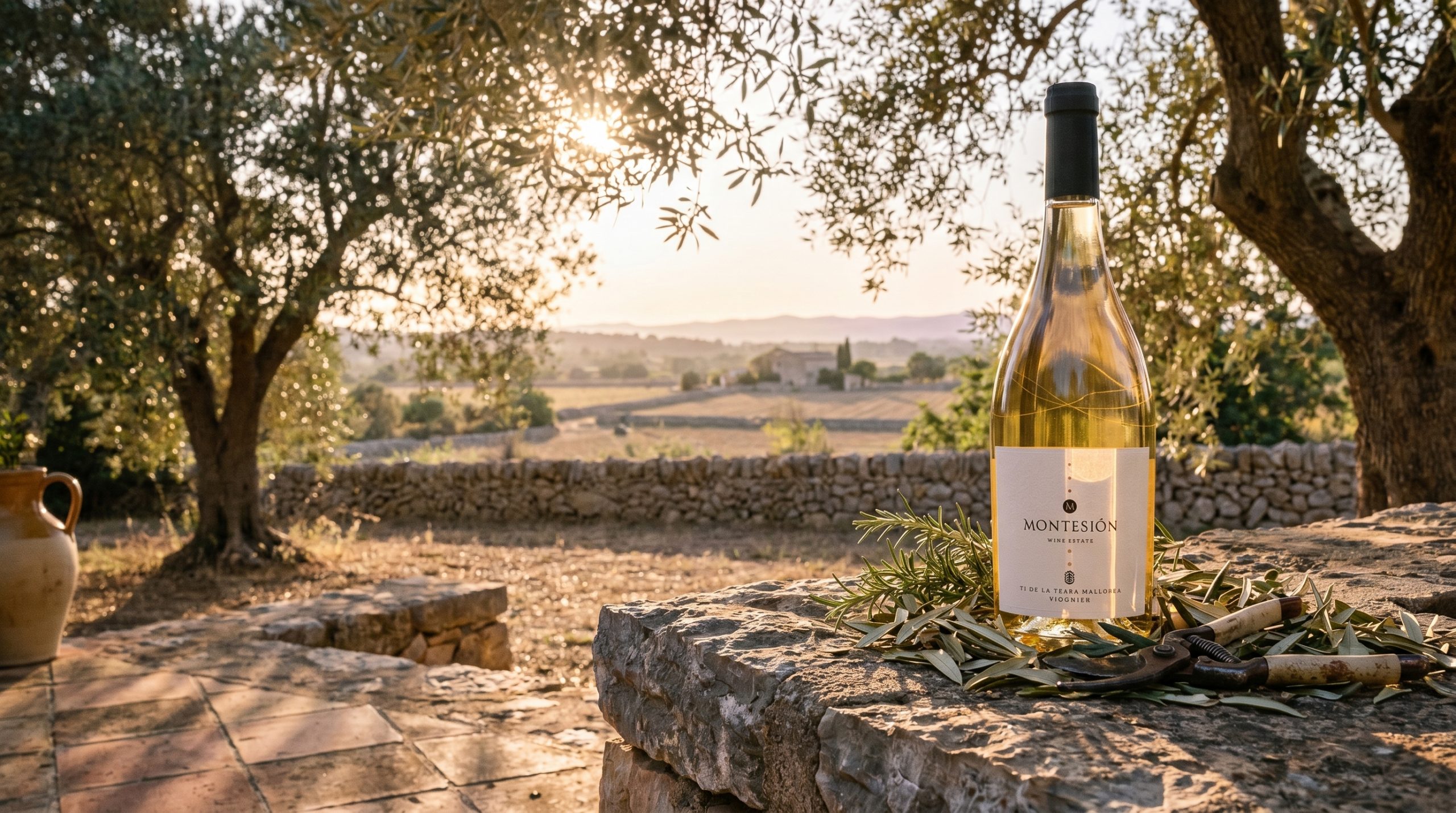
Cultivating indigenous and carefully adapted varieties allows island producers to deliver the elegance demanded by international sommeliers. For instance, white grapes grown under these specific conditions yield vibrant, aromatic expressions without requiring heavy manipulation. A perfect example of this refined style is the Montesión Viognier 2025, which captures the aromatic lushness and floral notes of the estate while maintaining a balanced, fresh profile at 13% volume. Such bottles illustrate exactly how meticulous vineyard management translates into the glass.
Therefore, Mallorca wine perfectly bridges the gap between historical Spanish viticulture and modern consumer expectations. The combination of strict Demeter certification standards and unique island microclimates creates a compelling narrative for buyers. Ultimately, these terroir-driven approaches ensure that the resulting vintages display the purity and finesse required to succeed in highly competitive export environments.
What Role Does Sustainable Packaging Play in Spanish Wine Exports?
Beyond the liquid itself, the physical presentation of premium bottles has undergone a radical transformation. British buyers at recent trade fairs explicitly rejected the heavy glass formats previously associated with luxury and prestige. Instead, these importers mandate sustainable packaging solutions to meet strict corporate carbon reduction targets. This logistical shift forces estates to rethink their entire bottling strategy to remain viable in the export sector.
Lighter bottles significantly reduce transportation emissions, aligning perfectly with the ethos of organic wine Spain produces today. Furthermore, modern consumers perceive excessive packaging as environmentally irresponsible rather than luxurious. Estates that embrace minimalist, lightweight glass instantly communicate their commitment to holistic sustainability. Consequently, the transition away from heavy materials represents a critical commercial advantage rather than merely an ecological choice.
| Packaging Element | Traditional Premium Format | Modern Sustainable Format |
|---|---|---|
| Empty Bottle Weight | 800g – 1200g | 390g – 450g |
| Carbon Footprint | Extremely high during transport | Significantly reduced emissions |
| Buyer Perception | Outdated, ecologically harmful | Progressive, environmentally conscious |
Therefore, integrating sustainable logistics serves as the necessary step for producers targeting international growth. Merely farming ecologically is no longer sufficient if the delivery mechanism damages the environment. Ultimately, the entire product lifecycle must reflect the regenerative principles practiced within the vineyard boundaries.
The Future of Ecological Viticulture in International Markets
The clear signals from recent trade exhibitions demonstrate that the global wine industry is undergoing a permanent evolution. British importers have firmly established that elegance, ecological responsibility, and minimal intervention now dictate premium purchasing decisions. Consequently, producers who cling to heavy extraction and unsustainable packaging will face increasing challenges in securing export agreements.
Several critical takeaways emerge from these shifting commercial dynamics. First, the demand for authentic, terroir-driven bottles continues to accelerate rapidly across Northern Europe. Second, indigenous grape varieties offer a distinct commercial advantage by providing unique, irreplicable flavor profiles. Finally, holistic sustainability must extend beyond the vineyard to include lightweight, environmentally conscious packaging solutions.
These market realities validate the rigorous, labor-intensive practices upheld by dedicated regenerative estates. By committing strictly to Demeter certification standards, producers ensure their vineyards remain vibrant and resilient. Ultimately, the meticulous care applied to island soils translates directly into the refined, elegant vintages that international connoisseurs now actively seek.
Frequently Asked Questions
What defines a biodynamic wine in the modern market?
A biodynamic wine originates from a vineyard managed as a completely self-sustaining, living ecosystem without any synthetic chemicals. Farmers utilize specific herbal preparations and align their agricultural activities with lunar and cosmic cycles to enhance soil vitality. Consequently, this holistic approach fosters deep root growth and produces grapes that vividly express their specific geographic origin. Furthermore, strict certification bodies ensure that these rigorous regenerative practices are maintained from the soil to the final bottling process.
Why are UK wine market trends shifting toward lighter styles?
British consumers increasingly prefer lighter, more elegant vintages due to evolving dietary habits and a growing awareness of alcohol consumption. Heavy, highly oaked bottles often overwhelm modern, vegetable-forward cuisine and lighter protein dishes. Therefore, importers now actively source bottles with vibrant acidity, lower alcohol by volume, and minimal oak interference. This stylistic pivot reflects a broader cultural movement toward freshness, authenticity, and unmanipulated agricultural products in the premium dining sector.
What makes Mallorca wine unique for international buyers?
The distinct maritime climate and mineral-rich soils create a terroir that cannot be replicated anywhere else, elevating the status of Balearic Islands wine globally. Constant sea breezes naturally cool the vines during hot summers, preserving crucial acidity and preventing the over-ripening of the grapes. Additionally, the cultivation of ancient indigenous varieties like Callet and Prensal Blanc offers highly original flavor profiles. Therefore, these island vintages provide the exact combination of elegance, freshness, and unique storytelling that top-tier international importers currently demand.
