
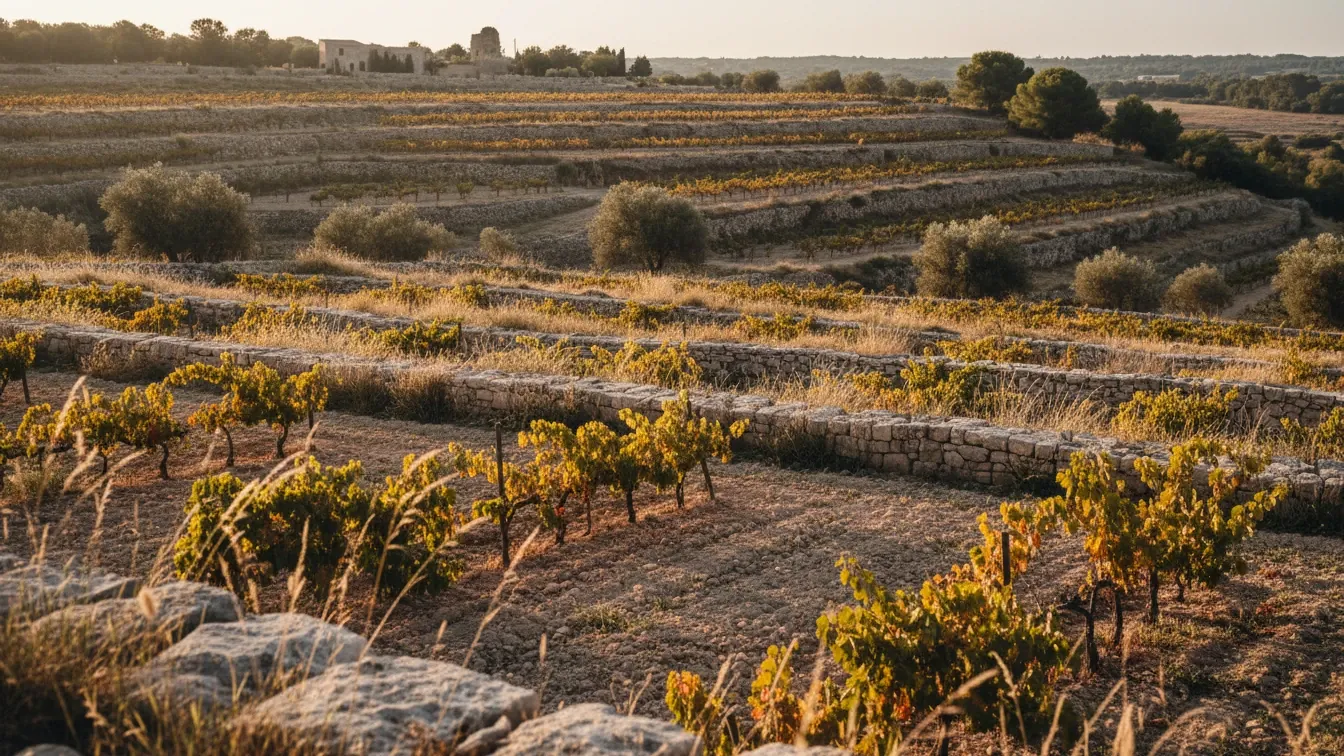
Sustainable wineries are wine estates that reduce environmental impact through farming, architecture, and production for healthier vineyards and more distinctive wine. In Mallorca, this approach connects local stone, renewable energy, gravity-fed cellars, and native Mediterranean conditions. The result is a more complete wine experience, where the building and landscape explain as much as the bottle. Montesion Wine Estate reflects this joined-up approach through its connection to land, wine, and place.
A decade of focused work by Mallorcan farmers, chefs, and vintners has changed how visitors understand the island’s wine. The shift is not only about avoiding synthetic chemicals. It also concerns energy use, water, soil health, local materials, and the relationship between a winery and its surroundings. View Mallorca’s selection of four destination-worthy estates captures this movement across several parts of the island. This article explains what makes these estates notable, how their methods differ, and why architecture can shape the taste of place.
What makes sustainable wineries different?
Sustainable wineries treat wine production as a connected system. Vineyard work, cellar design, packaging, transport, and hospitality all affect the estate’s footprint. A winery may use renewable energy, reduce chemical inputs, reuse natural warmth, or design its building to need less mechanical cooling. These decisions often improve efficiency while preserving the character of the site.
However, sustainability does not mean that every estate follows the same recipe. Organic farming focuses mainly on permitted agricultural inputs and soil management. Biodynamic wine goes further by treating the vineyard as a living ecosystem, often following Demeter standards and seasonal preparations. A winery can also use sustainable architecture without holding an organic or biodynamic certification.
How can architecture improve Mallorca wine production?
In Mallorca, architecture must answer practical problems created by heat, sunlight, and scarce water. Thick local stone can moderate temperature, while underground rooms provide stable conditions for ageing. Buildings that follow the slope of the land can reduce excavation and blend more naturally into the landscape. As a result, the cellar becomes part of the winemaking method rather than a separate industrial space.
The four estates selected by View Mallorca show different solutions. The first estate opened a new cellar in 2019 after more than three centuries of family production. Designed by Rafael Moneo’s studio, the building uses local stone, a gabled roof, and an underground barrel room. The second estate, founded in 2013 near Binissalem, combines solar panels and geothermal energy with a layout that follows the movement of grapes through production.
The third estate takes the idea of integration further. Its cellar sits inside an abandoned stone quarry, using the existing terrain as both architecture and thermal protection. The fourth estate, established in 2001 in Puigpunyent, uses gravity rather than pumps and adds solar panels to meet the estate’s energy needs. These details show why Mallorca wine can express its place through design as well as through grape variety.
Which four estates show the island’s new direction?
Each estate offers a different answer to the same question: how can modern wine production respect an older landscape? The first estate combines a 1711 foundation with a contemporary cellar. The second estate brings renewable energy and natural production methods to a small estate near Binissalem. The third estate links winegrowing with an estate history reaching back nearly 800 years. The fourth estate pairs French expertise with sloping Mallorcan vineyards planted for Cabernet Sauvignon and Merlot.
These figures are more than interesting dates. They reveal four different relationships with time. The first estate represents continuity, the second represents recent experimentation, the third reconnects agriculture with historic land use, and the fourth shows how an international style can adapt to local soil and climate. Together, they form a useful map for understanding wine activities in Mallorca beyond a conventional tasting room.
| Estate | Specific detail | Sustainable feature |
|---|---|---|
| First estate | Founded in 1711 | Local stone and underground barrel ageing |
| Second estate | Founded in 2013; seven hectares | Solar and geothermal energy |
| Third estate | Nearly 800 years of estate history | Cellar built into a former quarry |
| Fourth estate | Founded in 2001; cellar opened in 2016 | Gravity-led production and solar power |
Organic, natural, and biodynamic: what is the difference?
These terms overlap, but they should not be treated as synonyms. Organic wine Spain searches often combine certified farming with broader ideas about clean production. Yet organic certification primarily concerns how grapes are grown and which inputs are allowed. Natural wine usually describes a low-intervention cellar philosophy, although legal definitions vary between regions and producers.
Biodynamic farming considers the vineyard, soil, animals, plants, and seasonal cycles as one living unit. Demeter certification adds defined standards and regular oversight. The second estate’s reported focus on chemical-free grapes and healthy soils illustrates the natural and organic side of the conversation. The fourth estate represents the biodynamic direction, while the broader selection demonstrates that energy-efficient architecture can support either approach.
The distinction matters when comparing estates. A solar-powered cellar is not automatically organic, and an organic vineyard may still operate in an energy-intensive building. Visitors who understand these differences can judge a winery more accurately. They can also appreciate why the most convincing estates align farming, cellar practice, and architecture instead of relying on one environmental claim.
What does a sustainable wine taste like?
Sustainability does not create one universal flavour. Taste still depends on grape variety, soil, harvest conditions, fermentation, ageing, and the winemaker’s choices. Callet and Prensal Blanc express Mallorca differently from Cabernet Sauvignon or Merlot. Heat can build ripeness, while elevation, wind, and limestone or mineral soils can preserve freshness.
A bottle from a biodynamic or organic estate may taste precise, textured, or deeply regional, but those qualities are not proof of a particular farming method. For a full-bodied example, Montesión Selección Privada 2021 offers intense colour, firm tannins, and a velvety texture. Its character suits the kind of slow tasting that encourages attention to structure rather than simple fruitiness.
That approach also changes the meaning of the best wine in Mallorca. The “best” bottle depends on the occasion, food, vintage, and desired style. A fresh white may suit seafood and warm coastal light, while a structured red can match a winter meal. Sustainable production adds context, but it never replaces balance, freshness, and pleasure in the glass.
What are the advantages and limitations?
The advantages are practical as well as philosophical. Lower energy demand can reduce operating costs, while local materials can connect a building to its setting. Healthier soils may support resilience during dry periods, and biodiversity can strengthen the wider vineyard ecosystem. Visitors also gain a clearer understanding of how agriculture, architecture, and wine interact.
Nevertheless, sustainable production has limits. Solar panels do not remove the need for water management, and organic farming can require more labour or careful vineyard observation. Gravity-fed cellars may reduce pumping, but they can demand complex construction and steep site conditions. Certification also cannot measure every aspect of transport, glass weight, tourism, or distribution.
A thoughtful assessment therefore asks several questions:
- Which farming standards does the estate follow?
- How does the cellar reduce energy or water use?
- Does the architecture respond to the local climate?
- Are the claims supported by certification or clear production details?
- How does the wine express its grape variety and place?
Why does this movement matter for the Balearic Islands?
The rise of sustainable estates gives the Balearic Islands wine sector a stronger identity. Mallorca is not merely a sunny destination with vineyards scattered across the countryside. It is developing a model that joins local varieties, modern engineering, renewable power, and respect for traditional building materials. That combination makes the island’s wine culture more distinctive and more credible.
The four estates also show that innovation does not require abandoning history. A family cellar founded in 1711 can modernise without losing its roots. A new winery can use geothermal energy while remaining visually tied to Mallorcan stone. A biodynamic estate can apply gravity-led production to reduce unnecessary movement and energy use. For Montesion Wine Estate, a Demeter-certified estate working with Mediterranean varieties such as Callet, Prensal Blanc, and Viognier, this joined-up thinking offers a particularly relevant benchmark.
Ultimately, the strongest sustainable wineries make their claims visible in the vineyard, the cellar, and the glass. Their architecture protects resources, their farming respects living soil, and their wines retain a sense of place. Mallorca’s next chapter will be judged not by novelty alone, but by whether these choices remain practical, transparent, and expressive over time. Montesion Wine Estate demonstrates how that connection can remain rooted in the island’s landscape.
Frequently asked questions
What are sustainable wineries?
Sustainable wineries are estates that reduce environmental impact across farming, building design, energy use, water management, and winemaking. They may use solar power, local materials, efficient cellar systems, or practices that support soil and biodiversity. Sustainability is broader than organic certification because it considers the whole production system.
Are organic and biodynamic wine the same?
Organic and biodynamic wine are related but not identical. Organic farming restricts certain synthetic inputs and establishes rules for vineyard management, while biodynamic farming treats the estate as a connected ecological system and may follow Demeter standards. A winery can be organic without being biodynamic, and a sustainable building does not automatically prove either certification.
Which Mallorcan wineries use sustainable architecture?
The four estates described by View Mallorca are notable examples. Their features include local stone, underground ageing, solar and geothermal energy, gravity-led production, and a cellar built into a former quarry. Each estate uses a different architectural response to Mallorca’s climate and landscape.
Does sustainable production change the flavour of wine?
Sustainable production can support healthier soils, better vineyard resilience, and a clearer expression of site, but it does not determine one specific flavour. Variety, climate, harvest timing, fermentation, and ageing remain decisive. The best comparison considers both environmental practice and the wine’s balance, freshness, structure, and regional character.
