
Earning Demeter certification now requires viticulturists to meet strict new 2026 global guidelines focused on enhanced soil carbon sequestration and mandatory biodiversity corridors. Estates like Montesion Wine Estate must dedicate a minimum of 12% of their land to non-productive ecological zones to support local flora and fauna. These updated protocols ensure that biodynamic agriculture actively regenerates ecosystems rather than merely sustaining them.
The conversation around agricultural sustainability shifted fundamentally in early 2026 when Demeter International released its updated global standards. For decades, the baseline for ecological farming centered on removing synthetic chemicals. The new framework demands active ecological restoration. The 2026 mandate requires a definitive pivot toward quantifiable carbon capture and the creation of dedicated wildlife habitats within agricultural spaces. Vineyards face a unique challenge under these updated rules. Monoculture planting has dominated European wine production for centuries, leaving little room for wild ecosystems to thrive alongside the vines. The requirement to convert 12% of estate land into non-productive ecological zones forces a radical redesign of traditional vineyard architecture. While many producers view these Demeter standards 2026 as a formidable hurdle, estates practicing deep ecological integration have anticipated this shift for years. Understanding these new metrics provides essential context for anyone who values the relationship between healthy ecosystems and exceptional agricultural produce.
What Do the Demeter Standards 2026 Actually Require?
The updated regulatory framework issued by Demeter International establishes a rigorous new baseline for biodynamic farming globally. Previous iterations of the certification focused heavily on the application of specific field preparations and the strict prohibition of synthetic fertilizers. The 2026 update introduces mandatory spatial and metric-based requirements that fundamentally alter how an estate manages its physical footprint. At the core of these changes is the 12% biodiversity corridor mandate. Producers can no longer plant vines edge-to-edge across their property lines. They must carve out continuous, non-productive ecological zones that allow native wildlife, insects, and indigenous plant species to move freely through the agricultural landscape. These corridors act as vital arteries for local ecosystems, preventing the biological isolation that typically occurs in conventional farming operations.
Beyond spatial planning, the certification now enforces strict soil carbon sequestration metrics. Estates must demonstrate a measurable year-over-year increase in soil organic matter. This shift from qualitative observation to quantitative measurement ensures that biodynamic wine production genuinely removes carbon from the atmosphere. The new protocols demand meticulous record-keeping and regular soil testing to verify that farming practices actively build topsoil depth and improve subterranean microbial life. The agricultural sector holds immense potential to mitigate climate change through strategic land management. By enforcing these strict carbon metrics, the 2026 guidelines ensure that certified estates function as verified net carbon sinks, actively contributing to global climate mitigation efforts.
The Mechanics of Biodynamic Soil Management
Healthy soil functions as the biological engine of any successful agricultural enterprise, but the new framework demands a deeper understanding of subterranean ecosystems. Biodynamic soil management treats the earth as a living organism requiring specific nourishment and seasonal care. Instead of treating soil simply as a physical anchor for vine roots, the updated guidelines require producers to cultivate complex fungal networks and bacterial communities. The foundation of this approach relies on the precise application of compost preparations, specifically the horn manure preparation known as 500. When applied during descending moon phases, this concentrated humus inoculates the soil with beneficial bacteria that break down organic matter into bioavailable nutrients.
The 2026 guidelines require more frequent and targeted applications of these preparations to accelerate the development of humus, the stable organic fraction of the soil that retains water and stores carbon. This methodology creates a stark contrast with conventional practices that deplete topsoil through chemical intervention and excessive tilling. Even compared to standard regulations for organic wine Spain, the biodynamic approach requires a more active orchestration of natural inputs. Cover cropping becomes a highly strategic exercise. Estates must plant diverse mixtures of legumes, brassicas, and deep-rooting cereals between the vine rows. These specific plant combinations fix atmospheric nitrogen, naturally break up compacted earth, and provide essential biomass that feeds the microbial life below the surface.
Designing Effective Vineyard Biodiversity Corridors
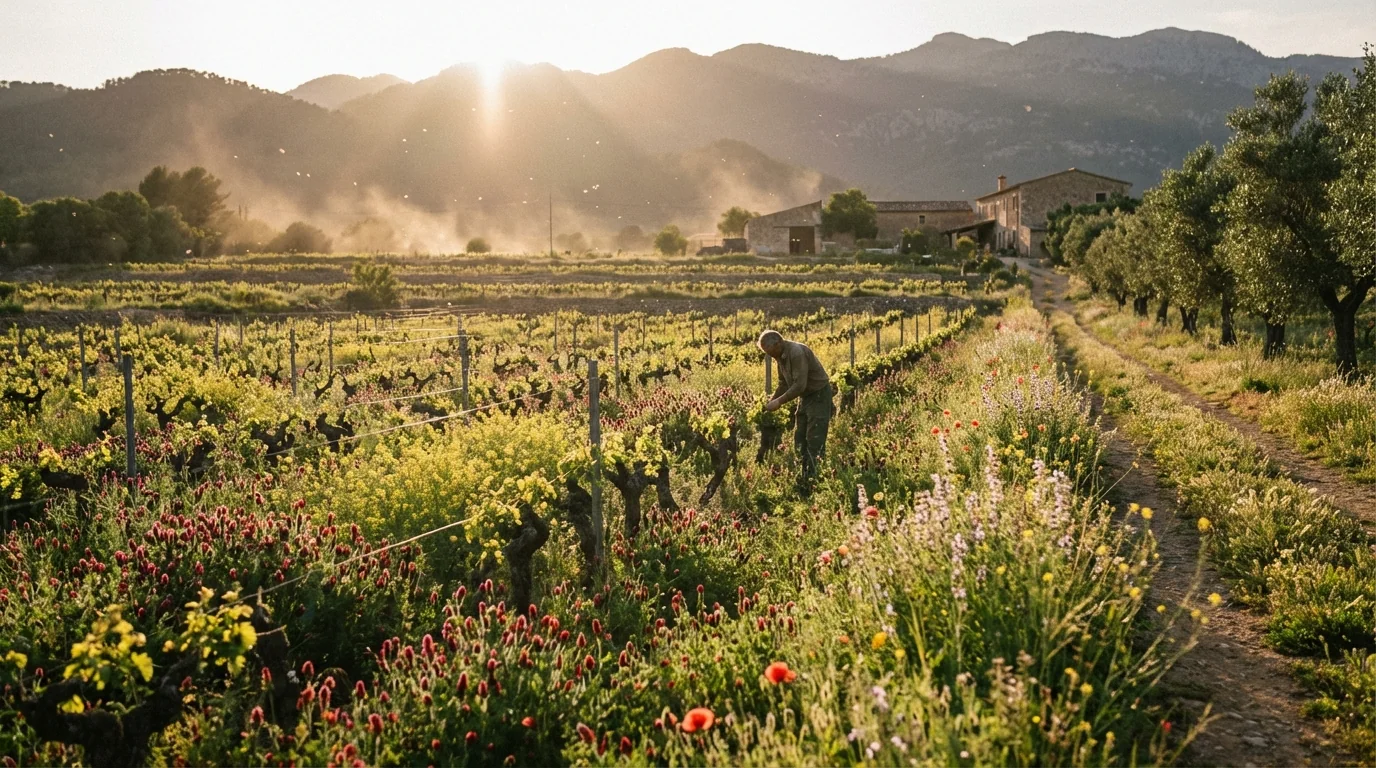
Creating a functional ecological corridor requires far more than simply leaving a patch of land uncultivated. The 12% mandate demands intentional landscape architecture designed to support specific local ecosystems. Vineyard biodiversity relies on the deliberate integration of wild spaces that provide shelter, food, and breeding grounds for beneficial insects, birds, and small mammals. In Mediterranean climates, these corridors often mirror the natural transition zones found in native forests. A properly designed corridor includes a multi-tiered canopy featuring tall indigenous trees, mid-level shrubs, and ground-cover herbaceous plants. This structural complexity creates microclimates that protect sensitive species from extreme summer heat and harsh winds.
The corridors must connect seamlessly across the property, allowing wildlife to traverse the estate without crossing exposed, heavily mechanized areas. The integration of these wild spaces profoundly influences the health of the adjacent vines. Beneficial predators, such as specific wasp species and ladybugs, establish permanent populations in the corridors and naturally control vineyard pests. For producers of Mallorca wine, integrating the native garrigue landscape-characterized by wild rosemary, fennel, and lentisc-into these corridors strengthens the natural resilience of indigenous grape varieties. This symbiotic relationship reduces the need for external interventions and creates a balanced, self-regulating agricultural environment that thrives without synthetic chemicals.
Comparing Regenerative Viticulture Standards
Understanding the nuances between different agricultural certifications helps clarify the rigor of the new 2026 guidelines. While terms like natural wine and organic farming frequently overlap in consumer discussions, the regulatory frameworks governing these practices vary significantly in scope and enforcement. Regenerative viticulture focuses specifically on drawing atmospheric carbon down into the soil and keeping it locked there for decades. Achieving these metrics requires a fundamental change in how viticulturists manage the ground beneath their vines.
Traditional farming relies heavily on frequent mechanical tilling to control weeds, a practice that exposes subterranean carbon to oxygen and releases it back into the atmosphere. The new guidelines strongly discourage deep plowing in favor of no-till or minimal-tillage practices, rolling and crimping cover crops to create a protective organic mulch over the soil surface.
| Standard | Biodiversity Requirement | Soil Management Focus | Carbon Metrics |
|---|---|---|---|
| Conventional | None required | Chemical inputs allowed | Not measured |
| EU Organic | Encouraged but not quantified | Prohibits synthetic chemicals | Qualitative observation |
| Demeter (Pre-2026) | 10% ecological reserve | Biodynamic preparations required | Encouraged practices |
| Demeter 2026 | 12% mandatory connected corridors | Strict preparation schedules | Mandatory quantitative growth |
The table illustrates the progression from basic chemical prohibition to active ecological regeneration. Producing authentic vino biodinámico now guarantees that the estate actively contributes to global climate mitigation efforts through precise, scientifically validated carbon farming techniques. The updated Demeter framework demands a holistic commitment to the entire ecosystem, setting a new benchmark for estates producing premium Balearic Islands wine.
Advancing the Future of Mediterranean Terroir
The implementation of the 2026 soil and biodiversity guidelines marks a defining moment for ecological agriculture. By mandating dedicated wildlife corridors and enforcing rigorous carbon sequestration metrics, the updated framework ensures that farming practices actively heal the environment. These protocols elevate the standard for what it means to cultivate land responsibly, moving the industry past simple sustainability into verifiable ecological regeneration. Adapting to these stringent requirements demands significant investment, foresight, and a profound respect for the natural world.
Estates that have spent decades nurturing their soils and protecting native flora will find these new rules validate their long-held philosophies. The mandatory 12% ecological zones and enhanced soil metrics perfectly align with the traditional, integrated farming methods that have historically defined the Mediterranean landscape. This evolution in agricultural standards ultimately serves the consumer by guaranteeing that every bottle represents a verified contribution to environmental health. The commitment to deep root systems, vibrant microbial networks, and thriving wildlife habitats translates directly into agricultural resilience and exceptional quality.
Frequently Asked Questions
What exactly does Demeter certification mean in 2026?
The updated Demeter certification represents the highest global standard for biodynamic agriculture, requiring estates to eliminate synthetic chemicals while actively regenerating their local ecosystems. The 2026 guidelines mandate that farms dedicate a minimum of 12% of their total land to non-productive biodiversity corridors. Additionally, certified properties must prove year-over-year increases in soil carbon sequestration through strict quantitative measurements.
Why are biodiversity corridors necessary in a vineyard?
Biodiversity corridors provide essential habitats for native wildlife, beneficial insects, and indigenous plant species that cannot survive in a monoculture environment. These connected wild spaces act as natural breeding grounds for predatory insects that control vineyard pests, reducing the need for external agricultural interventions. By maintaining these corridors, estates create a balanced, self-regulating ecosystem that strengthens the overall resilience of the vines.
How do biodynamic practices capture carbon in the soil?
Biodynamic farming captures carbon by utilizing specific compost preparations and maintaining permanent cover crops that draw carbon dioxide from the atmosphere through photosynthesis. Instead of deep tilling, which releases carbon, practitioners use minimal-disturbance techniques to build stable organic matter called humus. This growing layer of humus permanently locks carbon underground while simultaneously improving the soil’s ability to retain water.
What is the difference between organic and biodynamic soil management?
Organic soil management primarily focuses on what a farmer cannot use, strictly prohibiting synthetic fertilizers, herbicides, and pesticides to prevent environmental contamination. Biodynamic management operates as an active, regenerative system requiring the application of specific fermented herbal and mineral preparations to stimulate subterranean microbial life. The 2026 biodynamic standards also enforce strict quantitative metrics for carbon capture and mandatory spatial planning for wildlife, which go far beyond baseline organic rules.
