
The future of biodynamic wine tourism lies far beyond simple tasting rooms; it requires immersing guests directly into a living, breathing agricultural ecosystem. Reading the latest feature on new-wave agriturismo confirmed a philosophy I have championed for years in our own vineyards at Montesion Wine Estate. True luxury hospitality in the wine world is now defined by profound emotional connection, radical transparency, and the preservation of ancestral farming landscapes.
When the April 2026 issue of a leading industry magazine landed on my desk, highlighting the global rise of “new-wave agriturismo,” a profound sense of validation washed over me. For over a decade, I have watched the traditional hospitality model struggle to convey the sheer vitality of a Demeter-certified farm. Visitors no longer want to stand passively at a polished oak bar while someone recites tasting notes. They crave the dirt, the wind, and the tangible energy of a closed-loop ecosystem. Translating our daily reality into luxury wine experiences Spain can be proud of requires a complete reimagining of how we welcome guests. I want to share my perspective on why opening our gates to the public is a fundamental duty to educate, protect our landscape, and communicate the soul of Mallorca wine.
Why Are We Seeing a Shift Toward “New-Wave” Agriturismo?
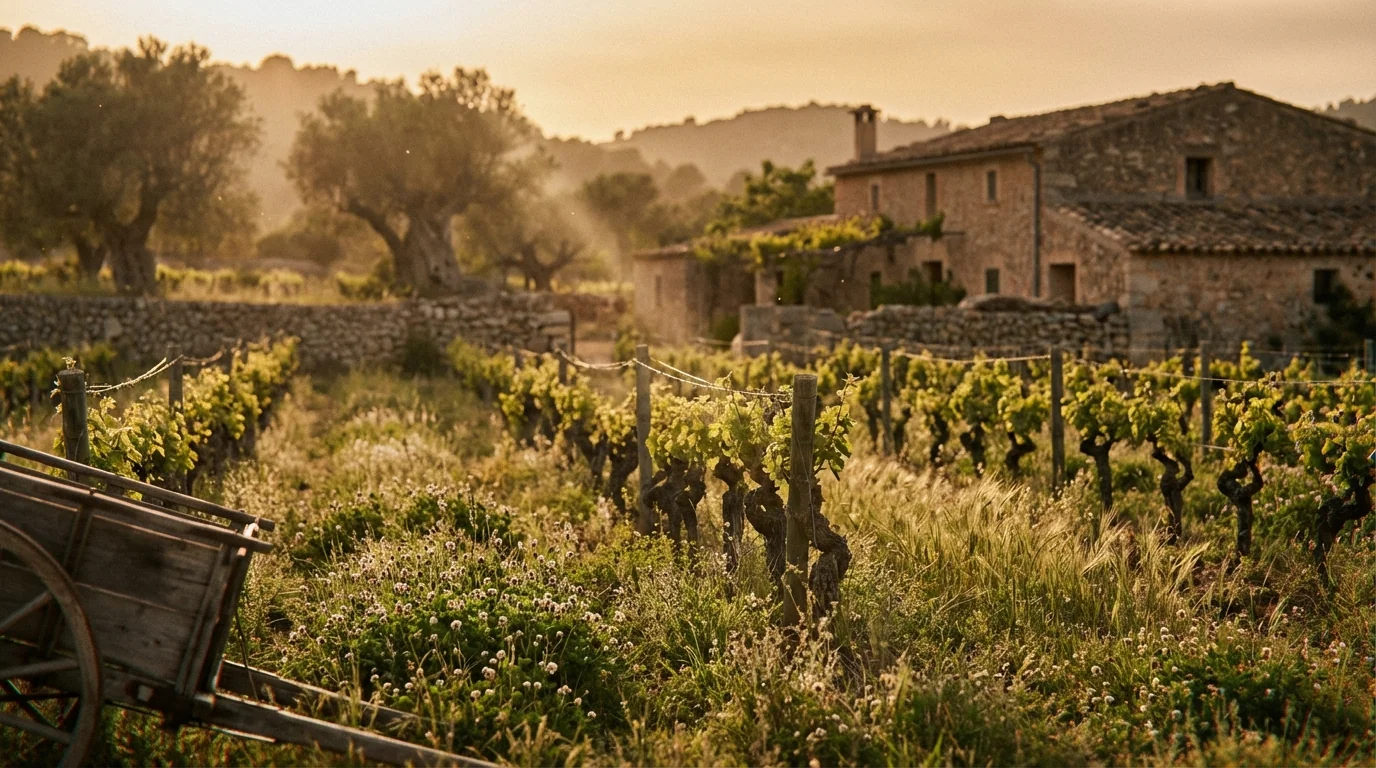
The shift toward new-wave agriturismo stems from a collective fatigue with manufactured luxury. In my daily walks through our Callet and Manto Negro vines, I see an intricate web of life that simply cannot be summarized on a back label. Guests arriving at Montesion Wine Estate sense this immediately. They are stepping into a working organism where cover crops, sheep, and indigenous flora play equal roles alongside the vines.
This evolution matches the ethos of organic wine Spain cultivates. When I design an experience for our guests, my goal is not to sell a bottle, but to forge a lifelong advocate for the soil. We achieve this by dismantling the barrier between the farmer and the consumer. Visitors witness the preparation of composts, the specific timing of our vineyard interventions governed by lunar cycles, and the raw reality of agricultural life. This transparency builds a profound trust.
To understand this transition fully, we must recognize the distinct phases of vineyard hospitality:
- Traditional Cellar Doors: Focused purely on transactional retail and standardized pours.
- Educational Tours: Adding basic cellar walkthroughs and technical explanations of fermentation.
- New-Wave Agriturismo Mallorca: Integrating guests into the farm’s daily rhythms, prioritizing ecosystem education over simple consumption.
How Does Biodynamic Estate Philosophy Translate into Luxury Hospitality?
Integrating a strict biodynamic estate philosophy into a high-end visitor experience is a fascinating challenge. I often explain to our visitors that true luxury is access to the pristine and the authentic. Achieving our Demeter certification was a grueling, transformative process that fundamentally altered how we interact with our environment. When guests visit, they are not just seeing a vineyard; they are stepping into a meticulously balanced sanctuary. The luxury element arises from the exclusivity and intimacy of this access.
I approach our hospitality program exactly as I approach our winemaking: with minimal intervention and maximum respect for the raw materials. Instead of rushing guests through a barrel room, I prefer to walk them through the preparation of horn manure or explain how the surrounding almond and carob trees protect our Prensal Blanc blocks from prevailing winds. This level of granular, passionate detail transforms a simple vacation activity into a masterclass in ecological stewardship.
The contrast between conventional tourism and our approach is stark. While traditional venues focus on transactional bottle sales and manicured landscapes, we prioritize relational ecosystem education within a wild, buzzing, biodiverse environment. We replace scripted tasting flights with seasonal, weather-dependent farm immersions. By treating our visitors as temporary custodians of the land rather than mere consumers, we elevate the entire concept of Balearic Islands wine. They leave with a visceral understanding of why a natural wine tastes a certain way, carrying the memory of the soil back home with them.
What Does the Future Hold for Sustainable Wine Tourism in the Balearics?
Looking ahead, I firmly believe that sustainable wine tourism will become the definitive hallmark of Mediterranean travel. The Balearic Islands possess a fragile, breathtaking geography that demands rigorous protection. My vision for the future of our local industry involves a radical reduction in visitor volume paired with a dramatic increase in visitor engagement. We must move away from the bus-tour mentality and embrace hyper-personalized, low-impact encounters that respect the carrying capacity of our land.
I spend a considerable amount of time analyzing how we can lower the carbon footprint of our hospitality operations while deepening the emotional resonance of the visit. This means sourcing every element of our tasting pairings from neighboring regenerative farms, utilizing solar energy for our guest facilities, and ensuring our water management systems are entirely circular. The future consumer of vino biodinámico will demand nothing less than absolute ecological integrity from the estates they choose to patronize.
Guests are booking longer stays, asking sharper questions about soil health, and showing a genuine desire to participate in the manual labor of the harvest. Our indigenous varieties require this precise, attentive audience to be truly understood. The estates that survive and thrive in the coming decades will be those that open their farms not as showrooms, but as classrooms for a better way of living. This is the ultimate promise of biodynamic wine tourism.
The True Value of Sharing Our Living Heritage
Reflecting on the evolution of our industry, the transition toward deeply immersive agricultural hospitality is the most exciting development I have witnessed in my career. Opening our gates to share the raw, unfiltered reality of a working farm fundamentally changes the relationship between the land and the glass. By moving away from transactional tastings, we cultivate a community of educated advocates who understand the immense effort required to produce vibrant, living wines.
The profound silence of a healthy vineyard and the vibrant taste of a wine grown in harmony with its environment offer a sensory richness that no artificial setting can replicate.
My daily commitment to this land goes far beyond the harvest. It is about preserving a Mediterranean agricultural legacy that respects the rhythms of nature. When we pour a glass of our estate-grown biodynamic wine for a guest, we are offering them a distilled expression of our philosophy, our heritage, and our unwavering dedication to the soil of Mallorca.
Frequently Asked Questions
What makes biodynamic wine tourism different from traditional vineyard tours?
In my experience, the fundamental difference lies in the level of immersion and the focus on the entire ecosystem rather than just the final product. When I guide guests through our property, I spend as much time discussing our sheep and cover crops as I do discussing the actual fermentation process.
How does Demeter certification impact the visitor experience on your estate?
Our Demeter certification acts as a guarantee to our guests that they are walking through a completely chemical-free, self-sustaining agricultural environment. I often notice a physical change in visitors when they realize the air, soil, and plants around them are managed with such strict ecological rigor. This certification means our hospitality must align with our farming, ensuring that every aspect of the guest experience adheres to the highest possible standards of environmental stewardship.
Can I taste the difference between conventional and biodynamic wines during a visit?
I always tell my guests that tasting the wine directly on the soil where it was grown is the only true way to understand its energy. Wines produced under our philosophy, particularly those made from indigenous grapes like Manto Negro or Callet, possess a specific tension, vibrancy, and aromatic clarity that I rarely find in conventionally farmed bottles. When you taste these wines while standing amidst the buzzing, wild biodiversity of the vineyard, the connection between the health of the soil and the purity of the flavor becomes undeniable.
