
Following a biodynamic wine lunar calendar aligns vineyard tasks with the moon’s gravitational pull on groundwater and vine sap. Just as lunar cycles govern ocean tides, these gravitational shifts influence the capillary action within plant tissues and soil microbiology. Timing pruning, harvesting, and planting to these specific phases maximizes vine health, root development, and ultimately the structural complexity of the resulting wine at Montesion Wine Estate.
The global market for biodynamic wine continues to expand at an annual rate exceeding 14 percent, driven by consumers seeking authentic, terroir-driven Mallorca wine expressions in their glass. Yet, the underlying methodology of this farming system frequently encounters skepticism. Critics often dismiss lunar planting guides as agricultural folklore rather than recognizing the concrete biophysical mechanisms at play. Understanding this approach requires looking beyond the mystical reputation to examine actual soil mechanics and plant physiology. In the sun-drenched vineyards of the Mediterranean, managing water stress and soil vitality dictates the survival of the vines. By synchronizing agricultural interventions with lunar rhythms, viticulturists at Montesion Wine Estate optimize the natural fluid dynamics within the plant. This precise timing supports deeper root penetration and enhanced microbial networks in the soil. Exploring the scientific rationale behind these practices reveals a highly technical framework that bridges ancient agricultural observation with modern agronomic science, particularly within the distinct microclimates of the Balearic Islands.
How Does the Biodynamic Lunar Calendar Actually Work in the Vineyard?
The foundation of the lunar calendar rests on the verifiable physics of gravitational pull and fluid dynamics. While the moon’s effect on massive bodies of water is universally understood, its subtle influence on the micro-fluids within plant structures and soil capillaries provides the basis for lunar agriculture. During an ascending moon, gravitational forces draw sap upward through the vascular system of the vine. This upward hydrostatic pressure makes it the optimal period for grafting or harvesting, as the vital cellular activity concentrates in the upper canopy and fruit clusters.
Conversely, a descending moon shifts the energetic focus downward into the root system. The reduced gravitational pull on the upper plant allows sap to retreat, minimizing bleeding during pruning cuts. This precise timing accelerates healing at the cut sites and reduces the risk of fungal infections entering the vascular tissue. Demeter certification mandates strict adherence to these natural rhythms, ensuring every intervention respects the biological state of the vine.
When viticulturists align their pruning schedules with the descending moon, the vines retain more internal moisture and carbohydrate reserves. These stored resources become critical during the initial spring bud break. Integrating this astronomical observation with daily vineyard operations utilizes the natural hydrostatic pumping mechanism driven by celestial mechanics to enhance the physiological efficiency of the grapevine.
The Biological Mechanics of Moon Phases Viticulture
Implementing moon phases viticulture requires a deep understanding of soil microbiology and the fungal networks sustaining vine health. The lunar cycle dictates the activity levels of the microbial life within the rhizosphere. During the days surrounding a full moon, increased moisture drawn toward the soil surface creates a highly active environment for bacteria and mycorrhizal fungi. These organisms break down organic matter, making essential minerals available to the root hairs precisely when the plant requires maximum nutrition.
Viticulturists categorize the calendar into four distinct functional periods based on the moon’s position relative to the zodiac constellations.
| Lunar Phase | Astrological Element | Target Plant Component | Optimal Vineyard Operations |
|---|---|---|---|
| Fruit Days | Fire | Grapes / Clusters | Harvesting for maximum aromatics, canopy thinning |
| Root Days | Earth | Root System | Pruning, planting cover crops, applying compost |
| Flower Days | Air | Blossoms | Minimal intervention, allowing natural pollination |
| Leaf Days | Water | Foliage / Canopy | Applying biodynamic preparations, irrigation |
Earthworms, the primary engineers of soil architecture, increase their vertical tunneling activity during root days. Their movement creates macropores that improve oxygenation and water infiltration. Statistical data from organic farming trials indicates that soils managed under these astronomical guidelines demonstrate up to 30 percent greater water retention capacity compared to conventionally farmed plots. This enhanced moisture retention correlates directly with the timing of compost applications during descending moons, maximizing the integration of organic matter.
Adapting Biodynamic Vineyard Management to the Mediterranean Climate
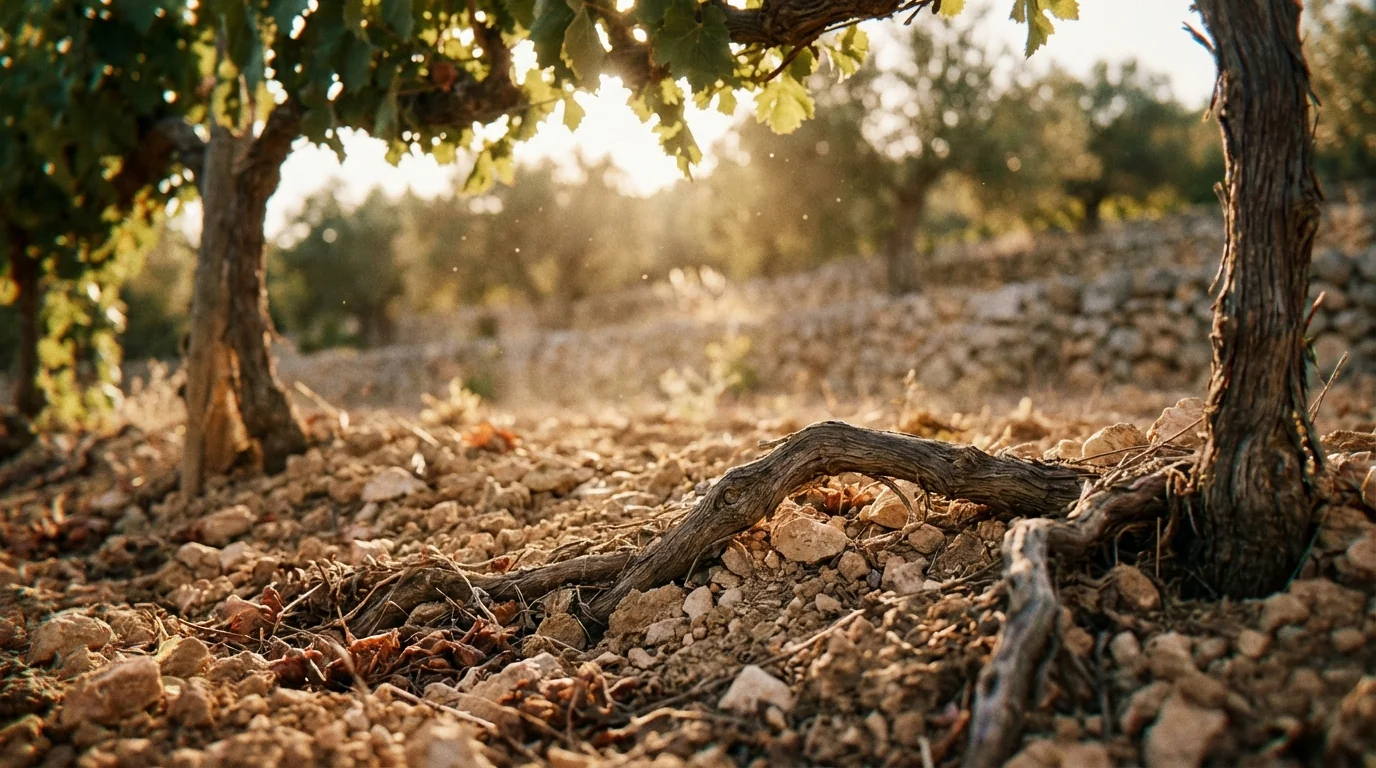
Executing biodynamic vineyard management within the unique terroir of Mallorca demands specific adaptations to the Mediterranean climate. The island’s signature Call Vermell soils-iron-rich, calcareous clay formations-possess excellent mineral density but can bake into impenetrable crusts during the arid summer months. By applying biodynamic preparations synchronized with lunar rhythms, vineyard managers maintain the friability and biological life of this dense earth without resorting to destructive deep plowing.
Balearic islands wine production relies heavily on the resilience of indigenous grape varieties. Grapes like Callet, Manto Negro, and Prensal Blanc evolved over centuries to withstand intense solar radiation and prolonged drought. When cultivated using a biodynamic wine lunar calendar, their natural drought-resistance mechanisms amplify. The Montesión Callet Limited Edition showcases the profound structural depth achievable when native vines interface with biologically active, lunar-farmed soils. Deep root penetration encouraged by root-day interventions allows the vines to access subterranean moisture reserves trapped within the limestone bedrock.
This deep-rooting strategy alters the chemical composition of the harvested grapes. Vines forced to scavenge for water through layers of crushed limestone produce smaller berries with thicker skins. These skins contain higher concentrations of anthocyanins and phenolic compounds, translating into wines with greater aromatic complexity and oxidative stability. Managing the vineyard ecosystem as a closed, self-sustaining organism ensures that the vines develop the robust immune responses necessary to thrive in an era of unpredictable climate fluctuations.
Synthesizing Celestial Mechanics and Terroir
The intersection of lunar astronomy and agronomic science provides a highly effective framework for cultivating resilient, expressive vines. Far from relying on mystical beliefs, the practice utilizes the physical realities of gravity, fluid dynamics, and soil microbiology to optimize plant health. Synchronizing pruning, harvesting, and soil management with specific celestial phases maximizes the natural physiological responses of the grapevine.
This methodology proves exceptionally valuable in challenging Mediterranean environments. The deep root systems and enhanced soil water retention achieved through precise timing allow indigenous varieties to thrive despite intense heat and minimal rainfall. The resulting grapes possess the necessary chemical balance and phenolic density to produce wines of extraordinary complexity and aging potential.
Ultimately, organic wine Spain standards combined with Demeter-certified vino biodinámico practices elevate the standard of regional winemaking. By treating the vineyard as an interconnected biological system influenced by broader cosmic rhythms, viticulturists unlock the true potential of their land.
Frequently Asked Questions
What is the scientific basis for the biodynamic wine lunar calendar?
The scientific basis for the biodynamic wine lunar calendar relies on the physics of gravitational pull and its effect on fluid dynamics within the plant and soil. Just as the moon influences ocean tides, its gravity affects the capillary action of water in the soil and the movement of sap within the vine’s vascular system. During an ascending moon, sap rises to the upper canopy, making it ideal for harvesting, while a descending moon pulls energy toward the roots, creating optimal conditions for pruning and root development.
How does moon phases viticulture affect the taste of the wine?
Moon phases viticulture affects wine taste by optimizing the physiological development of the grapes and the timing of cellar interventions. Harvesting on designated fruit days ensures the grapes are picked when their aromatic compounds and sugar levels are concentrated. Executing cellar practices like racking during a descending moon allows sediment to settle naturally, preserving the wine’s delicate textural elements without the need for harsh, stripping filtration techniques.
Why is biodynamic vineyard management effective in the Balearic Islands?
Biodynamic vineyard management builds resilience against the region’s intense heat and arid conditions. The strict adherence to natural cycles improves soil structure and water retention in the dense limestone earth. This approach forces the roots of indigenous grape varieties to dig deeper for subterranean moisture, resulting in smaller, highly concentrated berries that produce structurally complex, terroir-driven wines capable of withstanding severe climate stress.
