
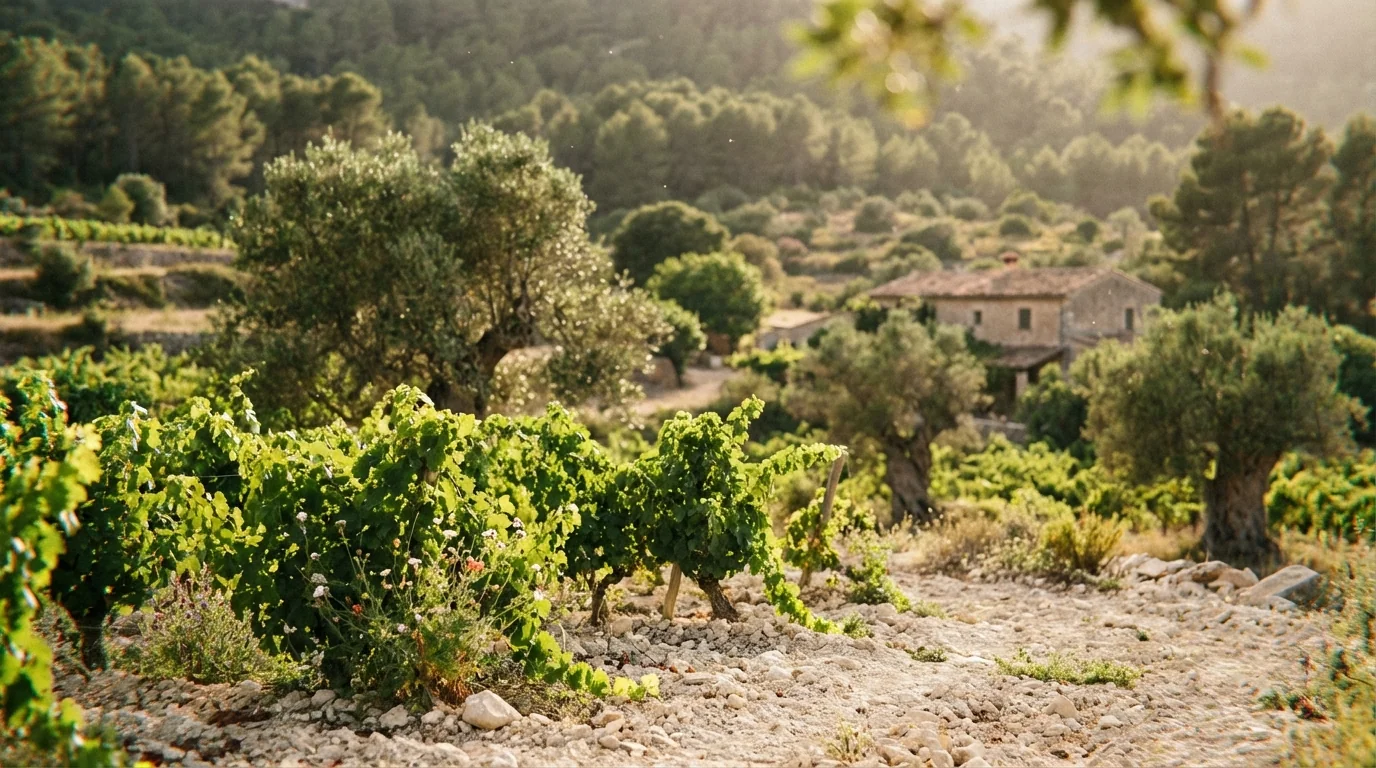
The recent €2.5 million funding initiative from the Balearic government accelerates the transition toward biodynamic wine Mallorca production. This strategic financial support specifically targets vineyards adopting Demeter-certified practices by 2026 to combat regional climate stress and soil degradation. For established estates like Montesion Wine Estate, this validates a long-standing commitment to ecological balance and positions the island as a premier Mediterranean hub for regenerative agriculture.
Agricultural policy across the Mediterranean basin is undergoing a rapid transformation, driven by the escalating pressures of prolonged droughts and rising average temperatures. The announcement of a €2.5 million strategic fund by the Govern de les Illes Balears signals a definitive pivot from conventional farming toward stringent ecological standards. This capital injection subsidizes the multi-year conversion process required for vineyards to achieve official biodynamic status.
Transitioning a conventional vineyard demands significant upfront investment and temporary yield reductions, creating a financial barrier for many regional producers. By offsetting these initial costs, the regional government is placing a massive bet on premium, terroir-driven viticulture. Readers will understand how this institutional backing alters the competitive landscape, elevates the baseline quality of local vintages, and reinforces the commercial viability of working in harmony with natural lunar cycles at Montesion Wine Estate.
Decoding the New Balearic Islands Wine Subsidies for 2026
The introduction of the €2.5 million strategic fund represents a watershed moment for agricultural economics in the archipelago. Historically, financial support for local agriculture focused heavily on basic infrastructure improvements and general modernization. The current framework deliberately narrows its focus, allocating capital exclusively to producers committing to the rigorous transition required for official biodynamic recognition. This targeted approach aims to increase the total acreage of certified regenerative viticulture Mallorca by 40% before the close of 2026.
Such institutional backing validates the methodology of estates that adopted these practices long before governmental incentives existed. Converting a vineyard involves far more than eliminating synthetic pesticides; it requires the implementation of closed-loop ecosystems, the integration of animal husbandry, and the precise application of specific organic preparations. The financial architecture of the new subsidy program acknowledges these operational complexities by distributing funds across the critical three-year conversion window, cushioning the inevitable temporary drop in harvest volumes.
| Viticulture Model | Average Conversion Time | Soil Organic Matter | Market Premium Potential |
|---|---|---|---|
| Conventional Farming | Immediate | Declining (< 2%) | Baseline |
| Standard Organic | 3 Years | Stable (2 – 3%) | + 15% |
| Certified Biodynamic | 3 – 5 Years | Increasing (> 4%) | + 30% |
This data underscores why the government is prioritizing premium ecological models. Elevating the soil organic matter sequesters carbon and fundamentally alters the flavor profile of the resulting vintages.
How Demeter Certification Spain Defines the New Standard of Excellence
Securing official recognition from the governing body of biodynamic agriculture remains one of the most challenging achievements in the global wine industry. The rigorous standards set by Demeter certification Spain go far beyond the baseline requirements for organic farming, demanding a holistic approach where the vineyard functions as a self-sustaining organism. This new €2.5 million fund directly subsidizes the administrative and operational costs associated with meeting these exact criteria, effectively making the highest tier of sustainable wine production accessible to a broader range of local vintners.
For estates that have already navigated this arduous process, the government’s initiative serves as a powerful market validation. The certification guarantees consumers that the wine in their glass is the product of an environment free from chemical intervention, where soil vitality is actively regenerated rather than merely maintained. A comparative analysis of market metrics illustrates the economic rationale driving this legislative push.
Cultivating Climate Resilience Through Indigenous Varietals
The intersection of targeted financial subsidies and ancestral farming techniques provides a robust defense against the increasing volatility of Mediterranean weather patterns. While modern irrigation technology offers temporary relief from drought, true climate resilience stems from deep-rooted vines accessing moisture preserved within healthy, structurally sound soil. Biodynamic preparations actively stimulate microbial life, dramatically increasing the earth’s capacity to act as a natural sponge during rare, intense rainfall events.
This ecological approach proves particularly effective when paired with indigenous grape varieties that have adapted to the island’s specific microclimates over centuries. Grapes like Callet, Prensal Blanc, and Viognier demonstrate remarkable natural resistance to heat stress when cultivated in living soils. The expression found in a Montesión Callet Limited Edition 2007 demonstrates the profound depth and balance achievable when native vines are managed without synthetic inputs. The root systems of these local varieties delve deep into the calcareous rock, extracting distinct mineral profiles that define the quintessential Mallorca wine experience.
The synergy between native genetics and regenerative farming creates a superior product that stands out in the competitive landscape of organic wine Spain. As more vineyards transition away from conventional methods, the entire region benefits from a collective reduction in chemical runoff and an increase in biodiversity.
Securing the Future of Mediterranean Terroir
The injection of €2.5 million into the local agricultural sector represents a definitive mandate for ecological preservation. The Balearic government has drawn a clear line, identifying rigorous regenerative practices as the sole viable path forward for the island’s viticulture. This policy shift guarantees that the total acreage dedicated to vino biodinámico will expand significantly over the next four years.
Several critical transformations will emerge from this initiative. First, the financial barrier to entry for achieving top-tier ecological certification has been lowered for smaller producers. Second, the widespread adoption of soil regeneration techniques will drastically reduce regional vulnerability to prolonged drought conditions. Third, the global market positioning of local vintages will shift upward, commanding higher premiums based on documented sustainability metrics.
For established estates operating under these stringent philosophies for years, this legislative development validates a long-held vision. The commitment to working in harmony with natural rhythms and nurturing indigenous vines is now the officially recognized standard for the future of the region’s viticulture.
Frequently Asked Questions
What exactly do the new Balearic Islands wine subsidies cover?
The €2.5 million strategic fund subsidizes the financial and operational costs of transitioning a conventional vineyard to a certified biodynamic model. This includes covering the temporary yield reductions during the three-year conversion phase, funding specific ecological preparations, and supporting Demeter certification administrative costs. Ultimately, the initiative targets a 40% increase in total regenerative acreage across the island by 2026.
How does biodynamic wine Mallorca differ from standard organic wine?
While standard organic farming strictly prohibits synthetic pesticides, the biodynamic approach goes further by treating the entire vineyard as a closed-loop, self-sustaining ecosystem. Producers must actively integrate animal husbandry, utilize specialized fermented preparations to enhance soil microbial life, and align planting schedules with lunar cycles. This rigorous methodology results in significantly higher soil organic matter and much greater climate resilience.
Why is Demeter certification Spain considered the highest standard?
Demeter operates as the premier internationally recognized certification body for regenerative agriculture, maintaining ecological standards significantly stricter than basic governmental organic regulations. Achieving this prestigious certification requires passing exhaustive annual audits that meticulously verify every aspect of farm management. This stringent oversight guarantees consumers absolute ecological purity and the complete prohibition of chemical interventions in the cellar.
Can regenerative viticulture Mallorca actually combat climate change?
Yes, transitioning to these advanced ecological farming methods plays a direct role in mitigating severe climate impacts locally. By drastically increasing organic matter within the soil profile, vineyards sequester significantly more atmospheric carbon while vastly improving the earth’s natural water retention capabilities. This enhanced soil structure actively prevents topsoil erosion during heavy rainfall and sustains deep-rooted indigenous vines through prolonged droughts.
