

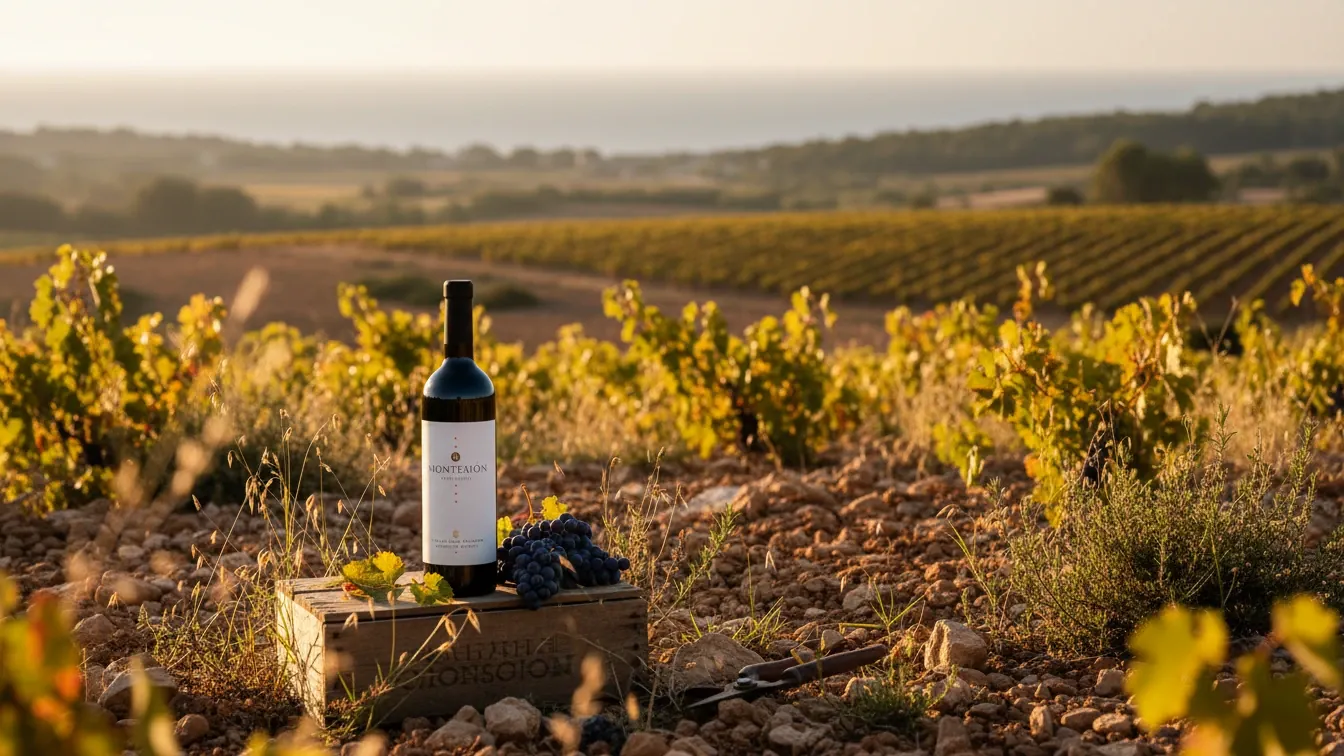
Callet wine is a red wine made from Mallorca’s indigenous Callet grape that expresses the island’s Mediterranean character with freshness and moderate alcohol. This distinctive variety grows well in hot, dry conditions, retaining acidity while developing bright red-fruit aromas. At Montesion Wine Estate, Callet reflects how local grape growing can express Mallorca’s landscape. Its wines can be light and elegant, or deeper and more structured after careful vineyard work and oak ageing.
In Mallorca, one grape can tell the story of an entire landscape. Callet developed through generations of farming in a Mediterranean climate, where summer heat, limited rainfall, and stony soils challenge every vine. Today, interest in Mallorca indigenous grapes is growing because drinkers want wines with a clear sense of place rather than familiar international formulas. Callet answers that desire with a profile that feels both local and surprisingly refined. It usually produces wines with moderate alcohol, soft tannins, and flavours of raspberry, cherry, and blackberry. However, its balance depends strongly on crop control, soil, and harvest timing. This article explains Callet’s origins, characteristics, ideal terroir, winemaking uses, and limitations. It also shows why the variety matters within the wider story of Balearic Islands wine.
What makes Callet wine distinctive in Mallorca?
Callet is a dark-skinned red grape native to Mallorca, particularly associated with the island’s Pla i Llevant region. Its name is often linked to the local word for black, reflecting the colour of its berries rather than an inevitably heavy style. The variety has large, compact bunches and medium to large, round grapes with bluish-black skins. Inside, the pulp has relatively little colour, so the finished wine can appear bright ruby rather than opaque purple.
Unlike many warm-climate grapes, Callet can preserve acidity while reaching phenolic ripeness. That combination gives the wine lift and prevents ripe fruit from becoming heavy. Typical examples show raspberry, cherry, and blackberry, sometimes joined by floral, herbal, or lightly aniseed notes. The body is usually medium, the tannins are moderate, and alcohol can remain near 11.5% to 12% in balanced vineyard conditions. Consequently, Callet often feels closer in spirit to an elegant cool-climate red than to a dense Mediterranean blockbuster.
How do Callet grape characteristics reflect the island climate?
The clearest Callet grape characteristics begin in the vineyard. The variety tolerates heat and drought, yet it does not rapidly accumulate excessive sugar. It also ripens relatively late, which allows growers to preserve acidity during long, bright summers. This timing matters in Mallorca, where daytime temperatures can rise sharply while sea breezes and cooler nights slow the final stage of maturation.
Callet performs particularly well in poor, shallow, stony soils. Fertile ground can encourage too much vegetative growth, leaving the vine with more foliage and fruit than it can ripen evenly. On limestone and rocky sites, the plant must work harder, naturally limiting vigour. That struggle can produce smaller crops with greater aromatic concentration, although old vines and low yields require careful economic and agricultural decisions.
For biodynamic wine producers, the variety offers another advantage. A grape adapted to local heat and water scarcity can reduce pressure on irrigation and chemical intervention. Deep-rooted vines also interact with soil structure and underground microbial life. Still, resilience does not remove the need for skilled canopy management, disease monitoring, and precise picking.
Which soils and vineyard practices suit Callet best?
Callet needs a vineyard that controls vigour without pushing the plant into severe stress. Shallow limestone, gravel, and other stony soils can provide useful drainage and restrict excessive growth. However, a dry site still requires thoughtful observation. Extreme drought may stop ripening rather than improve concentration, especially when vines lack sufficient leaf area to protect their fruit.
Growers therefore manage the canopy to balance sunlight and shade. Too much exposure can intensify heat and dehydrate berries, while dense foliage can delay ripening and encourage disease. The best sites often combine open airflow with enough leaf cover to protect clusters during the hottest weeks. Harvest timing then becomes a decision about flavour, acidity, tannin texture, and alcohol rather than sugar alone.
Three named examples illustrate how the grape can evolve through different approaches:
-
Montesión Callet Limited Edition 2007 reaches 14.5% alcohol after 12 to 15 months in 225-litre French oak barrels. Its ripe black-fruit profile, integrated tannins, and balanced acidity show how mature Callet can support a fuller style. The bottle is a useful example of how an indigenous grape can carry both Mediterranean warmth and cellar structure.
-
Montesión Callet Limited Edition 2005 also records 14.5% alcohol and combines Callet with Merlot. Its barrel ageing and concentrated ripe-fruit character demonstrate how blending can broaden texture while preserving the variety’s identity.
-
A young varietal Callet from a dry, stony site may reach approximately 11.5% to 12% alcohol, with bright ruby colour, raspberry aroma, and a lighter, more delicate palate. This style highlights the grape’s natural freshness rather than oak or extraction.
How is Callet different from Manto Negro and international grapes?
Callet and Manto Negro both belong to the family of important Mallorca wine varieties, but they do not present the same structure. Manto Negro often brings generous fruit, body, and warmth, while Callet tends to offer brighter acidity, softer tannins, and a more restrained alcohol profile. Their complementary qualities explain why growers have traditionally used them together in regional blends.
Callet also differs from Cabernet Sauvignon, Merlot, and Syrah. Cabernet usually contributes firmer tannin and cassis-like depth; Merlot adds plush texture and dark plum; Syrah can bring spice, colour, and a more powerful frame. Callet generally gives a lighter colour, red-fruit freshness, and a more delicate Mediterranean expression. That difference makes it valuable in blends, rosé production, and food-friendly red wines.
|
Grape |
Common structural impression |
Typical role in Mallorca |
|---|---|---|
|
Callet |
Fresh acidity, moderate body, soft tannins |
Indigenous red, rosé, and elegant blends |
|
Manto Negro |
Ripe fruit, warmth, generous body |
Regional red blends and varietal wines |
|
Cabernet Sauvignon |
Firm tannin, dark fruit, structure |
Blending and age-worthy reds |
|
Merlot |
Round texture, plum fruit, softness |
Blending and approachable reds |
Callet is not automatically “better” than these varieties. It is simply more revealing of Mallorca’s local identity, particularly when growers avoid excessive extraction or oak.
Featured: Montesión Selección Privada 2021
When you want to explore how Mallorca’s indigenous grapes gain depth without losing their sense of place, Montesión Selección Privada 2021 offers an inviting point of reference. Its layered, expressive character suits a thoughtful evening meal or a shared tasting focused on Mediterranean terroir.
What are the main uses and winemaking challenges?
Historically, Callet has appeared in rosé and blends with other indigenous varieties. Its colour, moderate alcohol, and fresh acidity make it useful when a wine needs lift without excessive weight. Modern producers also make light- to medium-bodied red wines from the grape, sometimes blending it with Cabernet Sauvignon, Tempranillo, or Syrah for additional structure.
The variety brings challenges as well. Its clusters can be large and compact, increasing the need for careful vineyard ventilation and disease management. High yields may dilute flavour, while overripe fruit can lose the freshness that makes Callet distinctive. Winemakers must also decide how much extraction and oak the wine can carry. Too little attention can produce a simple, rustic wine; too much can hide the grape beneath tannin and toast.
Spontaneous fermentation, gentle extraction, and restrained barrel use can preserve Callet’s red-fruit profile. Older vines may deliver greater aromatic depth, but they still require precise farming. The goal is not to make Callet imitate Cabernet or Pinot Noir. Instead, the finest examples use technique to clarify its own balance of fruit, acidity, and Mediterranean texture.
Why does Callet matter to biodynamic wine today?
Callet matters because it connects sustainability with regional identity. Indigenous vines have already adapted to Mallorca’s heat, seasonal dryness, and mineral soils. That does not make them invulnerable, but it can reduce the need to force the vineyard into conditions designed for a different climate. In a biodynamic system, such compatibility supports a broader approach built around soil vitality, biodiversity, and careful resource use.
The grape also offers a persuasive answer to a modern wine question: can a warm region produce fresh, moderate wines? Callet shows that it can, provided growers protect acidity and manage ripeness. Its restrained alcohol and red-fruit character make it suitable for grilled fish, roast poultry, vegetable dishes, rice, and local cheeses. It can sit comfortably beside food instead of dominating it.
At an estate in Porreres, a mature Callet bottle can therefore represent more than a rare grape. It can show how local varieties, dry farming principles, spontaneous fermentation, and patient ageing work together. At Montesion Wine Estate, that combination gives Mallorca a voice within Balearic Islands wine that cannot be reproduced by simply planting an international variety elsewhere.
Understanding Callet’s place in Mallorca’s wine future
Callet is distinctive because it balances apparent contradictions. It grows in a hot Mediterranean island yet can retain refreshing acidity. Its dark berries can produce bright ruby wines. It can deliver moderate alcohol and soft tannins while still gaining depth through careful oak ageing. Those qualities make it versatile without making it generic.
The variety also exposes the limits of simple wine labels. Callet from a young, rocky vineyard will not taste identical to Callet from old vines matured in barrel. Soil depth, crop level, canopy shade, harvest date, fermentation, and ageing all shape the final glass. Therefore, the grape name provides a starting point, not a complete tasting note.
For a biodynamic estate, Callet offers a practical and cultural advantage. It supports farming that respects Mallorca’s natural constraints while preserving a grape with deep local roots. In that sense, Callet wine is not merely an alternative to better-known reds. It is one of the clearest ways to understand the island’s climate, cuisine, and evolving winemaking identity.
Frequently Asked Questions
What is Callet wine?
Callet wine is a red wine made from Callet, an indigenous grape variety from Mallorca in Spain’s Balearic Islands. It usually shows moderate alcohol, soft tannins, medium body, and flavours of raspberry, cherry, or blackberry. Callet can be made as a varietal wine, included in blends, or used for rosé. Its defining quality is the balance between Mediterranean ripeness and refreshing acidity.
What does Callet wine taste like?
Callet wine commonly tastes of red berries, especially raspberry and cherry, with blackberry, floral, herbal, or lightly aniseed notes in some examples. The palate is often medium-bodied with soft tannins and moderate alcohol. Older vines and barrel ageing can add darker fruit, spice, and greater texture. The style remains fresher and more delicate than many heavily extracted warm-climate reds.
Is Callet a Mallorca indigenous grape?
Yes, Callet is a native Mallorca grape and one of the island’s most representative red varieties. It is strongly associated with the Pla i Llevant region and is also grown around Manacor and Felanitx. The variety has adapted to hot, dry Mediterranean conditions while retaining useful acidity. Its local origin makes it an important part of Mallorca’s distinct wine identity.
What food pairs well with Callet?
Callet pairs well with roast poultry, grilled vegetables, pork, rice dishes, white meats, stews, and semi-firm cheeses. Lighter examples can accompany grilled fish or tapas, while oak-aged versions suit richer dishes and chocolate-based desserts. Its moderate alcohol and fresh acidity help it complement food without overwhelming delicate flavours. Serving temperature usually depends on structure, with fuller examples best served around 15 to 17 degrees Celsius.
Is Callet similar to Pinot Noir?
Callet can remind some tasters of Pinot Noir because both varieties may produce bright, red-fruited wines with moderate body and relatively soft tannins. They are not the same grape, however, and Callet expresses Mallorca’s warmer climate, stony soils, and Mediterranean growing season. Callet often has a distinctive local herbal or mineral character. Its identity comes from place as much as from its lighter structure.
