

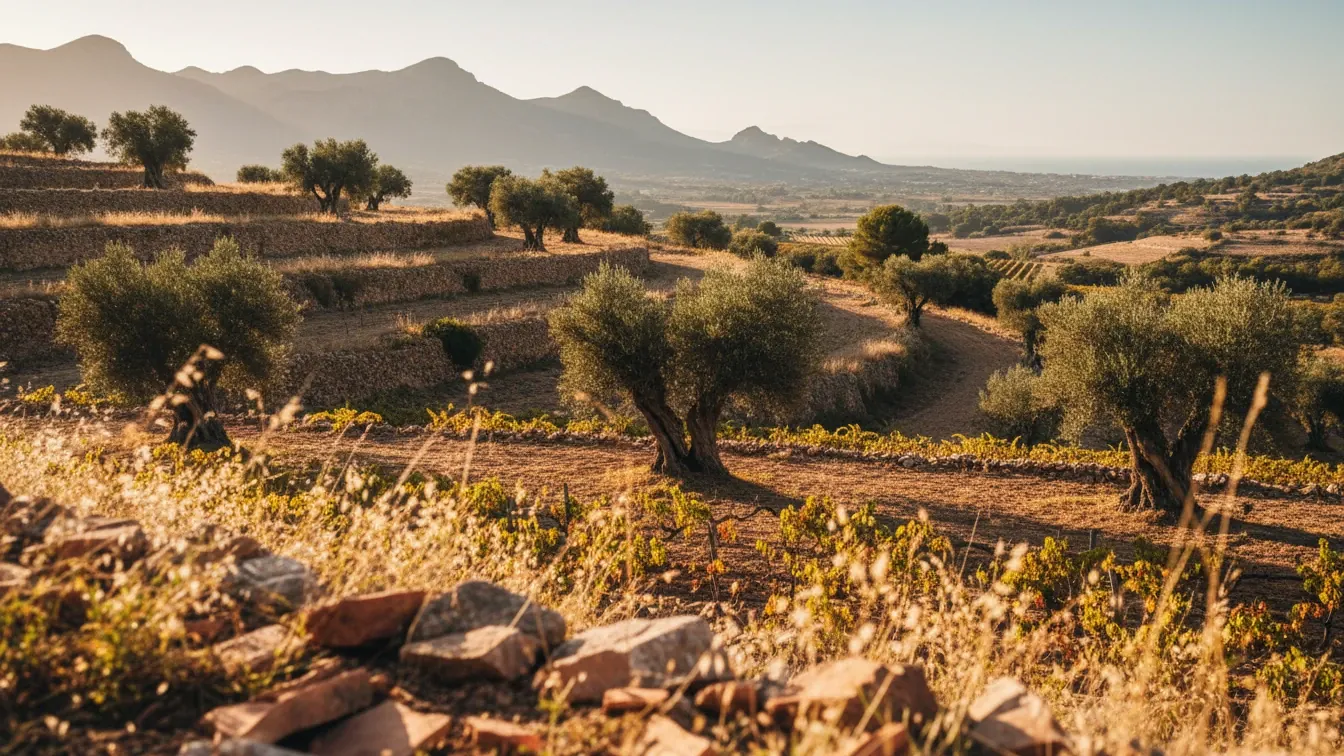
Mallorca red wines reveal the island’s Mediterranean identity through indigenous grapes, limestone soils, intense sunlight, and increasingly precise farming. The best bottles balance ripe fruit with freshness rather than simple weight. Callet leads the conversation, but regional styles also include Manto Negro, Fogoneu, international varieties, and thoughtful blends shaped by Mallorca’s diverse vineyards. At Montesion Wine Estate, this relationship between native grapes, careful farming, and island conditions is central to understanding the region.
A dry summer, an old vine, or a cool coastal influence can change the character of a Mallorcan red wine dramatically. Mallorca sits at the meeting point of maritime air, bright Mediterranean light, and soils that range from fertile plains to rocky, mineral slopes. Those conditions create reds with a distinctive tension: generous fruit on the first impression, followed by herbs, earth, spice, and refreshing acidity.
This guide explains how Mallorca developed its red wine culture, where the main vineyards lie, and how native varieties differ from international grapes. It also examines biodynamic farming, ageing choices, food pairing, buying decisions, common mistakes, and practical ways to taste the island’s wines with greater understanding. The result is a useful map for travellers, collectors, and curious drinkers who want more than a bottle chosen by its label.
Why do Mallorca red wines taste so distinctive?
Mallorca’s red wines taste distinctive because the island combines strong sunlight with moderating sea breezes and varied limestone soils. Vines receive enough warmth to achieve ripe flavours, yet evening air can preserve acidity. This balance matters. A warm climate alone can produce broad, heavy wines, but Mallorca often delivers ripe fruit with a lighter, more energetic frame.
The island’s soils add another layer. Many vineyards contain calcareous clay, limestone fragments, or iron-rich earth. These materials influence water retention, root development, and the timing of ripening. In dry years, deep-rooted vines can search through fractured rock for moisture. As a result, fruit concentration does not always mean excessive sweetness or alcohol.
Callet illustrates this balance particularly well. It generally shows red fruit, floral notes, moderate tannin, and useful acidity. Its colour can appear lighter than the wine’s flavour suggests, which challenges the assumption that a serious red must be deeply opaque. Manto Negro often contributes warmth and darker fruit, while Fogoneu can add savoury detail and structure.
The official description of Mallorca’s protected geographical indication also recognises a red wine style with pronounced colour, powerful aromas, red-fruit character, rounded texture, and firm tannins. The regional specification sets minimum natural alcohol levels at 10.5 percent for red grapes, while vineyard density can reach 5,500 vines per hectare. These technical details help explain the range of styles rather than define a single taste. caib.es
Which Mallorca wine regions should you know?
Mallorca contains several important wine areas, and each gives red wines a different context. The two best-known protected designations are Binissalem-Mallorca and Pla i Llevant. Wines may also carry the broader Vi de la Terra Mallorca indication, which covers vineyards across the island and allows a wider geographical expression.
Binissalem lies inland, near the Serra de Tramuntana. Its vineyards benefit from elevation and mountain influence, while local traditions give Manto Negro a central role. Reds from the area can combine ripe plum and red berry flavours with spice, earthy notes, and a firm but approachable palate. The mountain backdrop is not merely scenic; it influences exposure, temperature shifts, and harvest decisions.
Pla i Llevant covers a broad eastern and southeastern area. Its landscape includes flatter land, rolling hills, and maritime influences. Callet has become particularly important here, alongside Manto Negro, Fogoneu, and international varieties. The region’s diversity means that two producers can make very different wines even when they work with the same grape.
Porreres, in the central part of the island, is another useful place to understand Mallorca’s red wine identity. Vineyards around the town often experience hot, dry summers and strong sunlight. Careful canopy management becomes essential because leaves must protect grapes from excessive heat while allowing enough airflow. Wines from this setting can show ripe fruit, Mediterranean herbs, and polished tannin when harvested at the right moment.
For travellers, geography also shapes wine activities in Mallorca. A visit near the central plain may feel agricultural and spacious, while a northern estate can bring mountain views and cooler air. The bottle’s regional indication is therefore a starting point, not a complete tasting note.
How did Mallorca’s red wine tradition evolve?
Mallorca has cultivated vines for centuries, although its modern wine industry has experienced several difficult turns. Phylloxera damaged vineyards in the late nineteenth century, and later economic pressures encouraged farmers to focus on quantity or replace local varieties with better-known international grapes. The island’s wine culture survived, but not without losing some genetic and commercial continuity.
During the late twentieth century, Cabernet Sauvignon, Merlot, Syrah, Chardonnay, and other international grapes became more common. These varieties offered familiarity to export markets and gave growers reliable tools for blending. However, the shift also risked making Mallorca taste like many other warm wine regions.
The recent revival of Mallorcan indigenous varieties has changed that direction. Researchers, growers, and winemakers have explored old vines, local selections, and forgotten grapes. Their work has shown that Callet and Manto Negro can produce wines with freshness, nuance, and ageing potential when yields, harvest dates, and extraction remain controlled.
The island’s native grapes also carry a practical advantage in a warming climate. Callet can retain acidity while ripening at moderate alcohol levels, an increasingly valuable quality in hot regions. An account from Foods and Wines from Spain notes that Callet ripens later than Manto Negro and can reach flavour maturity with useful freshness. foodswinesfromspain.com
Modern Mallorca therefore does not reject international varieties. Instead, many producers use them beside local grapes. Cabernet Sauvignon can provide structure, Syrah can add spice, and Petit Verdot can deepen colour. The strongest wines usually make those grapes serve the island rather than obscure it.
Which grapes define Mallorca’s red wines?
The principal local red varieties each bring a recognisable contribution. Callet offers bright red fruit, floral lift, moderate tannin, and a relatively light visual colour. Manto Negro brings body, warmth, dark berry flavours, and a soft Mediterranean generosity. Fogoneu can add savoury notes, darker colour, and a distinctive rustic edge when handled carefully.
International grapes remain significant. Cabernet Sauvignon contributes cassis, structure, and firm tannin, especially when grown in warm sites with careful harvest timing. Merlot can soften a blend through plum fruit and rounded texture. Syrah often introduces blackberry, liquorice, pepper, and a fuller mid-palate. Petit Verdot can provide dense colour, firm tannin, and floral or dark-fruit depth.
| Grape | Typical contribution | Best question to ask while tasting |
|---|---|---|
| Callet | Red fruit, floral notes, freshness, moderate tannin | Does the wine feel light in colour but deep in flavour? |
| Manto Negro | Warmth, plum, dark berry, rounded texture | Does the palate feel generous without becoming heavy? |
| Fogoneu | Savoury character, colour, earthy detail | Can you find spice or herbal notes beneath the fruit? |
| Cabernet Sauvignon | Cassis, structure, tannin, ageing capacity | Is the oak supporting the fruit or dominating it? |
| Syrah | Blackberry, liquorice, pepper, body | Does the wine show Mediterranean warmth with balance? |
| Petit Verdot | Colour, firm tannin, dark fruit, aromatic intensity | Has the tannin softened enough for immediate drinking? |
The phrase “indigenous” does not mean every local grape tastes rustic. Vineyard age, yield, fermentation, and maturation can transform the final wine. Conversely, an international variety does not automatically lack local identity. A Cabernet Sauvignon grown in Mallorca can show different ripeness, herbal notes, and texture from one grown in Bordeaux or Chile.
A helpful tasting habit is to separate grape character from place character. First identify fruit, tannin, acidity, and alcohol. Then look for signs of climate and soil, such as dried herbs, warm stone, balsamic lift, or a salty finish. This approach creates a more accurate picture than relying on variety names alone.
What makes the Callet grape Mallorca’s signature red variety?
The Callet grape in Mallorca has moved from an undervalued local variety to one of the island’s most compelling ambassadors. Historically, some growers considered it too pale or rustic for ambitious red wine. Today, low yields, older vines, precise harvesting, and gentler extraction can reveal striking finesse.
Callet typically produces wines with red cherry, raspberry, violet, and earthy aromas. The palate may feel supple rather than massive, with moderate tannins and lively acidity. In hot years, that freshness can make the variety particularly attractive. It offers a Mediterranean red wine experience without relying on excessive oak or high alcohol.
The grape also reflects the island’s environmental pressures. In dry sites, established vines can develop deep root systems that help them access scarce moisture. Thick skins can protect berries from strong sunlight. These traits do not eliminate the effects of drought, but they help explain why the variety remains relevant as summers become more demanding.
An aged example can show how far Callet may travel with time. The Montesión Callet Limited Edition 2007 combines ripe fruit with earthy notes, integrated tannin, and balanced acidity after barrel ageing. Its story begins with a dry, healthy vintage and continues through spontaneous fermentation and 12 to 15 months in French oak. The result suits a slow meal of roasted meat, stew, mature cheese, or chocolate dessert.
That kind of bottle changes the usual expectation of island wine. Instead of treating heat as a reason for power alone, it shows how sunlight can create concentration while time and acidity preserve shape. Callet is not merely a heritage label; it is a useful lens through which to understand Mallorca’s evolving wine culture.
How do biodynamic methods influence island red wine?
Biodynamic farming treats the vineyard as a connected ecosystem rather than a row of isolated plants. Demeter-certified estates follow strict rules that exclude synthetic pesticides and fertilisers, while using preparations, compost, biodiversity, and careful observation of natural cycles. The goal is not to make a wine taste magically different. It is to build healthier soils and more resilient vines.
In Mallorca, that philosophy meets real environmental pressure. Summer heat, limited rainfall, strong ultraviolet light, and occasional storms all test vineyard management. Cover crops can protect soil from erosion, while compost supports microbial life and water retention. Trees, flowering plants, insects, and animals can create a more balanced farm environment.
Biodynamic wine also demands restraint in the cellar. Spontaneous fermentation relies on native yeasts rather than an added commercial strain. That choice can bring greater variation, so the producer needs clean fruit, sound equipment, and close monitoring. Temperature control remains useful because natural fermentation should express the site without losing precision.
The method does not guarantee quality. A poorly farmed vineyard cannot be rescued by certification, and a technically flawed wine remains flawed. Yet biodynamic practice can support the conditions that allow local varieties to speak clearly. When soil health, vine balance, and harvest timing align, the wine may show vivid fruit, savoury detail, and a more integrated texture.
For this reason, biodynamic farming belongs in the main story of Mallorca rather than in a separate sustainability footnote. It connects the island’s future to its agricultural past. It also gives drinkers a practical question: does the wine show freshness, balance, and detail rather than simply carrying an environmental claim?
How are Mallorca red wines made and aged?
Winemaking begins with the harvest decision. In Mallorca’s climate, a few days can alter the balance between ripe flavour, acidity, and alcohol. Growers assess berry taste, seed maturity, skin texture, acidity, and weather forecasts. Hand harvesting allows teams to select healthy bunches and remove fruit that will not contribute to a precise wine.
After sorting, many estates ferment red grapes in stainless steel tanks. The material is neutral, easy to control, and useful for protecting fruit character. Temperature management influences extraction and aromatic freshness. Cooler fermentations can preserve red fruit, while warmer conditions draw more colour and tannin from the skins.
Oak ageing adds another set of choices. French oak may contribute toast, spice, cedar, and a smoother impression of tannin. Large or older barrels can add texture with less obvious flavour. Amphorae and Italian stoneware offer different oxygen exchange and surface characteristics, often allowing fruit and herbal notes to remain prominent.
A red wine aged for 12 to 24 months may develop a softer palate and more integrated oak, but time alone does not create complexity. The fruit must have enough concentration and acidity to support maturation. A delicate Callet may benefit from restrained oak, while a structured Cabernet Sauvignon or Petit Verdot can carry more influence.
The following sequence helps explain the process:
- Vineyard teams select a harvest date based on flavour, acidity, tannin, and health.
- Workers hand-pick and sort bunches when the producer seeks maximum precision.
- The winery ferments the grapes with either native or selected yeasts.
- The winemaker manages temperature, skin contact, and extraction.
- The young wine matures in tank, oak, stoneware, or a combination of vessels.
- Bottling and further rest allow texture and aroma to settle.
The best vessel is not universal. A producer chooses it to protect the identity of the grape and the structure of the vintage.
What does Mallorca red wine cost, and what return does it offer?
Price varies widely according to vineyard age, yield, certification, ageing, rarity, and reputation. An accessible young red can provide immediate fruit and food-friendly freshness. A reserve wine costs more because it may involve lower yields, hand selection, expensive barrels, cellar time, and inventory held for years before release.
Collectors should look beyond the front label. Check the vintage, grape composition, geographical indication, alcohol, ageing vessel, and producer philosophy. An older bottle is not automatically better. Storage conditions, closure quality, and the grape’s natural structure matter more than age alone.
The return on a Mallorcan red wine is often experiential rather than purely financial. A distinctive Callet may offer a flavour profile unavailable from a standard international blend. A biodynamic bottle can connect a meal with soil management, local ecology, and island agriculture. A mature vintage can show how heat, acidity, oak, and time interact.
For restaurants, value also depends on versatility. A medium-bodied Callet can match grilled vegetables, lamb, roast poultry, or tuna. A structured blend may suit slow-cooked meat and hard cheese. Wines with moderate alcohol and lively acidity often perform better at the table than very sweet, heavily oaked reds.
A sensible buying framework includes three levels:
- Everyday drinking: young, fruit-driven wines with moderate oak and refreshing acidity.
- Exploration: indigenous varieties, unusual blends, or wines from a specific Mallorca region.
- Cellaring: structured reds with firm tannin, balanced acidity, healthy fruit, and proven maturation potential.
This framework keeps price connected to purpose. A simple bottle can be the right choice for a hot afternoon, while a mature Callet deserves a quiet meal and a larger glass.
How should you taste and pair Mallorca red wines?
Serve most structured island reds slightly below room temperature, usually around 15 to 17 degrees Celsius. Warm rooms can push alcohol forward and flatten acidity. A younger, lighter Callet may need less time in a decanter, while a mature or heavily structured red can benefit from gentle aeration.
Begin by examining colour, but do not overinterpret it. Callet may appear pale while delivering concentrated aroma and flavour. Swirl slowly and look for red fruit, violet, dried herbs, liquorice, earth, smoke, or oak spice. Then taste for the relationship between acidity, tannin, alcohol, and fruit weight.
Food pairing works best when it respects texture. Bright Callet can refresh a plate of grilled vegetables, roast chicken, pork, or Mediterranean fish with a strong sauce. Manto Negro can meet lamb, sausage, mushrooms, or slow-cooked dishes. Cabernet-based wines suit red meat and aged cheese when tannin needs protein.
A few pairings are especially revealing:
- Callet with grilled lamb and rosemary shows how acidity lifts savoury flavours.
- Manto Negro with roasted pork highlights its warmth and dark fruit.
- Syrah with mushroom dishes echoes earthy and spicy notes.
- A mature red with hard cheese softens tannin and extends the finish.
- A fuller blend with dark chocolate can emphasise ripe fruit and oak spice.
Avoid serving every Mallorca red at the same temperature. A heavy wine served too warm may seem alcoholic, while a delicate wine served too cold can lose aroma. Glass shape matters as well. Use a broad bowl for structured reds and a smaller bowl for lighter, aromatic examples.
Which mistakes lead people to misunderstand Mallorca wine?
The first mistake is assuming that island wine must be heavy because Mallorca is hot. Warmth can create ripe fruit, but altitude, sea air, harvest timing, variety, and farming practices all influence balance. Some of the island’s most memorable reds feel fresh and transparent rather than dense.
Another mistake is treating colour as a measure of quality. Callet can show moderate colour intensity and still deliver remarkable aromatic depth. Extraction can darken a wine, but it may also create harder tannins. A pale red with energy and length can be more successful than an opaque wine that feels tired.
Many drinkers also overlook regional detail. “Mallorca” is not one vineyard. Binissalem, Pla i Llevant, Porreres, and other areas bring different elevations, soils, exposures, and traditions. Asking where the grapes grew often reveals more than asking whether the wine is “strong.”
A fourth mistake is confusing biodynamic certification with a predetermined flavour. Farming method influences the vineyard, but grape variety, cellar work, vintage, and ageing remain decisive. Taste the wine first, then consider how the farming philosophy may have supported its clarity and balance.
Finally, do not judge indigenous grapes after one bottle. Callet changes with vine age, extraction, oak, blending, and vintage. Manto Negro can range from fresh and bright to broad and powerful. Repeated tasting across producers provides a much fairer assessment than a single encounter.
How can a reader build a personal Mallorca red wine route?
A useful tasting route begins with contrast. Start with a young Callet to understand red fruit, floral lift, and moderate tannin. Follow it with a Manto Negro or Callet-led blend to explore greater warmth and body. Then taste a structured Cabernet Sauvignon, Syrah, or Petit Verdot to see how international varieties respond to the island’s climate.
Next, compare vessels and ageing. A tank-aged red can preserve direct fruit, while French oak adds spice and texture. Stoneware or amphora ageing may create a different balance between freshness and savoury complexity. The comparison becomes more meaningful when the wines share a vintage or producer.
Include one older bottle if possible. A mature red can show dried fruit, leather, earth, and softer tannin. It also demonstrates why acidity matters. Without freshness, age produces fatigue; with freshness, it creates complexity.
A practical tasting order looks like this:
- Young, fruit-driven Callet.
- Fresh indigenous blend.
- Manto Negro or Fogoneu-led red.
- Oak-aged international variety.
- Mature Callet or a structured reserve.
Write down the vintage, grape, region, alcohol, vessel, and first three aromas. Add one sentence about texture. This simple record helps reveal preferences over time. Some tasters prefer floral, lighter Callet; others favour dark-fruited, oak-aged reds with firm tannin.
Wine activities in Mallorca can deepen that understanding when the experience includes vineyards, cellar choices, and local food rather than tasting alone. A thoughtful visit explains why a vine grows where it does and how the producer translates that place into a bottle. The island’s wines become easier to remember once the landscape has a physical shape.
What should the future of Mallorca’s red wine look like?
The island’s future depends on maintaining identity while adapting to climate pressure. Indigenous grapes offer valuable genetic and cultural resources, but they need investment, careful vineyard work, and consumers willing to explore beyond familiar international labels. Producers must also manage water, shade, soil cover, and harvest timing with increasing precision.
Biodynamic and organic farming can contribute to resilience, especially when it improves soil structure and biodiversity. However, sustainability must remain practical. Healthy vineyards need workable yields, responsible labour, efficient water use, and commercial stability. A noble philosophy cannot survive if the farm cannot support the people who maintain it.
Winemaking experimentation will continue. Producers may use larger oak, concrete, stoneware, or amphorae to preserve freshness and reduce heavy oak influence. They may also revive minority grapes, select better-adapted clones, and make lighter reds suited to modern dining.
Mallorca’s advantage is its ability to offer several stories at once. It has heritage grapes, international varieties, mountain sites, maritime plains, biodynamic estates, and mature wines with genuine ageing character. That variety gives the island relevance in a wine world increasingly interested in place, climate adaptation, and agricultural integrity.
The most convincing future bottles will not imitate Bordeaux, Rioja, or Napa. They will use technical skill to make Mallorca more legible. Callet, Manto Negro, Fogoneu, and carefully chosen international grapes can coexist when each one serves the island’s climate and food culture.
Why Mallorca’s red wines matter beyond the island
Mallorca red wines matter because they offer a clear example of how regional identity can grow stronger through change. The island has moved from dependence on familiar international grapes toward a more confident conversation between native varieties and modern cellar practice. Callet now shows that elegance can matter as much as colour or power.
Three lessons stand out. First, climate does not dictate heaviness; altitude, sea air, soils, and harvest timing can preserve freshness. Second, indigenous grapes are not museum pieces. They can produce precise, age-worthy wines when growers understand their potential. Third, biodynamic farming connects quality with the long-term health of the land rather than treating sustainability as a decorative claim.
Montesion Wine Estate’s work with Callet, spontaneous fermentation, and Demeter principles reflects that wider movement. The most persuasive expression is not a slogan, but a wine that carries ripe fruit, balanced acidity, integrated tannin, and a recognisable Mediterranean sense of place.
A serious glass of Mallorca red wine therefore offers more than flavour. It carries the history of island agriculture, the pressure of a warming climate, and the choices made between vineyard and cellar. That combination gives Mallorca a distinctive voice in the Mediterranean wine world.
Frequently asked questions
What are the main red grapes in Mallorca?
The main red grapes include Callet, Manto Negro, and Fogoneu, alongside international varieties such as Cabernet Sauvignon, Merlot, Syrah, and Petit Verdot. Callet usually brings red fruit, floral aromas, freshness, and moderate tannin. Manto Negro often adds warmth and dark berry character, while Fogoneu can provide savoury depth and colour.
Is Callet a good grape for ageing?
Callet can age well when it comes from healthy, concentrated fruit with balanced acidity and suitable tannin. Oak use, vine age, yield, and vintage also influence its development. Mature examples often move from fresh red fruit toward earthy, spicy, and savoury complexity rather than simply becoming heavier.
What food pairs well with Mallorca red wine?
Mallorca red wine pairs well with grilled lamb, roast poultry, pork, mushrooms, stews, Mediterranean vegetables, and firm cheeses. Lighter Callet works with dishes that need freshness, while structured Cabernet or Syrah can handle richer meat and sauces. Serve most structured examples at approximately 15 to 17 degrees Celsius.
Are Mallorca red wines biodynamic?
Some Mallorca estates are biodynamic, while others follow organic, conventional, or mixed farming systems. Demeter certification indicates compliance with specific biodynamic standards, but certification does not determine one universal flavour. Variety, site, vintage, fermentation, ageing, and the producer’s technical decisions remain equally important.
What are the main Mallorca wine regions for red wine?
The main recognised areas include Binissalem-Mallorca, Pla i Llevant, and the broader Vi de la Terra Mallorca indication. Binissalem is associated with inland and mountain influence, while Pla i Llevant covers a broad eastern and southeastern landscape. The broader indication includes wines from several parts of the island and therefore shows considerable stylistic variation.
