
Understanding biodynamic viticulture principles requires recognizing the vineyard as a living, self-sustaining organism guided by natural rhythms. Farmers synchronize planting, pruning, and harvesting with lunar cycles while applying specific organic preparations to enrich the soil. Consequently, this holistic approach transforms isolated island vineyards into resilient ecosystems. Ultimately, the method at Montesion Wine Estate yields exceptional grapes that perfectly reflect their unique Mediterranean terroir.
Island viticulture presents distinct environmental pressures, from intense summer heat to saline Mediterranean winds. Historically, conventional agriculture treated these factors as obstacles requiring chemical intervention. However, modern scientific analysis increasingly validates the traditional wisdom embedded in Demeter certification standards. Specifically, researchers find that treating the vineyard as an interconnected biological system creates unprecedented climate resilience.
Furthermore, the Balearic Islands offer a perfect laboratory for observing these regenerative practices. The unique limestone-rich soils of Mallorca require careful management to maintain moisture during dry spells. Therefore, adopting a holistic calendar becomes an ecological necessity rather than a philosophical choice. Indeed, understanding this annual cycle reveals exactly how natural wine achieves its complex flavor profile. Readers will discover the specific biological mechanisms making these ancient agricultural techniques highly effective.
How Does the Lunar Calendar Dictate Vineyard Rhythms?
The biodynamic lunar calendar wine production relies on categorizing days into four specific elements: root, leaf, flower, and fruit. These categories correspond directly to the moon’s position relative to the twelve zodiac constellations. Consequently, vineyard managers schedule critical tasks based on these astronomical alignments to maximize plant vitality. For instance, pruning occurs exclusively on root days to encourage deep subterranean growth and minimize sap loss.
Conversely, harvesting happens predominantly on fruit days when lunar forces theoretically draw energy upward into the grape clusters. While skeptics once dismissed this timing as mere folklore, plant chronobiology now offers compelling supporting evidence. Specifically, gravitational pulls demonstrably affect sap flow and water retention within plant cellular structures. Therefore, aligning agricultural interventions with these natural fluid dynamics reduces stress on the vines.
Moreover, this precise scheduling creates a highly disciplined framework for vineyard management throughout the year. Farmers must observe nature closely, adapting their labor to the cosmic rhythm rather than arbitrary human schedules. As a result, the vines develop stronger immune responses to local pests and diseases. Ultimately, this rhythm ensures that Mallorca wine captures the absolute peak of aromatic expression at harvest time. Additionally, this meticulous observation fosters a deeper connection between the viticulturist and the specific microclimate of their estate.
Why Are Biodynamic Preparations Essential for Mediterranean Soils?
Maintaining soil vitality in a hot, dry climate requires proactive microbial management rather than reactive chemical fertilization. Biodynamic practitioners utilize nine specific preparations, numbered 500 through 508, to stimulate biological activity in the vineyard. Specifically, preparation 500 involves packing cow manure into horns and burying them underground throughout the winter months. Consequently, the resulting humus acts as a concentrated inoculant, introducing billions of beneficial bacteria into the earth.
Furthermore, these microscopic organisms break down complex minerals in the limestone, making them readily available to the vine roots. This biological conversion process proves crucial for organic wine Spain producers facing nutrient-poor Mediterranean dirt. Indeed, treating the soil with these fermented mixtures fundamentally alters its physical structure over several seasons. The earth becomes highly porous, dramatically increasing its capacity to retain scarce winter rainfall for the dry summer.
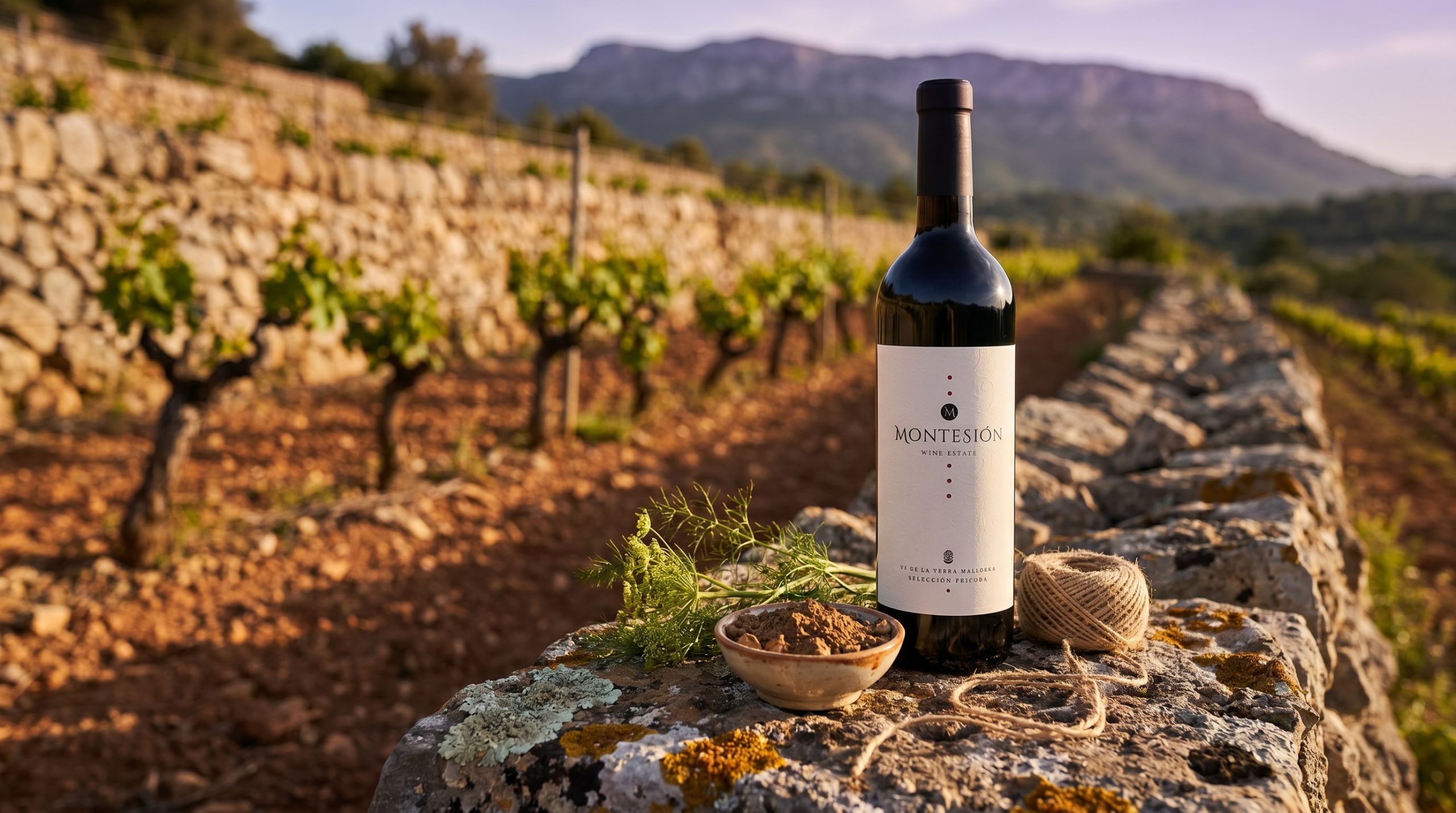
Additionally, foliar sprays like preparation 501 utilize finely ground quartz to enhance light metabolism during the growing season. This silica mixture strengthens the leaf canopy, helping indigenous grape varieties resist fungal pressures from coastal humidity. Through these meticulous applications, a vineyard achieves true self-sufficiency without external synthetic inputs. The resulting ecosystem perfectly supports the cultivation of complex, terroir-driven varietals. For example, enjoying a bottle of Montesión Callet Limited Edition 2007 reveals the profound depth and earthy undertones made possible only by such vibrant, living soil.
Can Biodiversity and Data Validate Regenerative Farming in Mallorca?
Monoculture fundamentally weakens agricultural systems by depleting specific nutrients and inviting targeted pest infestations. Therefore, regenerative farming mallorca prioritizes deliberate vineyard biodiversity through carefully selected cover crops planted between the vine rows. Farmers typically sow a precise mixture of legumes, cereals, and indigenous wildflowers immediately after the autumn harvest. Consequently, these companion plants work symbiotically to fix atmospheric nitrogen directly into the root zone.
Moreover, this green carpet provides a crucial physical barrier against the intense Balearic sun during early spring. The vegetation prevents rapid moisture evaporation while simultaneously protecting the delicate topsoil from wind erosion. Furthermore, recent agronomical studies quantify the actual environmental benefits of these holistic agricultural models. Specifically, vineyards utilizing full biodynamic protocols demonstrate a 15% to 25% increase in total soil organic carbon compared to conventional plots.
Additionally, market data indicates a growing consumer preference for sustainably produced agricultural goods, with the organic wine sector showing an annual growth rate exceeding 8% worldwide. Long-term yield analysis also challenges the assumption that chemical farming produces superior volume. While regenerative transition causes a temporary dip, yields frequently stabilize and surpass conventional plots after five years. More importantly, the qualitative metrics of the harvested fruit show marked improvement.
| Metric Analyzed | Conventional Vineyard | Biodynamic Vineyard |
|---|---|---|
| Soil Organic Matter | 1.2% – 1.8% | 2.5% – 3.5% |
| Microbial Biomass | Baseline | +40% relative increase |
| Water Infiltration | Moderate | High (rapid absorption) |
Ultimately, this vibrant above-ground biodiversity perfectly mirrors the complex microbial life thriving beneath the surface. The empirical evidence strongly supports the adoption of these traditional, nature-aligned methodologies in modern viticulture. Indeed, Balearic Islands wine producers increasingly view these methods as essential for long-term survival.
Synthesizing the Annual Cycle of Island Viticulture
The integration of cosmic rhythms and terrestrial biology creates a fundamentally superior model for agricultural production. Specifically, adhering to the lunar calendar provides a structured, nature-aligned framework for all vineyard interventions. Moreover, the application of fermented preparations transforms depleted dirt into a resilient, living matrix capable of sustaining complex plant life. Consequently, these practices ensure that indigenous grape varieties can thrive despite the challenging Mediterranean climate.
Furthermore, prioritizing biodiversity through cover cropping establishes a self-regulating ecosystem that eliminates the need for synthetic chemicals. This holistic methodology goes far beyond simple organic compliance, demanding a profound physical and philosophical commitment from the farmer. Indeed, the resulting vino biodinámico offers an unadulterated expression of its specific geographical origin. Ultimately, true domain authority in the wine world stems from this uncompromising dedication to soil health and ecological balance at Montesion Wine Estate.
Frequently Asked Questions
What is the primary difference between organic and biodynamic wine?
Organic farming strictly prohibits synthetic pesticides and fertilizers, focusing on chemical-free agricultural practices. Conversely, biodynamic viticulture principles treat the entire farm as a closed-loop, self-sustaining organism. This advanced methodology requires specific compost preparations and synchronizes farming activities with astronomical cycles. Therefore, while all biodynamically farmed grapes are organic, not all organic grapes meet the rigorous standards of Demeter certification.
How does the lunar calendar influence grape harvesting?
The biodynamic lunar calendar divides days into root, leaf, flower, and fruit categories based on the moon’s astrological position. Farmers specifically schedule their grape harvest during designated fruit days to maximize the sensory qualities of the yield. According to chronobiological theories, gravitational forces pull the plant’s internal energy and sap upward into the fruit during these periods. Consequently, grapes picked on fruit days theoretically display optimal flavor concentration and aromatic intensity.
Why do regenerative vineyards in Mallorca use cover crops?
Cover crops provide essential ecological services that protect and enrich the vulnerable Mediterranean topsoil throughout the year. These diverse plantings prevent wind erosion, retain vital winter moisture, and naturally fix atmospheric nitrogen into the earth. Furthermore, the vegetation creates crucial habitats for beneficial insects that naturally control parasitic pest populations. As a result, vineyard biodiversity eliminates the need for chemical interventions while steadily building soil organic matter.
