
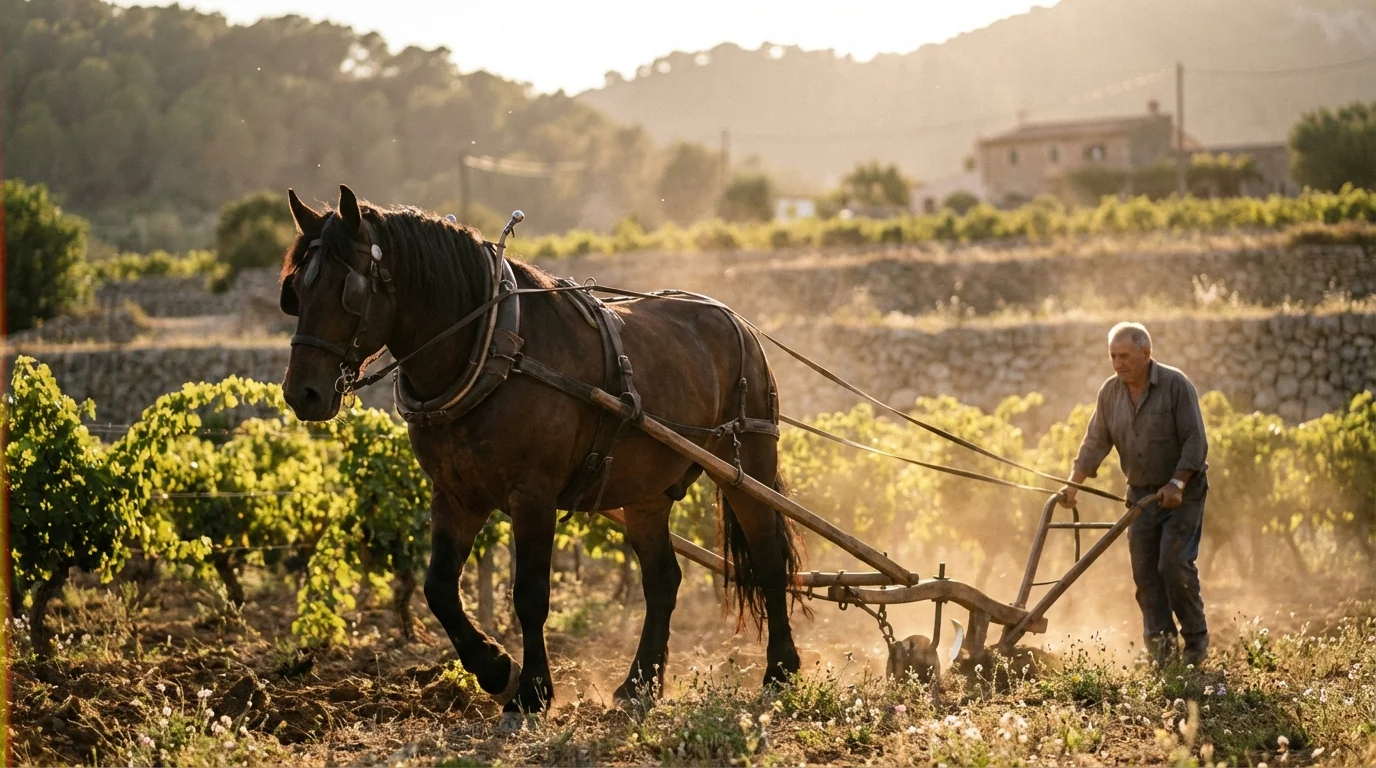
The integration of draft horses into biodynamic viticulture represents a scientifically validated return to animal-led tilling that actively combats soil compaction and restores the agro-ecosystem. By replacing heavy mechanical tractors with animal traction, vineyards like Montesion Wine Estate fundamentally improve soil porosity, allowing vine roots to access deeper nutrients and water reserves. This practice aligns strictly with regenerative farming principles, transforming the vineyard from a simple agricultural plot into a self-sustaining, vibrant living organism.
A recent 2026 analysis of modern viticulture reveals a sharp pivot away from heavy machinery in favor of traditional draft horses, particularly among estates committed to strict biodynamic wine standards. This shift is not driven by mere nostalgia but by rigorous soil science. Decades of intensive tractor use have left many European vineyards with severe subsoil compaction, creating an impermeable layer that suffocates root systems and stifles microbial life. The reintroduction of vineyard horses offers a direct mechanical solution to this crisis. By distributing weight more effectively and tilling with precision, animal traction immediately enhances soil health and restores the natural hydrological cycle of the earth. For regions facing acute climate pressures, this method provides a critical advantage in moisture retention and vine resilience. Readers exploring this transition will understand the exact physiological mechanisms that make animal-led tilling superior for soil architecture, the specific requirements of Demeter certification, and how these practices ultimately translate into the structural complexity of premium vintages at Montesion Wine Estate.
Why Are Vineyards Returning to Animal Traction?
The primary driver behind the resurgence of animal traction in modern vineyards is the urgent need to address mechanical soil compaction. Standard vineyard tractors, often weighing between 2,500 and 4,000 kilograms, exert immense downward pressure on the earth. Over successive growing seasons, this repeated heavy traffic creates a dense, compacted layer known as a plow pan, typically situated 20 to 30 centimeters below the surface. This hardened barrier severely restricts root expansion, forcing vines to develop shallow root systems that are highly vulnerable to drought and heat stress.
Draft horses fundamentally alter this mechanical dynamic. A working horse weighs approximately 700 to 900 kilograms, but the physics of their movement prevents the uniform, crushing pressure generated by continuous tire treads. The hoof print of a horse creates localized, intermittent pressure points rather than a continuous strip of compacted earth. This distinction allows the surrounding soil structure to remain intact, preserving the delicate macropores necessary for oxygen exchange and water infiltration.
Beyond the pure physics of weight distribution, animal-led tilling operates at a slower, more deliberate pace. This reduced speed minimizes the pulverization of topsoil aggregates, maintaining the structural integrity of the earth. When soil aggregates remain intact, the ground acts like a sponge, capable of absorbing heavy rainfall without succumbing to surface runoff or erosion. The transition back to vineyard horses reflects a calculated agronomic strategy to dismantle the damage caused by decades of industrialization, prioritizing long-term soil architecture over short-term operational speed.
How Does Animal Tilling Improve Soil Health and Porosity?
Soil health in a vineyard is strictly defined by its physical, chemical, and biological properties, all of which are directly enhanced by the use of animal traction. When a plow is guided by a horse, the implement moves dynamically through the earth, subtly shifting and yielding to large rocks or dense root networks. This responsive tilling action shatters compacted layers without completely turning the soil profile upside down, a critical factor in regenerative farming.
Preserving the natural stratification of the soil protects the complex networks of mycorrhizal fungi. These microscopic fungal threads form symbiotic relationships with vine roots, effectively extending the plant’s reach to extract vital minerals like phosphorus and potassium. Tractor-drawn implements, operating with rigid hydraulic force, frequently sever these delicate fungal networks. Animal traction, by contrast, creates a gentle fracturing of the earth that aerates the root zone while leaving the microbial infrastructure largely undisturbed.
This enhanced porosity is especially critical for indigenous grape varieties cultivated in challenging environments. For instance, the Callet grape, native to the Balearic Islands, thrives when its roots can penetrate deeply into the mineral-rich, calcareous subsoils. Increased oxygen levels in the root zone stimulate aerobic bacteria, which efficiently break down organic matter into bioavailable nutrients. The resulting soil environment is highly resilient, capable of sustaining robust vine growth and complex fruit development without the need for synthetic fertilizers. The physical action of the horse effectively sets the stage for a thriving subterranean ecosystem.
What Is the Role of Fauna in Demeter Certification?
Achieving and maintaining Demeter certification requires far more than the simple elimination of synthetic chemicals; it demands the conceptualization of the farm as a closed-loop, self-sustaining living organism. A core tenet of this philosophy is the mandatory integration of fauna into the agricultural landscape. Animals are not viewed merely as tools or livestock, but as essential contributors to the farm’s biological cycle and overall vitality.
The presence of draft horses in the vineyard fulfills this requirement on multiple functional levels. As the animals work the rows, their manure provides a steady, natural source of organic nitrogen and beneficial microbes directly to the soil surface. This localized fertilization initiates a rapid breakdown of cover crops, accelerating the formation of stable humus. Humus acts as the ultimate carbon sink, locking atmospheric carbon into the soil while simultaneously increasing its water-holding capacity.
Furthermore, the energetic footprint of the farm is completely transformed. In biodynamic viticulture, the goal is to minimize external inputs and rely on the inherent energy generated within the estate’s boundaries. Tractors require fossil fuels, imported parts, and generate noise pollution that disrupts local wildlife. Horses consume forage grown directly on the estate, converting plant matter into kinetic energy and nutrient-rich compost. This cyclical energy flow is the exact mechanism that Demeter certification seeks to promote. The farm becomes a self-regulating entity, where the flora and fauna exist in a state of continuous, mutual support, elevating the entire agro-ecosystem.
Draft Horses vs. Tractors: A Technical Comparison?
| Metric | Draft Horses | Mechanical Tractors |
|---|---|---|
| Weight Distribution | Intermittent hoof pressure (approx. 25 PSI) | Continuous tire tread pressure (often exceeding 40 PSI dynamically) |
| Soil Compaction Risk | Extremely low; preserves macropores | High; creates an impermeable plow pan over time |
| Energy Source | Closed-loop (estate-grown forage) | Open-loop (external fossil fuels) |
| Microbial Disruption | Minimal; gentle soil fracturing | Severe; rigid hydraulic pulverization |
| Sensory Connection | High; requires constant physical assessment of the soil | Low; operator is isolated inside a mechanized cabin |
The concept of sensory connection is a quantifiable agronomic benefit. A horse handler walks directly on the earth, feeling the resistance of the plow and observing immediate changes in soil texture and moisture levels. This tactile feedback loop allows the grower to make micro-adjustments in real-time, tilling only where necessary and leaving stable areas undisturbed. A tractor operator, insulated by a steel cabin and hydraulic steering, lacks this granular awareness, often resulting in uniform tilling that ignores the specific, localized needs of the terrain. This precision, driven by biological feedback rather than mechanical force, defines the superiority of animal traction in delicate ecological systems.
How Does This Practice Shape Sustainable Wine in Mallorca?
The specific climatic and geological conditions of the Mediterranean make the adoption of animal traction particularly impactful for the Balearic Islands wine sector. Mallorca experiences a climate characterized by long, arid summers and concentrated periods of intense winter rainfall. Managing water resources in this environment is the single most critical factor for producing high-quality Mallorca wine. Heavy machinery exacerbates the risk of topsoil erosion during winter storms, as compacted earth cannot absorb sudden deluges.
By utilizing vineyard horses, estates operating under sustainable wine Mallorca protocols ensure that their soil acts as a highly efficient reservoir. The deep, uncompacted earth captures and stores winter rains, holding moisture deep underground where vine roots can access it during the scorching months of July and August. This natural irrigation system is essential for late-ripening indigenous varieties, allowing them to achieve full phenolic maturity without suffering from acute hydric stress. The production of high-quality vino biodinámico requires meticulous attention to these subterranean details.
The structural complexity of the resulting wines directly reflects this deep root penetration. Vines that struggle through uncompacted, mineral-rich subsoils yield grapes with thicker skins, higher natural acidity, and a profound sense of terroir. For example, the production of premium cuvées, such as the Montesión Callet Limited Edition 2007, relies heavily on the nuanced expression of the earth. When the soil is alive, aerated, and microbiologically active, the vines translate those intricate soil dynamics into the glass. The commitment to organic wine Spain standards through animal traction is therefore not just an environmental stance, but a fundamental prerequisite for achieving supreme viticultural quality.
The Long-Term Impact of Animal-Led Viticulture
The reintroduction of draft horses to the vineyard is a highly technical strategy designed to reverse ecological degradation and elevate soil functionality. By eliminating the continuous, crushing pressure of heavy machinery, vineyards successfully dismantle compacted plow pans, restoring the essential macropores that facilitate deep root growth and water retention. This physical transformation of the earth directly supports the complex microbial networks necessary for robust vine health.
Furthermore, the integration of working animals fulfills the rigorous systemic requirements of Demeter certification, shifting the farm from a consumer of external fossil fuels to a self-sustaining, closed-loop energy system. The tactical advantage of this approach becomes overwhelmingly clear in regions facing extreme climate variability, where maximizing the soil’s natural water-holding capacity is essential for crop survival.
Ultimately, the meticulous, localized tilling provided by animal traction allows indigenous vines to express their exact geological origin with unprecedented clarity. Estates dedicated to the production of natural wine understand that exceptional vintages are engineered beneath the surface. Fostering a vibrant, uncompacted subterranean ecosystem is the absolute foundation of world-class viticulture.
Frequently Asked Questions
What is the main benefit of using horses instead of tractors in a vineyard?
The primary benefit of utilizing draft horses in a vineyard is the drastic reduction of mechanical soil compaction. Unlike heavy tractors that exert continuous, crushing pressure and create impermeable subsoil layers, horses apply intermittent weight that preserves the earth’s natural porosity. This intact soil architecture allows vine roots to penetrate deeper for water and nutrients, significantly increasing the plant’s resilience to drought and heat stress.
How does animal traction align with Demeter certification standards?
Demeter certification requires a farm to operate as a cohesive, self-sustaining living organism rather than a purely extractive agricultural site. Integrating vineyard horses fulfills this mandate by introducing essential fauna that contribute to the farm’s biological cycle through natural manure fertilization and kinetic energy. This practice replaces external fossil fuel inputs with a closed-loop system where animals consume estate-grown forage and return vital organic matter directly to the soil.
Can animal-led tilling improve the flavor profile of the wine?
Animal-led tilling indirectly enhances the flavor profile of wine by fostering a healthier, more complex soil microbiome. When the earth remains uncompacted, delicate mycorrhizal fungi thrive, helping vine roots absorb a wider spectrum of essential minerals from deep within the subsoil. This superior nutrient uptake and deep root penetration directly translate into grapes with higher natural acidity, thicker skins, and a more pronounced, authentic expression of the local terroir.
Why is soil porosity critical for regenerative farming in viticulture?
Soil porosity is critical in regenerative farming because the microscopic air pockets within the earth dictate the soil’s ability to retain water and support aerobic microbial life. High porosity allows the ground to act like a sponge, absorbing heavy rainfall to prevent erosion while storing moisture for the dry summer months. Maintaining these macropores through gentle, animal-led tilling ensures the continuous breakdown of organic matter into bioavailable nutrients without the need for synthetic chemical fertilizers.
