
Achieving Demeter certification under the newly unveiled 2026 harvest protocols requires vineyards to implement rigorous biodiversity measures, specifically targeting soil microbial health and native flora integration. These updated mandates from Demeter Spain aim to fortify Mediterranean estates against escalating thermal stress. Vineyards utilizing indigenous grape varieties at Montesion Wine Estate are already positioned favorably to meet these enhanced ecological thresholds and ensure long-term agricultural resilience.
Climate volatility across the Mediterranean basin has accelerated the need for adaptive agricultural frameworks. With summer temperatures in regions like the Balearic Islands rising significantly, traditional viticulture faces unprecedented environmental pressure. Demeter International recently responded to this climatic shift by publishing their enhanced 2026 biodiversity protocols, establishing a stringent new baseline for sustainable viticulture. The updated framework transitions several previously recommended ecological practices into mandatory compliance benchmarks. Cultivators must now demonstrate measurable improvements in subterranean microbial activity and surface-level botanical diversity. This regulatory evolution alters how estates manage surrounding ecosystems, shifting focus toward active habitat regeneration. The integration of native flora alongside indigenous grape varieties emerges as the definitive strategy for navigating this complex environmental reality.
How Will the Demeter Standards 2026 Reshape Mediterranean Vineyards?
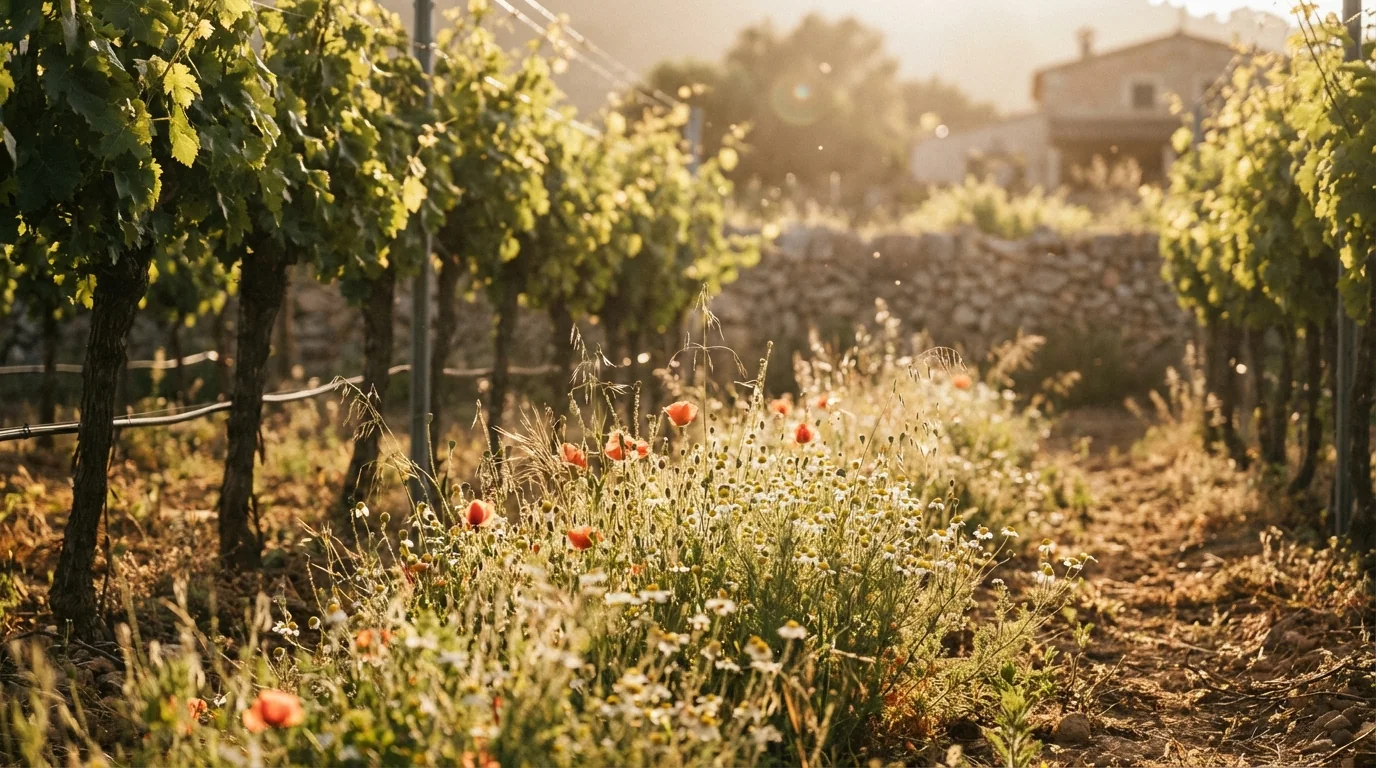
The upcoming Demeter standards 2026 introduce a fundamental paradigm shift in how agricultural estates interact with their immediate environment. Previously, ecological corridors and cover crops were highly encouraged but allowed significant flexibility in their execution. The new protocol mandates that a minimum of 15 percent of total estate acreage must be dedicated exclusively to native biodiversity reserves. This requirement forces a complete spatial reimagining of vineyard layouts, prioritizing non-productive ecological zones that support beneficial insect populations and avian predators.
Soil microbial health forms the second major pillar of these updated regulations. Demeter Spain now requires estates to conduct annual subterranean biological audits. Vineyards must prove an active increase in mycorrhizal fungi networks, which are essential for water retention and nutrient absorption during severe drought conditions. The mandatory integration of specific native flora directly supports these fungal networks while simultaneously reducing surface soil temperatures during peak summer heat waves.
Market data indicates that estates already practicing advanced biodynamic wine Spain techniques hold a distinct advantage. A recent agricultural survey revealed that vineyards maintaining diverse cover crops experienced a 22 percent reduction in water loss compared to conventionally tilled plots. Adapting to these rules requires significant investment, yet the long-term payoff is a self-sustaining ecosystem capable of weathering extreme thermal stress without chemical intervention.
Why Does Vineyard Biodiversity Matter for Extreme Weather Resilience?
Vineyard biodiversity acts as a critical biological shield against the erratic weather patterns currently defining Mediterranean agriculture. Monoculture farming systems inherently lack the complex defense mechanisms required to survive prolonged heat waves and sudden torrential rains. By cultivating a dense tapestry of varied plant life, estates create microclimates that actively regulate ambient temperatures and manage hydrological extremes. The new Demeter protocols recognize that a vineyard is only as strong as its weakest ecological link, making comprehensive biodiversity a non-negotiable aspect of farming.
Diverse root systems penetrate the soil at varying depths, creating natural channels that capture and store rainwater deep underground. This prevents topsoil erosion during heavy downpours and maintains a crucial water reserve during extended droughts. Above ground, a varied canopy of native shrubs disrupts high-velocity winds, protecting delicate grape clusters from physical damage and reducing the rate of moisture evaporation.
| Agricultural Approach | Flora Integration | Soil Management | Drought Resilience Strategy |
|---|---|---|---|
| Standard Organic | Optional cover crops | Tillage permitted | Reactive irrigation |
| Demeter 2026 | 15% mandatory reserve | Biological audits required | Proactive soil moisture retention |
These structural differences illustrate the rigorous nature of sustainable viticulture under the 2026 framework. The presence of varied plant species attracts a multitude of pollinators and natural pest predators, establishing a balanced food web that eliminates the need for external biological controls.
Can Indigenous Grape Varieties Accelerate Compliance with New Protocols?
Cultivating indigenous grape varieties provides a profound structural advantage when aligning with stringent ecological mandates for Demeter certification. Grapes that evolved over centuries within a specific terroir inherently possess the genetic traits necessary to thrive in that exact environment. In the context of Mallorca wine production, native varieties like Callet, Manto Negro, Prensal Blanc, and Viognier demonstrate remarkable natural resistance to the specific thermal stresses and moisture deficits characteristic of the Balearic climate.
This genetic predisposition means that indigenous vines require significantly less external manipulation to maintain health and productivity. When a vineyard relies on native grapes, the surrounding ecosystem experiences less disruption from aggressive irrigation or intensive canopy management. The vines naturally synchronize with the native flora mandated by the new Demeter protocols, creating a cohesive biological network rather than a fragmented landscape of incompatible plant species. The root systems of native vines have adapted to coexist perfectly with the local microbial life that auditors now require estates to monitor and protect.
Furthermore, the synergy between indigenous vines and local biodiversity directly impacts the quality and character of natural wine. By prioritizing varieties that belong to the island, estates effortlessly meet the philosophical and practical requirements of the 2026 regulations, focusing instead on nurturing an ecosystem that is already biologically harmonious.
Navigating the Future of Ecological Wine Production
The implementation of the 2026 biodiversity protocols marks a definitive milestone in the evolution of agricultural standards. These rigorous mandates ensure that estates move beyond basic organic compliance and actively participate in ecosystem regeneration. The mandatory 15 percent biodiversity reserve and stringent soil microbial audits will fundamentally transform the physical landscape of certified vineyards, establishing a new global benchmark for environmental stewardship.
Adapting to these requirements demands a proactive, deeply integrated approach to farming. Estates that have historically prioritized native flora and indigenous grape varieties are exceptionally well-positioned to navigate this transition seamlessly. Their existing biological networks already exhibit the resilience necessary to combat escalating thermal stress and erratic rainfall.
The trajectory of Balearic Islands wine production is inextricably linked to these advanced ecological practices. By embracing the complex synergy between native vines and wild botanical reserves, premium estates secure not only their regulatory standing but also the long-term vitality of their terroir. Cultivating a thriving, self-sustaining habitat remains the ultimate expression of authentic, terroir-driven viticulture.
Frequently Asked Questions
What are the new Demeter biodiversity protocols for 2026?
The 2026 Demeter biodiversity protocols require certified vineyards to dedicate a minimum of 15 percent of their total land area to native ecological reserves. These updated regulations mandate strict annual audits of soil microbial health and enforce the integration of specific local flora to combat extreme thermal stress. The framework shifts the focus from basic organic farming to active, measurable ecosystem regeneration.
How does vineyard biodiversity protect against climate change?
Vineyard biodiversity creates resilient microclimates that regulate extreme temperatures and manage water resources efficiently. Diverse plant root systems improve soil structure, allowing the earth to retain moisture during severe droughts and prevent erosion during heavy rainfall. A varied canopy of native vegetation also protects grapevines from high winds and reduces overall moisture evaporation across the estate.
Why are indigenous grape varieties important for biodynamic farming?
Indigenous grape varieties possess centuries of genetic adaptation to their specific local climate, making them naturally resistant to regional environmental stresses. These native vines require less water and fewer interventions, allowing them to integrate seamlessly with the local flora and soil microbes mandated by advanced ecological certifications. Their natural hardiness supports a balanced, self-sustaining agricultural ecosystem.
What is the difference between organic and biodynamic wine?
While organic wine prohibits the use of synthetic pesticides and chemical fertilizers, biodynamic farming treats the entire vineyard as a single, self-sustaining living organism. Biodynamic practices require strict adherence to lunar cycles for planting and harvesting, alongside the mandatory use of specialized natural compost preparations. Estates producing vino biodinámico must actively foster complex biodiversity rather than simply avoiding prohibited chemicals.
