
The updated 2026 framework for Demeter certification introduces rigorous new mandates for Mediterranean viticulture, specifically requiring a 10% increase in non-productive ecological areas across certified estates. These sweeping adjustments prioritize enhanced biodiversity corridors and soil microbiome health to combat regional climate volatility. For progressive estates like Montesion Wine Estate already practicing advanced biodynamic farming, these new benchmarks validate long-standing environmental stewardship rather than forcing operational changes.
The global conversation surrounding agricultural resilience shifted dramatically this week following the announcement of new regulatory benchmarks for holistic farming. With climate patterns across southern Europe becoming increasingly erratic, the governing body for biodynamic agriculture released a stringent set of regulations aimed directly at the Mediterranean basin. This region faces unique environmental pressures, combining prolonged summer droughts with intense, isolated rainfall, making topsoil preservation and ecological balance critical survival strategies for vineyards.
Historically, environmental compliance in the wine sector focused primarily on chemical-free farming and basic cover crops. The upcoming regulatory shift moves past these foundational practices, demanding active ecological regeneration and measurable increases in native flora and fauna. Cultivators of organic wine in Spain and beyond must now demonstrate tangible improvements in local ecosystems. Understanding how these updated requirements impact daily operations provides a fascinating look into the future of premium winemaking, where the health of the surrounding forest and insect populations directly influences the quality of the final vintage at Montesion Wine Estate.
What Do the Demeter Standards 2026 Actually Change?
The newly published Demeter standards 2026 represent a significant evolution in how agricultural properties manage their uncultivated spaces. The most impactful mandate requires certified estates to expand their non-productive ecological areas by a full 10%. This means dedicating more land exclusively to native vegetation, wildlife habitats, and natural water retention systems, rather than maximizing vine density. For many traditional operations, surrendering a tenth of potential yield-bearing land poses a considerable logistical challenge.
Beyond spatial requirements, the updated framework places unprecedented emphasis on soil microbiome health. Evaluators will now assess the microscopic life thriving beneath the vines, moving away from simple chemical soil analyses toward comprehensive biological audits. Fungi, bacteria, and nematode populations must demonstrate robust diversity, acting as a natural defense mechanism against vine disease and drought stress. This subterranean ecosystem serves as the foundation for true terroir expression in the glass.
The regulations also introduce specific protocols for biodiversity corridors. These continuous strips of wild vegetation must connect different sections of the property, allowing beneficial insects, birds, and small mammals to migrate safely across the agricultural landscape. Isolated patches of forest or single hedgerows no longer meet the threshold for compliance. Estates must weave a contiguous web of life throughout their parcels, ensuring that monoculture never dominates the visual or ecological landscape. For producers of Mallorca wine, where island ecosystems are particularly fragile, establishing these interconnected corridors requires careful planning and a deep understanding of indigenous botanical species.
How Mediterranean Vineyards Adapt to Enhanced Vineyard Biodiversity?
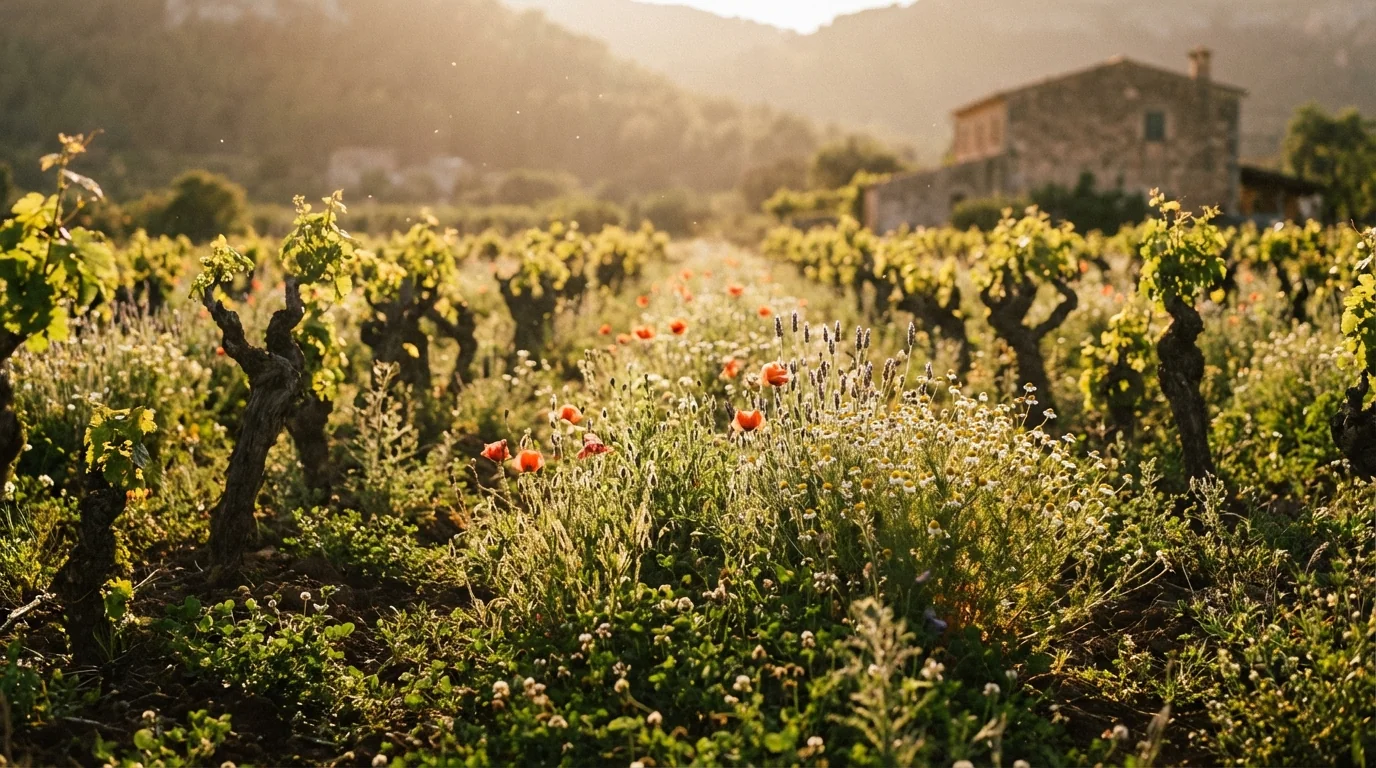
Implementing enhanced vineyard biodiversity requires a fundamental shift in daily agricultural management, especially under the harsh sun of the Mediterranean basin. The updated requirements recognize that southern European vineyards cannot apply the same cover crop strategies used in cooler, wetter climates like northern France. Instead, estates must cultivate drought-resistant indigenous plants that support local pollinators without aggressively competing with the vines for scarce summer moisture.
The shift toward advanced ecological integration is best understood by comparing the outgoing baseline expectations with the incoming mandates.
| Metric | Current Baseline (Pre-2026) | New Mediterranean Mandate (2026) |
|---|---|---|
| Non-Productive Area | Baseline ecological reserves | Mandatory 10% increase in wild zones |
| Soil Assessment | Organic matter percentage | Comprehensive microbiome diversity metrics |
| Habitat Connectivity | Recommended native borders | Mandatory continuous biodiversity corridors |
| Flora Integration | Standard cover crops allowed | Region-specific indigenous species required |
Adapting to these rigorous expectations involves planting specific shrubs and trees, such as wild olive, mastic, and native lavender, to create permanent habitats for predatory insects. These insects naturally control aphid and mite populations, eliminating the need for external interventions. Furthermore, managing the soil microbiome involves precise applications of biodynamic preparations at specific lunar intervals, encouraging deep root systems that can access subterranean water reserves. The meticulous cultivation of this symbiotic relationship between the vine and its surrounding environment ultimately defines the character and resilience of a true natural wine.
Why Sustainable Viticulture Spain is Leading the Biodynamic Transition?
The Iberian Peninsula, and particularly the Balearic archipelago, serves as a vital testing ground for advanced agricultural resilience. Sustainable viticulture in Spain has rapidly evolved from a niche philosophy into a highly sophisticated movement, driven by the urgent need to mitigate extreme weather patterns. Spanish winemakers understand that protecting the vineyard ecosystem is no longer an ideological choice but a practical necessity for long-term survival.
In regions characterized by intense heat and limited rainfall, the principles of biodynamic farming offer the most effective tools for maintaining vine vitality. By fostering a rich, living soil structure, these vineyards dramatically increase water retention capacity, allowing indigenous grape varieties like Callet, Manto Negro, and Prensal Blanc to thrive even during extended drought periods.
The commitment to exceeding baseline regulations is particularly evident among producers of Balearic Islands wine. Island ecosystems demand an elevated level of environmental sensitivity due to their isolated nature and limited resources. Forward-thinking estates in these areas have spent decades cultivating intricate polycultures, integrating almond trees, carob, and native garrigue alongside their vines. Because these properties have operated under strict holistic principles for generations, the upcoming 2026 regulatory adjustments serve merely as a formal validation of their everyday practices. Their existing biodiversity corridors and thriving soil microbiomes already surpass the new benchmarks, cementing their position at the forefront of the global movement toward regenerative agriculture.
Beyond Basic Compliance in Modern Winemaking
The upcoming regulatory shifts in holistic farming underscore a critical transition in the global wine industry. Agricultural benchmarks are finally catching up to the environmental realities of the Mediterranean basin, demanding that estates prioritize ecological health alongside crop yield. The mandate for a 10% increase in wild habitats and the new focus on subterranean biological diversity represent a necessary evolution in vineyard management.
The most resilient agricultural properties view these stringent requirements not as hurdles, but as fundamental components of premium wine production. Cultivating a robust network of native flora and fauna directly enhances the structural integrity of the soil and the complexity of the fruit. True leadership in this sector involves anticipating environmental needs long before governing bodies mandate them. Estates that have spent years meticulously integrating native forests, establishing uninterrupted wildlife corridors, and nurturing microscopic soil life already operate far beyond the 2026 parameters. This proactive approach to land stewardship ensures that the surrounding ecosystem remains vibrant and capable of producing exceptional vino biodinámico for generations to come.
Frequently Asked Questions
What is the Demeter certification?
The Demeter certification is the globally recognized standard for biodynamic agriculture, representing the strictest set of farming regulations in the world. It requires farmers to treat their property as a single, self-sustaining organism, prohibiting synthetic chemicals while mandating specific holistic preparations, closed-loop nutrient cycles, and stringent biodiversity integration to ensure maximum ecological health.
How do the 2026 biodiversity standards affect wine production?
The 2026 biodiversity standards mandate that certified vineyards increase their non-productive ecological areas by 10% and establish continuous wildlife corridors. This forces estates to dedicate more land to native flora and fauna rather than vine planting, which ultimately improves soil microbiome health, increases natural disease resistance, and creates more resilient, terroir-driven biodynamic wine.
What makes Mallorca a unique environment for biodynamic farming?
Mallorca features a distinct Mediterranean island climate with intense summer heat, limited rainfall, and a highly specific indigenous ecosystem. Biodynamic farming thrives here because traditional island polyculture already integrates diverse native plants like carob and wild olive, creating natural resilience against climate volatility while perfectly supporting indigenous grape varieties like Callet and Manto Negro.
