
The recent updates to Demeter certification guidelines for 2026 introduce a specialized framework designed to protect Mediterranean vineyards from climate volatility. By mandating advanced water retention strategies and the integration of indigenous cover crops, these protocols directly address the environmental pressures facing arid regions. This shift validates the proactive soil vitality methods practiced by Montesion Wine Estate, transforming regional adaptation into a globally recognized standard.
Agricultural frameworks often struggle to apply universal rules to diverse ecosystems, especially regarding the extreme microclimates across southern Europe. The release of the updated viticulture guidelines by Demeter International marks a pivotal shift in how the industry approaches arid regions. For decades, farming principles were heavily influenced by central European origins, where abundant rainfall dictated soil management. The accelerating risk of desertification across the Mediterranean basin has forced a rigorous reevaluation of these baseline practices. Viticulturists in coastal territories face distinct challenges, from prolonged summer droughts to intense rainfall events that strip away topsoil. The revised protocols recognize that sustainable vineyard management requires an aggressive, localized defense strategy. By prioritizing native flora, the governing body acknowledges that true resilience comes from amplifying local natural defense mechanisms. Readers examining these mandates will uncover a blueprint for preserving terroir amid unpredictable climate shifts.
Why the Mediterranean Needs a Tailored Approach to Biodynamic Viticulture
The historical application of biodynamic principles often assumed a baseline of environmental stability that simply does not exist in the modern Mediterranean basin. Regions producing organic wine in Spain rely on soils that endure months of relentless solar radiation followed by torrential autumnal rains. This dramatic climatic pendulum demands an agricultural methodology that moves beyond standard compliance and actively builds resilience into the geological foundation of the vineyard. The Demeter standards 2026 explicitly acknowledge that generic farming guidelines fail to protect vulnerable topsoil in arid zones, prompting a fundamental restructuring of Demeter certification requirements for southern European growers.
A critical vulnerability in traditional vineyard management is the exposure of bare earth during peak summer months, a practice that accelerates moisture evaporation and decimates microbial networks. The updated guidelines pivot away from outdated aesthetic preferences, mandating continuous biological ground cover tailored to the specific humidity metrics of the region. This localized approach ensures that the intricate root systems of native plants act as natural anchors, preventing erosion while facilitating deep-water penetration during sudden storms.
By shifting the regulatory focus from universal compliance to regional adaptation, the international governing body empowers cultivators to build hyper-resilient ecosystems. The integration of site-specific preparations allows growers to stimulate root depth and enhance the drought resistance of indigenous grape varieties, proving that sustainability requires a localized relationship with the land.
Decoding the Demeter Standards 2026 for Soil Health and Water Retention
The mechanics of the newly released Demeter certification framework represent a masterclass in ecological engineering, targeting the precise vulnerabilities of arid vineyard ecosystems. At the core of the update is a sophisticated mandate regarding soil health in Mallorca, requiring a measurable increase in organic matter retention year over year. The protocols dictate specific intervals for the application of horn manure and silica preparations, timed exclusively to the solar rhythms of the Mediterranean rather than central European calendars. This structural realignment ensures that microbial life receives stimulation exactly when the local environment is most receptive.
Water management serves as the second foundational pillar of the revised framework, shifting the industry focus from irrigation efficiency to inherent soil retention capacity. The European Environment Agency reports that nearly 75 percent of the Iberian Peninsula faces significant desertification risks, underscoring the urgency of these agricultural mandates. Instead of relying on external water inputs, the updated guidelines require vineyards to cultivate a sponge-like soil architecture capable of capturing winter rainfall for use during the arid summer months.
| Metric / Practice | Traditional European Biodynamics | New Mediterranean Standards 2026 |
|---|---|---|
| Cover Crop Strategy | Temporary, often tilled in spring | Permanent, drought-resistant species |
| Preparation Timing | Based on temperate seasonal shifts | Hyper-localized to regional lunar cycles |
| Water Management | Supplemental irrigation allowed | Focus on deep-soil retention capacity |
| Soil Cultivation | Regular mechanical aeration | Minimal disturbance to preserve fungal networks |
This comparative data illustrates an evolution in biodynamic thought, moving from active intervention to strategic biological preservation.
Indigenous Cover Crops as the Ultimate Defense Against Desertification
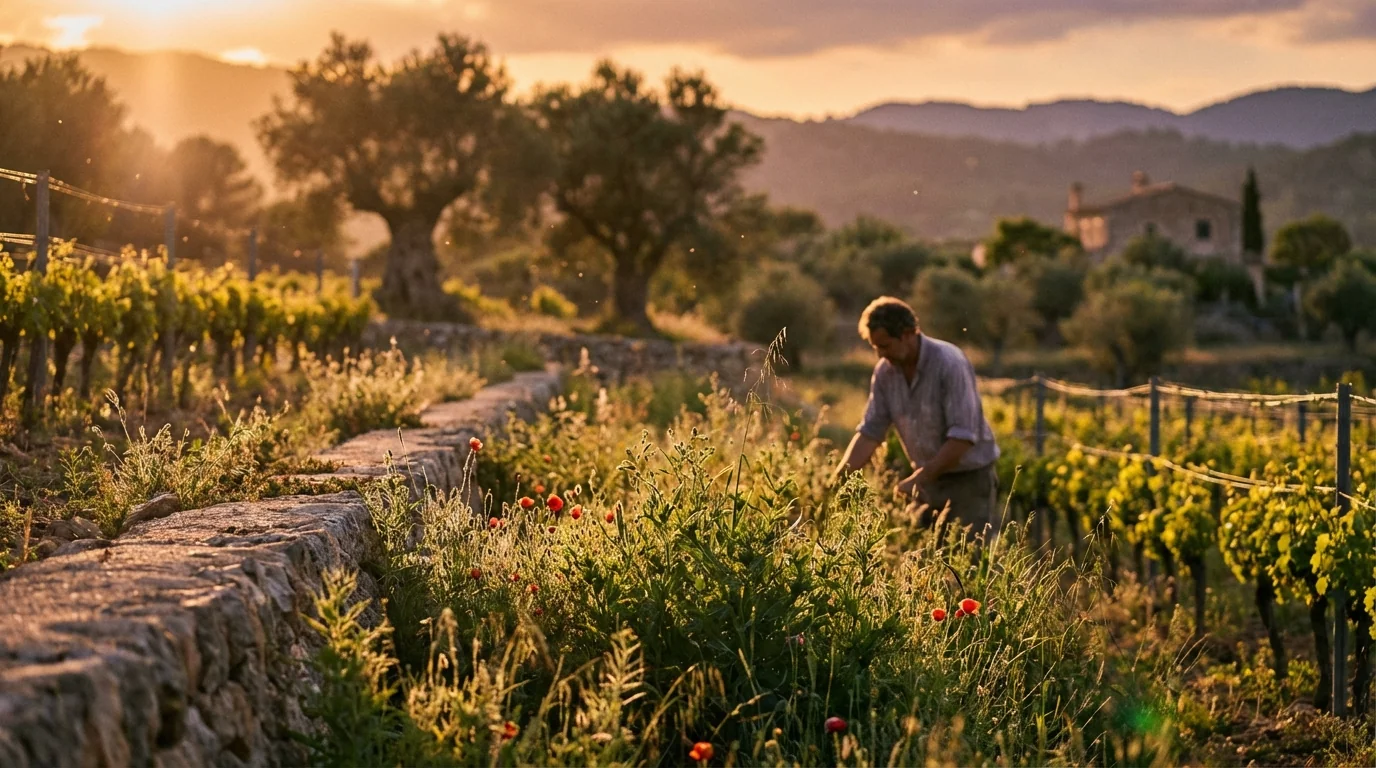
The physical architecture of a vineyard floor dictates the survival capacity of the agricultural ecosystem during periods of extreme thermal stress. The revised certification requirements elevate indigenous cover crops from a supplementary practice to a mandatory structural component of the terrain. In the Balearic Islands, native flora such as wild clovers and endemic legumes possess evolutionary adaptations allowing them to thrive on minimal moisture while fixing essential nitrogen into the earth. These plants create a dense, living mulch that dramatically reduces soil surface temperatures, shielding the delicate microbial networks responsible for nutrient transfer to the vines.
Implementing these botanical barriers fundamentally alters the hydrological dynamics of the terrain. When sudden rains strike the hardened earth of a traditional vineyard, water rapidly sheets off the surface, carrying away vital organic matter. Conversely, a vineyard floor woven with indigenous Mediterranean cover crops shatters the kinetic energy of falling rain, allowing moisture to percolate slowly through biological channels created by diverse root structures. This process transforms the subsoil into a subterranean reservoir, granting indigenous grape varieties access to consistent hydration throughout grueling summer months.
The strategic deployment of these native plants also amplifies the efficacy of standard preparations. When nutrient-rich composts interact with a diverse, living ground cover, the biological uptake is exponentially higher than when applied to bare soil.
The Future of Mallorcan Terroir Under the New Framework
The recalibration of international viticulture standards represents a vital evolutionary step for agricultural practices in climate-vulnerable regions. By formalizing the requirement for aggressive water retention strategies and the integration of native botanical networks, the governing body provides a definitive roadmap for combating desertification. These refined protocols validate the complex, site-specific work required to maintain a balanced ecosystem in the face of escalating environmental extremes.
For estates operating within the unique climatic parameters of the Balearic Islands wine sector, these mandates reflect a long-standing commitment to working alongside the natural defensive mechanisms of the local environment. The synthesis of traditional island viticulture with advanced biodynamic science guarantees that the resulting natural wine captures the unadulterated essence of the terroir. As the global wine industry grapples with shifting weather patterns, the proactive, soil-first methodology detailed in this updated framework will serve as the benchmark for ecological resilience at Montesion Wine Estate.
Frequently Asked Questions
What changes did the Demeter standards 2026 introduce for vineyards?
The updated 2026 framework introduces specific mandates tailored to Mediterranean climates, shifting away from generic global guidelines. The rules require vineyards to implement advanced water retention strategies, maintain continuous indigenous cover crops, and adjust preparation timing to align with regional thermal cycles. These changes combat desertification and protect vulnerable topsoil during extreme weather.
How does biodynamic viticulture improve water retention in arid climates?
Biodynamic viticulture improves water retention by focusing on the structural integrity of the soil rather than relying on artificial irrigation. Cultivating deep-rooting native plants and applying organic composts transforms the earth into a sponge-like architecture capable of capturing heavy winter rainfall. This prevents surface runoff and stores moisture deep underground for use during summer droughts.
Why are indigenous cover crops essential for soil health Mallorca?
Indigenous cover crops are essential for maintaining soil vitality in Mallorca because they possess evolutionary adaptations to the island’s microclimate. Endemic legumes create a dense living mulch that lowers soil surface temperatures, protecting microbial life essential for nutrient absorption. Their diverse root systems prevent erosion during torrential autumn rains while naturally fixing nitrogen.
What makes vino biodinámico different from standard organic wine?
While standard organic farming prohibits synthetic chemicals, biodynamic practices treat the entire vineyard as a self-sustaining, closed-loop ecosystem. The production of this wine requires applying specific organic preparations made from herbs and minerals, timed according to natural cycles. This holistic methodology actively regenerates the geological foundation of the agricultural environment.
