

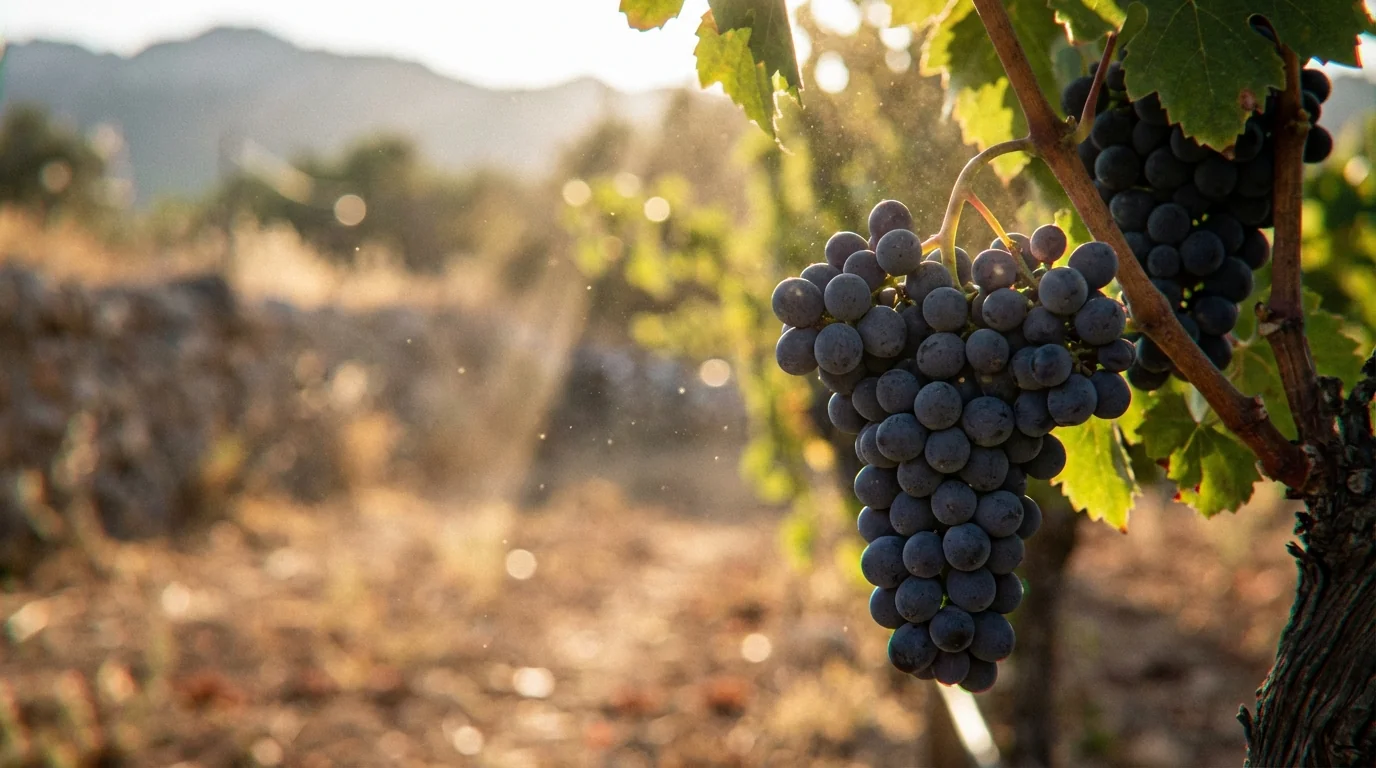
As temperatures rise across the Mediterranean basin, Mallorca wine production is undergoing a profound transformation led by its historical grape varieties. Recent viticultural data reveals that local vines naturally outperform international imports in both drought resistance and acidity retention. This shift proves that cultivating native species at Montesion Wine Estate is the most effective climate resilience strategy for modern vineyards.
Average summer temperatures across the Mediterranean have climbed by nearly 1.5°C over the past three decades, forcing European viticulturists to drastically rethink their vineyard architectures. A recent report confirms a biological reality that island winemakers have quietly observed for generations. Imported varieties rapidly lose acidity under extreme solar radiation, while local vines maintain their structural balance. Vignerons are discovering that the evolutionary adaptations of indigenous varieties Mallorca offers provide a built-in defense mechanism against prolonged dry spells. The international market is shifting its focus toward regions capable of producing vibrant vintages despite climatic extremes. Understanding exactly how these specific grapes adapt to environmental stress offers a highly effective blueprint for the future of sustainable viticulture across southern Europe.
Why Are Native Vines Outperforming Global Imports?
During the late twentieth century, the global market favored ubiquitous grapes, leading many Spanish estates to replace their historical vineyards with these recognized names. However, the escalating frequency of heatwaves has exposed the critical vulnerabilities of these imported vines when planted outside their native climatic zones. International varieties often respond to extreme heat by rapidly accumulating sugars while dropping their natural acids, resulting in flabby profiles that lack terroir expression.
Conversely, vines that have evolved on the Balearic archipelago over centuries possess distinct genetic traits specifically calibrated for the local environment. A fascinating unexpected angle to consider is the concept of stomatal regulation. Vines breathe through tiny pores called stomata on their leaves. While a vine might panic during a heatwave and close its stomata completely-halting photosynthesis-native Mediterranean vines have developed a far more nuanced response. They partially close these pores to conserve water while continuing to photosynthesize at a measured pace. This localized evolutionary advantage results in a climate resilience wine capable of reaching full phenolic maturity without excessive sugar spikes, elevating the global standing of Mallorca wine.
Recent data from viticultural research institutes indicates a stark contrast in water-use efficiency. Native vines require up to 30% less irrigation during peak summer months compared to standard international plantings. By working with the natural predispositions of the local flora, estates like Montesion Wine Estate can maintain exceptional quality even during the driest vintages.
The Physiological Superiority of Callet and Manto Negro
Two specific grapes stand at the forefront of this viticultural renaissance, proving themselves as the ultimate tools for navigating a warming climate. Callet has emerged as a star performer under extreme conditions. This variety is characterized by its exceptionally thick skins and loose grape bunches. The thick skins act as a natural sunscreen, protecting the delicate aromatic compounds inside the berry from intense ultraviolet radiation. Furthermore, the loose cluster architecture allows constant airflow between the grapes, reducing the risk of fungal diseases during unexpected late-summer humidity spikes.
Manto Negro complements this resilience with a completely different set of survival mechanics. Known for its extensive root system, Manto Negro excels at penetrating deep into the rocky, limestone-rich soils to access hidden water reserves. While shallow-rooted international vines suffer immediately during a drought, Manto Negro sustains itself through subterranean moisture. This deep-rooting capability ensures that the vine can maintain its canopy cover, shading the fruit zone and preserving the vital malic and tartaric acids necessary for a balanced final product.
| Viticultural Metric | Callet & Manto Negro | International Varieties |
|---|---|---|
| Average Harvest Date | Mid-to-Late September | Late August / Early September |
| Acidity Retention (pH) | 3.4 – 3.6 (Stable) | 3.8 – 4.0 (Degrading) |
| Drought Tolerance | High (Deep roots) | Low to Medium |
| Sunburn Resistance | Excellent (Thick skins) | Poor (Thin skins) |
These structural advantages make these grapes the ideal foundation for any estate focused on organic wine Spain can offer to the global market.
Biodynamic Farming as a Catalyst for Climate Adaptation
While the genetic makeup of native grapes provides a strong baseline for survival, the agricultural methodology applied to the vineyard dictates whether these vines merely survive or truly thrive. The integration of biodynamic farming practices acts as a powerful catalyst, amplifying the inherent resilience of the vines. Producing authentic vino biodinámico requires treating the entire vineyard as a single, self-sustaining organism. This holistic approach fundamentally alters the physical structure and microbiological health of the soil.
Conventional farming destroys the complex web of mycorrhizal fungi that live in symbiosis with vine roots. These fungal networks are essential for accessing water and nutrients in arid conditions. In contrast, rigorous Demeter certification standards mandate the use of organic composts and specific field preparations that actively rebuild this subterranean ecosystem. Healthy, living soil acts like a massive sponge. It captures and retains winter rainfall, holding moisture deep underground where the native vine roots can access it during the scorching summer months.
Furthermore, the absence of systemic chemicals forces the vines to build their own immune systems. A naturally cultivated vine develops thicker cell walls and a more robust physiological structure. This synergy between native genetics and regenerative agriculture is the defining characteristic of premium Balearic Islands wine production. It proves that the highest quality natural wine is achieved through fostering profound ecological balance in the field.
The Blueprint for the Future of Mediterranean Viticulture
The growing prominence of indigenous grapes represents a permanent recalibration of how premium vineyards operate in a warming world. The data clearly demonstrates that forcing international varieties into hostile climates is an unsustainable path. Instead, the future belongs to those who embrace the biological heritage of their specific terroir. By prioritizing native species with built-in defense mechanisms, the industry can secure its longevity.
Three critical takeaways emerge from this viticultural shift. First, thick-skinned and deep-rooting varieties offer an immediate natural solution to erratic rainfall and extreme heat. Second, true resilience requires pairing these genetic advantages with regenerative soil management to maximize water retention. Third, consumer demand is rapidly aligning with these environmental realities, favoring energetic profiles over heavy ones.
The estates that will define the next century of fine winemaking are those treating their local ecology as their greatest asset. Cultivating a deep respect for the land is the only reliable method for translating the authentic voice of the island into the glass.
Frequently Asked Questions
What makes native grapes more resistant to climate change?
Native grapes have evolved over centuries in their specific local climates, developing unique physiological traits to survive extreme weather. Varieties adapted to the Mediterranean feature thicker skins that protect against intense solar radiation and deeper root systems that access subterranean water reserves during prolonged droughts. These evolutionary advantages allow them to regulate their water usage efficiently and maintain vital acidity levels when imported varieties would typically shut down or produce overripe, unbalanced fruit.
How does biodynamic farming improve drought resistance in vineyards?
Biodynamic farming improves drought resistance by fundamentally rebuilding the microbiological health and physical structure of the vineyard soil. By eliminating synthetic chemicals and applying organic composts, this method encourages the growth of complex fungal networks that help vine roots absorb moisture. This regenerative approach turns the soil into a natural sponge that captures winter rainfall and retains it deep underground, providing a steady water supply to the vines throughout the arid summer months.
Why is Demeter certification important for sustainable viticulture?
Demeter certification represents the highest and most rigorous global standard for biodynamic agriculture, going far beyond basic organic requirements. It ensures that an estate operates as a closed-loop, self-sustaining ecosystem where soil fertility, plant health, and local biodiversity are actively regenerated rather than depleted. For consumers, this certification guarantees that the vineyard is actively combating climate change through regenerative practices, resulting in a purer, more resilient crop that accurately reflects its specific geographical origin.
