

Mallorca Wine History: How Phylloxera Lost Its Grip
Mallorca wine history shows that the island did not simply escape phylloxera through geography alone. Maritime isolation delayed the insect, commercial decisions later opened the door, and surviving local varieties helped preserve a distinct viticultural identity after the epidemic. The result is a living record of adaptation, not an untouched vineyard paradise.
In 1891, Mallorca still supported roughly 30,000 hectares of vines, according to foodswinesfromspain.com. Within eight years, production had fallen from as much as 517,000 hectolitres annually to 18,000. That collapse reshaped farms, trade routes, grape genetics, and the social value of wine across the Balearic Islands. It also created a historical paradox: Mallorca’s distance from mainland Europe offered protection, yet the island’s booming export trade eventually brought the threat ashore.
This history matters now because contemporary Mallorca wine often presents native grapes as a recent discovery. They are not. Callet, Prensal Blanc, and other island varieties survived cycles of disease, market pressure, land conversion, and tourism. Their renewed importance reflects a long biological and cultural memory. It also explains why biodynamic farming can feel less like a trend here and more like a continuation of careful island stewardship.
Did Mallorca really escape the first phylloxera wave?
For a time, yes. Phylloxera reached European vineyards through the movement of plant material, and the insect spread across France during the 1870s. Mallorca’s position in the Mediterranean created a natural delay. Sea crossings slowed accidental transmission, while the island’s dry, windy climate offered conditions that could make vineyard disease less predictable. As a result, Mallorcan growers supplied French merchants when vineyards north of the Pyrenees were failing.
The commercial opportunity was enormous. A report cited by palatepress.com places Mallorca’s vineyard area at 75,000 acres in 1891, a scale far beyond today’s plantings. Island wine travelled to France and could be relabelled there, because buyers needed volume more urgently than they needed varietal detail. During that period, Mallorca was not a remote curiosity. It was a strategic supplier inside a European wine emergency.
However, isolation protected the island only while the island remained cautious. The historical record indicates that imported American rootstock, reportedly brought in illegally, helped introduce the insect in 1891. majorcadailybulletin.com describes the first reports in Algaida and Llucmajor before the pest moved through Llevant, Binissalem, Inca, Santa Maria, and other producing areas. The lesson is uncomfortable but useful: geography buys time; it does not replace biosecurity.
What did phylloxera do to Balearic Islands viticulture?
The damage was both biological and economic. Phylloxera feeds on the roots of susceptible European grapevines, weakening them until the plants decline. American vine species developed thicker root tissue, which limits the insect’s access. Grafting European fruiting varieties onto American rootstocks therefore became the proven long-term response, as explained by doplaillevant.com.
Mallorca’s growers faced a more complicated problem than replacing dead vines. The island had expanded production rapidly to meet French demand. Wheat fields gave way to vineyards, while almond and carob trees were removed. When France began recovering and imposed higher duties on Mallorcan imports, the island suffered a second shock. The market weakened just as vineyard restoration became expensive.
That sequence explains why “devastation” should not be understood as a single harvest failure. It was a chain reaction. Vineyards disappeared, household income contracted, and landowners reconsidered whether grapes justified the labour. Between 1900 and 1909, production was described as practically zero. Later, almonds, apricots, construction, and tourism occupied land once associated with vines.
The wider history of repec.org shows that Balearic Islands viticulture followed different economic models across the archipelago. Mallorca built a powerful mercantile network around international demand, while Menorca relied more heavily on its own market. This distinction matters because disease did not act alone. Commercial exposure determined how intensely each island experienced the consequences.
Why did native grapes survive after the vineyards collapsed?
Phylloxera destroyed plants, but it did not erase every grape-growing practice. Farmers replanted selectively, maintained small parcels, and preserved cuttings where wine remained part of local life. Old vineyards were often mixed plantings, with Callet, Fogoneu, Manto Negro, and table grapes growing together. Such fields were less tidy than modern monoculture, yet they carried genetic diversity through difficult decades.
Callet illustrates the value of that survival. The variety produces relatively pale-coloured reds, moderate tannins, floral aromas, and red-fruit character. It also ripens later than Manto Negro, which can help it retain acidity while reaching flavour maturity at moderate alcohol levels. foodswinesfromspain.com identifies those traits as increasingly relevant in a warming climate.
Prensal Blanc, also known as Moll, represents the white-wine side of the story. It became a foundational grape in Binissalem and remains useful for fresh, approachable wines. Viognier is not an indigenous Mallorcan variety, but its aromatic profile can sit naturally within the island’s Mediterranean setting. Together, these grapes show that heritage does not mean refusing all outside influence. It means knowing which varieties express the place with clarity.
The survival of native grapes also challenges the phrase “pre-phylloxera vines Spain.” Very old vines may preserve valuable local material, but age alone does not prove that a vine predates the epidemic. Rootstock history, vineyard records, trunk morphology, and genetic analysis all matter. A credible claim requires evidence rather than romance.
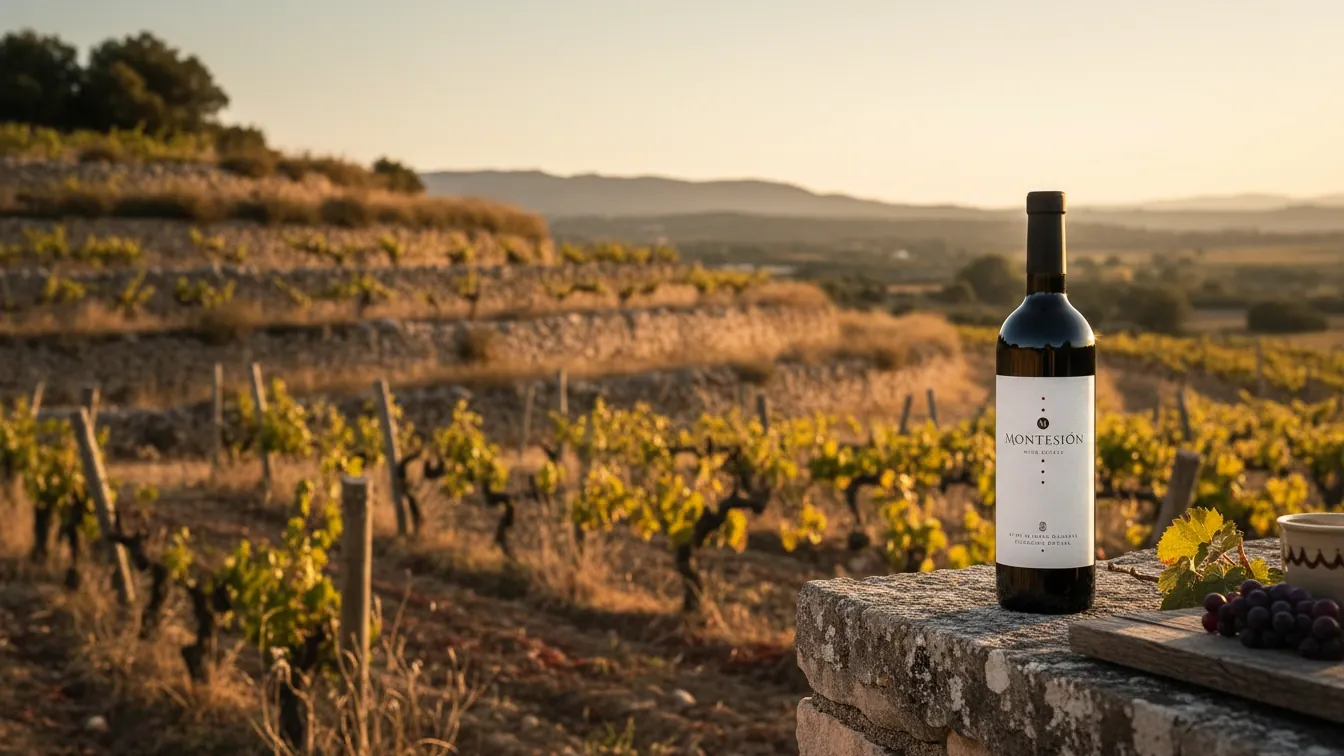
Featured: Montesión Callet Limited Edition 2007
For readers drawn to the survival of Mallorca’s native grapes, Montesión Callet Limited Edition 2007 offers a way to experience that continuity in the glass. Its mature red-fruit character and measured oak warmth give the island’s historical thread a contemporary, contemplative expression. It is a fitting choice for a reflective dinner or a focused tasting of Mallorcan heritage.
Did mainland Spain lose more than Mallorca?
The comparison with mainland Spain is useful, though it should not become a simple island-versus-continent story. Mainland vineyards faced broader transport networks and denser links with France, making the movement of infected plant material easier. Replanting eventually relied on American rootstocks across both mainland and island vineyards. The technical solution was shared, but the social consequences varied by region.
Mallorca’s post-phylloxera landscape became especially vulnerable to substitution. In some districts, farmers chose crops that demanded less labour or offered steadier returns. Later, the growth of tourism raised land values and redirected younger generations toward construction and hospitality. The vineyard did not need to fail biologically to disappear economically.
Meanwhile, replanting could simplify a vineyard. Mixed old parcels were replaced with more orderly rows, selected clones, and internationally familiar grapes. Cabernet Sauvignon, Merlot, Syrah, and Chardonnay became widely planted in Mallorca during the twentieth century. These varieties can perform well, but their success sometimes obscured the island’s more unusual inheritance.
Today, the strongest wines often reject that false choice. A grower can use grafted vines, careful canopy work, and modern cellar hygiene while still protecting Callet or Prensal Blanc. The past therefore offers a practical model: restore resilience first, then allow local identity to guide the planting decisions.
How does biodynamic wine preserve historical knowledge?
Biodynamic wine cannot reverse phylloxera, and it should not be presented as an alternative to resistant rootstocks. Its contribution lies elsewhere. Biodynamic farming treats soil, plants, animals, weather, and human labour as parts of one working system. That approach encourages observation over routine, which is valuable in an island climate where wind, drought, salt exposure, and heat can change conditions quickly.
The connection with history becomes clearest in the vineyard’s pace. A farmer who monitors soil structure, cover crops, moisture, and vine balance may notice small changes before they become costly problems. Such attention also supports older parcels, where irregular trunks and mixed varieties make mechanised uniformity less useful. Preservation is not passive. It requires repeated decisions across decades.
At the winery, spontaneous fermentation can reinforce that sense of place when it is carefully managed. A red such as Montesión Callet Limited Edition 2007 connects a native variety with a dry, hot growing season, hand harvesting near Porreres, controlled fermentation, and 12 to 15 months in French oak. Its value is not that it recreates a nineteenth-century wine. Rather, it demonstrates how local grapes can carry historical continuity through contemporary craft.
That distinction also helps consumers read labels more intelligently. Organic and biodynamic certification describe farming standards, while grape variety and origin describe identity. Neither replaces the other. A wine can be environmentally responsible yet stylistically generic, or historically distinctive without offering a complete ecological account. The most convincing bottles bring those dimensions together without overstating either one.
Three lessons from Mallorca’s vineyard recovery
Mallorca’s wine history offers three practical conclusions for growers, drinkers, and anyone studying resilient agriculture. First, isolation is a temporary advantage. The island delayed phylloxera, but trade and plant movement eventually overcame the sea. Biosecurity remains as important as climate.
Second, genetic diversity is a form of insurance. Mixed plantings and neglected parcels may look inefficient beside uniform vineyards, yet they can preserve varieties that later become essential to regional identity. Callet’s moderate tannin, later ripening, and freshness show how an old grape can answer a modern climate challenge.
Third, recovery depends on economics as much as agronomy. Replanting succeeds only when farming remains viable for families and landowners. Protecting vineyards therefore means valuing skilled labour, realistic yields, local varieties, and landscapes that compete with more profitable land uses.
For Montesion Wine Estate, this heritage is most credible when it appears in specific choices: Porreres vineyards, Demeter standards, spontaneous fermentation, and continued attention to varieties that connect Mallorca’s present with its difficult past. The island did not remain untouched by phylloxera. It endured the epidemic, rebuilt unevenly, and retained enough living material to make recovery meaningful.
At Montesion Wine Estate, the three actions are clear: protect plant material, verify historical claims, and farm for long-term soil and economic health. Those actions turn memory into practice. They also explain why the best Mallorca wine is not defined by survival alone, but by what growers choose to preserve next.
