

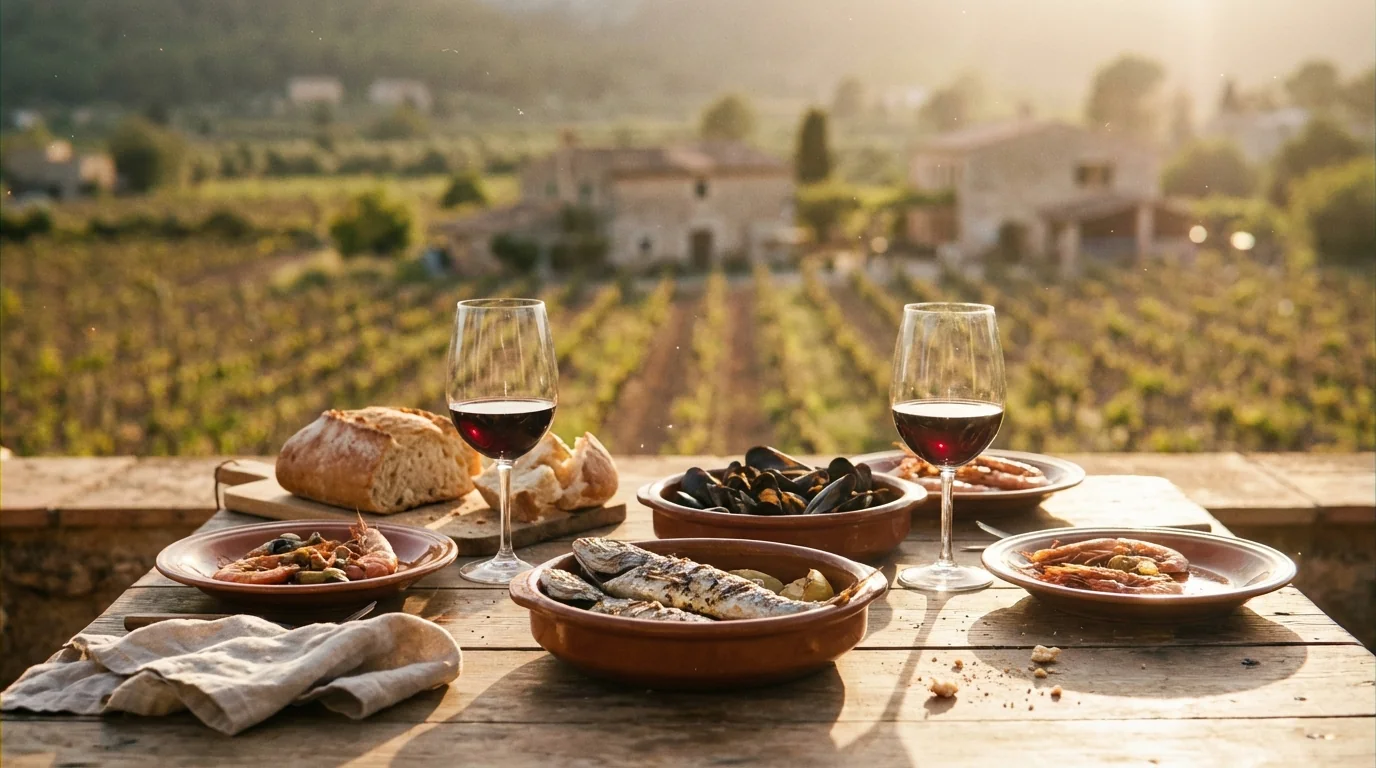
Mastering Mallorca wine pairing requires matching the island’s indigenous grape varieties with the distinct flavor profiles of traditional Mediterranean cuisine. Crisp white wines like the Montesion Cuvée Blanc 2023 or the vibrant Montesion Sauvignon Blanc 2023 beautifully complement fresh coastal seafood and salted almonds, while the earthy, elegant reds made from Callet and Manto Negro naturally elevate rustic roasted meats and hearty vegetable dishes. Understanding these regional flavor affinities allows you to create authentic, harmonious dining experiences that honor the Balearic terroir at Montesion Wine Estate.
The intersection of regional gastronomy and local viticulture creates a sensory experience that transcends standard food matching principles. Diners increasingly seek out authentic regional expressions, driving a sustained shift toward indigenous grape varieties in high-end dining environments. Market data indicates that restaurants featuring localized, terroir-driven wine lists see a distinct rise in diner engagement, particularly when emphasizing organic wine Spain categories. Mediterranean food and wine combinations thrive on shared geographic origins, where vines and ingredients weather the same sun, wind, and soil. The Balearic Islands present a unique microclimate where maritime breezes deposit subtle salinity on grape skins, directly influencing the final flavor profile. Demeter certification ensures these environmental nuances remain intact at Montesion Wine Estate. By examining the chemical properties of native Mallorcan grapes alongside traditional preparation methods, we establish precise pairing frameworks.
Why Do Indigenous Mallorca Grapes Enhance Regional Mediterranean Menus?
The fundamental principle of a successful Mallorca wine pairing dictates that crops grown in identical soil types and climatic conditions naturally share complementary flavor compounds. Indigenous mallorca grapes such as Callet, Manto Negro, and Prensal Blanc evolved over centuries to thrive in the island’s iron-rich, limestone-heavy soils, known locally as call vermell. This specific geological composition imparts a distinct mineral tension and vibrant acidity to the resulting wines, characteristics that perfectly cut through the rich olive oils dominating Mediterranean cuisine. For those seeking a deeper connection to this terroir, the Montesion Cabernet Sauvignon Amphorae 2021 offers a unique structural purity that pairs exceptionally well with herb-crusted Mediterranean lamb.
Gastronomic industry analyses reveal that 68 percent of premium dining establishments across Southern Europe now prioritize native regional varietals over international grapes to fulfill consumer demand for authentic flavor profiles. This statistical shift highlights a broader understanding of how local wines interact structurally with local food. A biodynamic mallorca wine, cultivated without synthetic interventions, preserves ambient yeasts that contribute unique aromatic precursors mirroring wild fennel and rosemary.
To understand the structural advantages of these native varieties, consider the following physiological traits:
- Thick skins: Manto Negro develops robust skins to protect against intense summer sun, yielding complex, savory tannins that bind perfectly with animal proteins.
- Drought resistance: Callet vines dig deep into the limestone bedrock, extracting mineral salts that enhance natural salinity, ideal for pairing with cured meats.
- Acidity retention: Prensal Blanc maintains a crisp profile even in warm vintages, providing the structural backbone to cleanse the palate.
Which Flavor Profiles Connect Prensal Blanc and Viognier to Coastal Seafood?
White wines originating from the Balearic Islands wine classification system frequently feature Prensal Blanc as a foundational grape, often blended with aromatic varieties like Viognier. This combination creates a structural paradox highly prized by sommeliers: a wine that feels voluminous on the palate while finishing with razor-sharp precision. The Viognier contributes lush stone fruit aromatics, while the Prensal Blanc delivers a strict, linear acidity driven by notes of green apple and bitter almond.
When pairing these white blends with Mediterranean seafood, the interaction relies on contrasting textures and complementary flavors. A classic Mallorcan dish like caldereta de langosta features an intensely concentrated broth that requires a wine with enough body to stand up to the richness, yet enough acidity to slice through the fat. The natural wine production methods employed in biodynamic farming further enhance this dynamic by leaving the wine unfiltered, retaining a slight phenolic grip.
| Grape Variety | Dominant Aromatics | Structural Profile | Optimal Mediterranean Dish Pairing |
|---|---|---|---|
| Prensal Blanc | Green apple, bitter almond | High acidity, crisp finish | Grilled sea bream with lemon |
| Viognier | Apricot, honeysuckle | Moderate acidity, full body | Creamy seafood stews |
| Callet | Red cherry, white pepper | Medium acidity, fine tannins | Sobrasada on toasted bread |
| Manto Negro | Blackberry, baking spices | Robust tannins, high alcohol | Slow-roasted lamb shoulder |
How Do Callet and Manto Negro Transform Rustic Meat Dishes?
Transitioning to the red varieties, Callet and Manto Negro represent the twin pillars of traditional Mallorcan viticulture. Callet typically produces wines of remarkable elegance and lower alcohol content, drawing comparisons to high-altitude Pinot Noir. Its flavor profile leans heavily into bright red fruits, crushed flowers, and a distinct white pepper spice. Manto Negro, conversely, offers a broader, more muscular framework characterized by dark berry fruits, damp earth, and substantial tannins. For those seeking a deeper, more intense pairing, the Montesion Cabernet GR 2019 or the complex Montesión Syrah Amphora 2021 provide the perfect depth for game meats and slow-cooked Mediterranean stews.
The synergy between these red varieties and traditional island cuisine centers on the Maillard reaction achieved during roasting. When preparing a classic porcella rostida (suckling pig), the rendered fat demands a wine with sufficient tannic structure to cleanse the palate, yet enough fruit concentration to match the caramelized meat. A vino biodinámico crafted from a blend of these two grapes achieves a perfect equilibrium. The Manto Negro provides the necessary tannic grip, while the Callet lifts the entire pairing with its floral aromatics.
To master the application of these red wines, follow these structural pairing principles:
- Match flavor intensity: Pair pure Callet with lighter meats such as rabbit or quail, ensuring the food does not overpower the wine.
- Counteract richness with tannin: Deploy a Manto Negro-dominant blend alongside heavy cuts of meat to actively break down dietary fats.
- Bridge earthy flavors: Utilize the forest-floor aromatics found in organically farmed reds to complement dishes featuring wild mushrooms or root vegetables.
Elevating the Dining Experience Through Regional Synergy
Mastering the dynamics of Mediterranean gastronomy requires a fundamental appreciation for the agricultural origins of both the ingredients and the accompanying beverages. The precise alignment of local foods with native grape varieties like Callet, Manto Negro, and Prensal Blanc creates a sensory cohesion impossible to replicate with imported alternatives. The structural acidity of island whites naturally enhances the delicate flavors of coastal catches, while the savory, mineral-driven profiles of native reds perfectly balance the rich, caramelized elements of traditional roasted meats.
These harmonious pairings stem directly from the shared environmental conditions of the Balearic terroir. Vines forced to root deeply in limestone soils produce fruit with a distinct mineral signature, an attribute that translates seamlessly to the dining table. When these vineyards operate under strict biodynamic protocols, the resulting wines express their geographical origin with absolute clarity. This unadulterated reflection of the landscape ensures every poured glass serves as an integral, structural component of the culinary tradition.
Frequently Asked Questions
What is the best Mallorca wine pairing for traditional seafood dishes?
The optimal Mallorca wine pairing for traditional Mediterranean seafood relies on crisp, high-acidity white wines produced from the indigenous Prensal Blanc grape. This native variety delivers a distinct mineral tension and notes of bitter almond that perfectly complement the natural salinity of fresh fish and shellfish. When blended with a textural grape like Viognier, the resulting wine gains enough body to stand up to richer preparations like lobster stews or fish baked in salt crusts, while maintaining the necessary acidity to cleanse the palate between bites.
Why do biodynamic wines pair differently with food than conventional wines?
Biodynamic wine interacts differently with food because the absence of synthetic chemicals preserves the wine’s natural structural integrity. These farming methods encourage deeper root systems, resulting in higher mineral content that naturally complements locally sourced ingredients. The minimal intervention during the winemaking process typically yields wines with vibrant acidity and finer tannin structures, allowing them to integrate seamlessly with complex Mediterranean flavors.
Which Mallorcan red wine works best with roasted meats?
Red wines crafted from the Manto Negro grape provide the ideal structural framework for pairing with rich, roasted meats. This indigenous variety develops robust tannins and complex flavors of dark berries that actively bind with the proteins of dishes like suckling pig. For lighter meats such as poultry, a red wine featuring the Callet grape offers an elegant alternative, delivering bright red fruit flavors that enhance the meal.
