

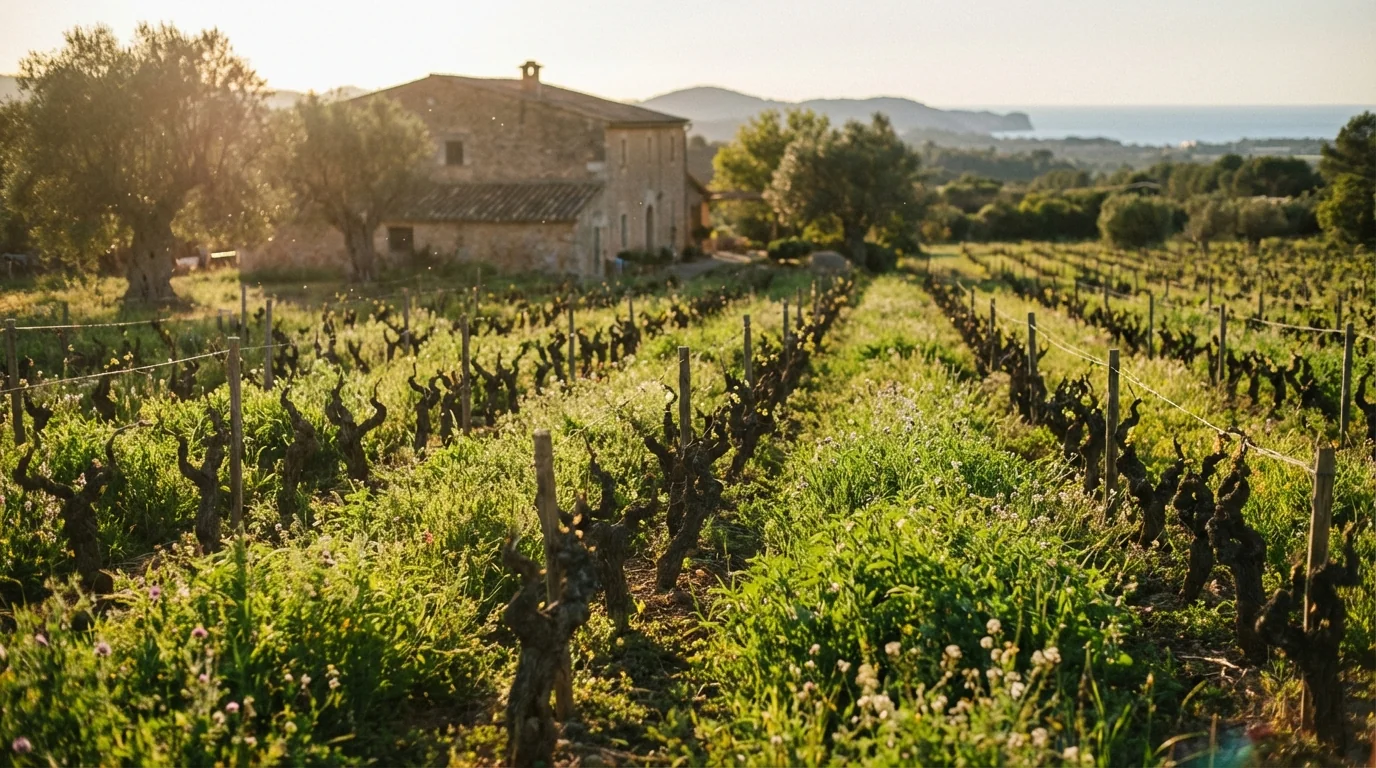
The evolution of natural wine Spain is experiencing a profound renaissance, driven by a return to ancestral farming methods across the Mediterranean coast. By abandoning chemical interventions and embracing native grape varieties, we are finally allowing our unique terroirs to speak clearly. This movement proves the future of Spanish viticulture lies entirely in its ancient past, a philosophy central to the mission at Montesion Wine Estate.
Watching the recent transformation within the Mediterranean region fills me with validation and shared purpose. For decades, much of the Spanish Mediterranean coast prioritized volume over character, relying heavily on international grape varieties and systemic chemicals to meet global market demands. However, a quiet rebellion has taken root among dedicated vignerons who refuse to accept compromised soils. Reading about the viticultural revolution unfolding just across the Balearic Sea perfectly mirrors the daily reality of our own biodynamic practices here in Mallorca at Montesion Wine Estate. We are witnessing a definitive shift away from industrial agriculture toward a philosophy honoring the living vineyard. I want to share my perspective on why this regional awakening matters so deeply and how it connects directly to our work with indigenous vines.
How Did the Mediterranean Region Become a Catalyst for Biodynamic Viticulture Spain?
When I analyze the trajectory of biodynamic viticulture Spain over the last ten years, the region stands out as a fascinating case study in agricultural redemption. Historically recognized almost exclusively for massive sparkling wine production, the area suffered from decades of intensive farming that stripped the soils of their natural vitality. The current revolution represents a complete paradigm shift. These farmers are actively restoring the microbiological life of their land by integrating animals back into the vineyards, utilizing cover crops, and treating the farm as a single, self-sustaining organism.
Seeing this transformation unfold resonates deeply with my own daily experiences among the vines. When you transition a degraded vineyard to biodynamic farming, the first few years are incredibly challenging. The vines go through a withdrawal period, stripped of their synthetic fertilizers, forcing their roots to dig deeper into the limestone and clay to find nutrients. In this region, this rigorous transition has resulted in a stunning revival of soil health and vine resilience. The vignerons there are proving that even historically industrialized zones can return to a state of ecological balance.
- They have replaced chemical herbicides with mechanical under-vine tilling and sheep grazing.
- They treat fungal pressures using homeopathic plant preparations rather than systemic fungicides.
- They view wild ground cover not as competition, but as essential indicators of soil moisture retention.
Why Are Indigenous Spanish Grapes the True Stars of This Movement?
The heart of this Mediterranean renaissance beats through the revival of indigenous Spanish grapes. For far too long, the global market dictated the planting of international varieties across our landscapes, homogenizing the distinct flavor profiles of our regions. The true breakthrough in natural wine has been the uncompromising dedication to native varieties like Sumoll and Xarel·lo. These grapes spent centuries adapting to the specific solar radiation, wind patterns, and drought conditions of the Mediterranean basin.
I see the exact same dynamic playing out in our own vineyards. Working with Callet, Manto Negro, and Prensal Blanc requires a distinct approach compared to handling international varieties. Native grapes possess thicker skins, different tannin structures, and a natural acidity balance perfectly calibrated for our hot, dry summers. When we cultivate these varieties using holistic principles, they express a profound sense of place that imported vines simply cannot replicate.
The decision to uproot international vines and replant native ones is a massive financial investment for any estate. It takes years for a newly planted Manto Negro vine to produce fruit worthy of a serious cuvée. Yet, the resulting wines possess an undeniable electric tension and aromatic complexity. We are finally bottling the authentic, sun-drenched soul of our territories.
What Does Minimal Intervention Wine Actually Mean in Practice?
There is a pervasive misconception that producing minimal intervention wine simply means harvesting the grapes, throwing them into a vat, and walking away. From years of hands-on experience, I know nothing could be further from the truth. Crafting a flawless vintage without the safety net of commercial yeasts, enzymes, or heavy sulfur additions requires an absolute obsession with hygiene and precision. The work does not disappear; it shifts entirely from the cellar to the vineyard.
In both the mainland and our own Mallorcan estate, achieving Demeter certification demands a proactive rather than reactive approach to farming. We must anticipate disease pressure before it arrives, observing the lunar cycles and weather patterns to time our natural treatments perfectly. If the grapes arriving at the crush pad are not perfectly healthy, with balanced pH levels and robust native yeast populations on their skins, a spontaneous fermentation can quickly turn disastrous.
This level of risk is exactly why I deeply respect the vignerons pushing the boundaries of organic wine Spain today. They operate without a safety net, relying entirely on the pristine quality of their fruit.
- We hand-harvest exclusively in small crates to prevent any premature crushing or oxidation.
- We utilize gravity-fed cellar movements to avoid the harsh mechanical agitation of pumps.
- We age the wines in neutral vessels to allow the terroir to shine completely unmasked.
The Future of Our Ancestral Winemaking Heritage
Reflecting on the transformative work across the Mediterranean coast, I am filled with optimism for our industry’s future. The transition toward biodynamic farming and native grape varieties is fundamentally reshaping how the world perceives our viticultural potential. We have moved past standardized, chemically dependent agriculture, entering a phase where authenticity and ecological health dictate a vintage’s value.
The key takeaways from this ongoing renaissance are clear. First, soil vitality is the absolute prerequisite for any wine claiming to represent its terroir. Second, our indigenous varieties possess an innate climate resilience that will prove crucial as global temperatures continue to rise. Finally, true natural winemaking requires maximum attention, demanding a level of farming precision that elevates the entire craft.
The parallels between the mainland’s evolution and our daily work producing Balearic Islands wine reaffirm that we are on the right path. By listening to the land and trusting the ancient rhythms of nature, we are securing a legacy of vibrant, living wines for generations to come.
Frequently Asked Questions
What defines natural wine Spain compared to conventional Spanish wine?
This category of wine is defined by an absolute commitment to farming without synthetic chemicals and vinifying without industrial additives. In my experience, the starkest contrast lies in the cellar, where we rely entirely on indigenous yeasts for fermentation and avoid commercial enzymes, fining agents, or heavy sulfur additions. This approach results in a living product that authentically reflects its specific vintage and vineyard, unlike conventional wines that are chemically adjusted to taste identical year after year.
Why is Demeter certification important for biodynamic wine?
Demeter certification provides an internationally recognized, rigorous standard that guarantees a vineyard is operating as a closed, self-sustaining ecological loop. I value this certification because it goes far beyond basic organic farming by requiring specific homeopathic preparations, biodiversity integration, and strict adherence to lunar and cosmic cycles. It offers consumers complete transparency, ensuring that the vino biodinámico they purchase genuinely supports regenerative agriculture rather than mere marketing claims.
How do indigenous Mallorcan grapes differ from international varieties?
Indigenous grapes like Callet and Manto Negro have evolved over centuries to thrive specifically in our hot, arid Mediterranean climate. From my perspective in the vineyard, these native vines exhibit superior drought resistance and maintain vibrant natural acidity even under intense solar radiation, whereas imported varieties often struggle and require artificial irrigation. This evolutionary advantage allows us to produce Mallorca wine that is incredibly fresh, aromatic, and deeply connected to our island’s unique limestone soils.
