

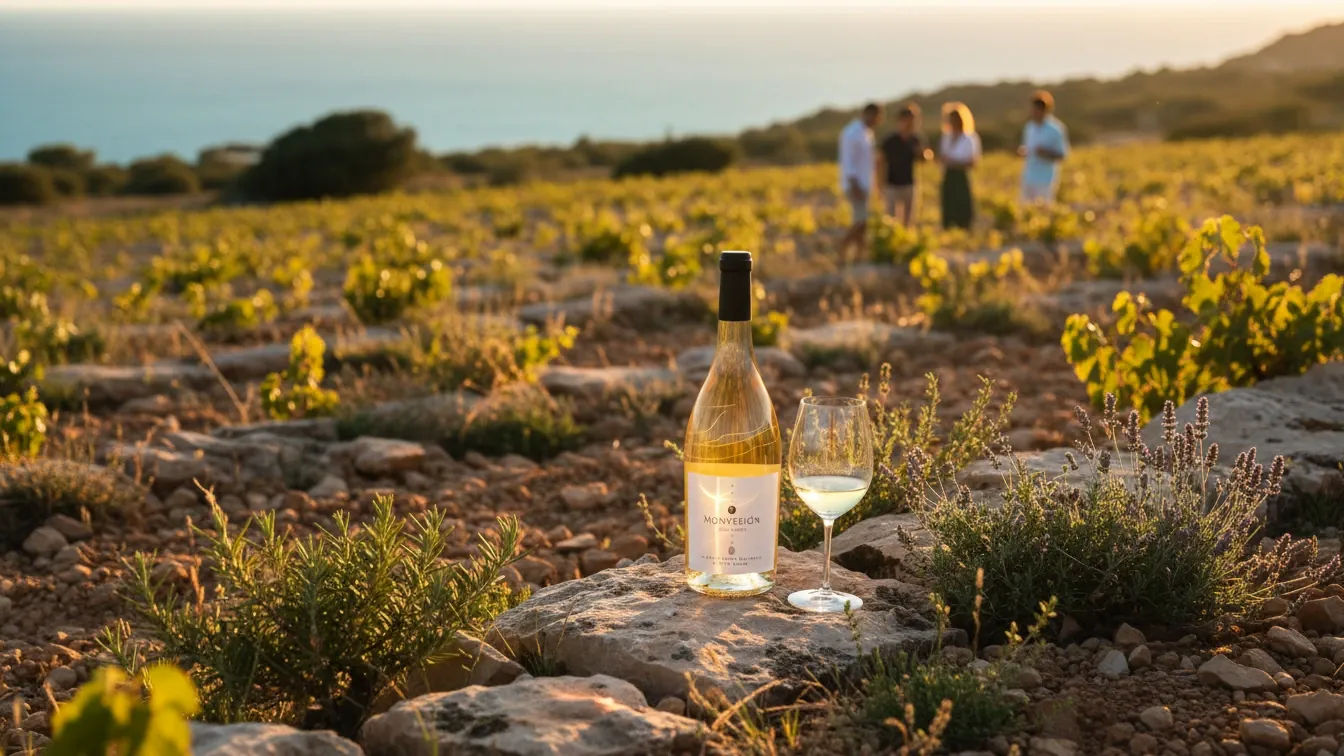
Prensal Blanc wine suits drinkers seeking freshness, saline lift, and a distinctly Mallorcan identity. Choose Viognier when floral perfume, ripe stone fruit, and a broader texture matter more. Both varieties thrive in Mediterranean conditions, yet they create very different experiences at the table.
Prensal Blanc Wine vs Viognier: Which Fits Your Glass?
A single degree of ripeness can change the balance of a Mediterranean white wine. That detail matters in Mallorca, where intense sunlight, limestone soils, coastal winds, and dry summers challenge white grapes in distinctive ways. Prensal Blanc, also known locally as Moll, responds with natural freshness and a subtle island character. Viognier offers a more expressive aromatic profile, often led by jasmine, apricot, peach, and lychee.
This comparison explains when to choose each variety rather than ranking one above the other. You will find practical differences in aroma, acidity, texture, food pairing, ageing, serving temperature, and occasion. The most useful choice depends on whether you want a wine that refreshes the palate or one that fills it with fragrance and texture.
Prensal Blanc or Viognier: Which Wine Wins at a Glance?
Choose Prensal Blanc if you want a crisp, mineral white for seafood, warm afternoons, or a bottle that expresses Mallorca’s native grape heritage. Choose Viognier if you prefer a lush, aromatic wine with a softer impression of acidity and greater floral intensity. Neither choice requires a compromise in quality; each simply answers a different appetite.
| Criterion | Prensal Blanc | Viognier | Winner |
|---|---|---|---|
| Aromatic intensity | Subtle citrus, green apple, herbs, and white flowers | Pronounced floral, apricot, peach, and lychee notes | Viognier |
| Acidity and refreshment | Naturally bright and palate-cleansing | Moderate acidity with a rounder feel | Prensal Blanc |
| Texture | Light to medium-bodied and precise | Medium to full-bodied and generous | Viognier |
| Local identity | Indigenous to Mallorca and the Balearic Islands | International variety adapted to the island | Prensal Blanc |
| Seafood pairing | Excellent with shellfish, grilled fish, and salads | Best with richer fish, spice, or creamy sauces | Prensal Blanc |
| Aromatic cuisine | Delicate herbs and vegetables | Strong spices, fruit, and fragrant sauces | Viognier |
| Cellaring style | Best young, with some lees-aged exceptions | Develops honeyed and waxy complexity when balanced | Tie |
The table offers a quick decision, but context gives it meaning. The following sections examine each criterion in the same format, so the comparison remains useful for shoppers, hosts, and sommeliers.
Which Variety Shows More Aromatic Character?
Prensal Blanc usually speaks in a restrained voice. Its aromas can suggest green apple, pear, lemon peel, white blossom, fennel, and a faint saline note. The fruit rarely overwhelms the glass, which makes the variety particularly effective when food deserves equal attention. In a well-made example, the aroma feels like a sea breeze over dry limestone rather than a bowl of tropical fruit.
Viognier takes a more immediate approach. Its characteristic profile often includes jasmine, orange blossom, peach, apricot, and lychee, with ripe fruit aromas that remain clear even when the wine is served cold. Therefore, Viognier often wins blind tastings for aromatic impact. Choose it when you want guests to notice the wine before the first bite, especially with fragrant dishes or an aperitif.
Does Prensal Blanc Offer Better Freshness?
Prensal Blanc wins the acidity test for most warm-weather occasions. The variety can retain useful malic acidity during Mallorca’s heat, helping the finished wine remain lively without tasting sharp. Its moderate body and clean finish make it a natural partner for seafood, grilled vegetables, salads, and salty appetisers.
Viognier can still taste fresh when growers pick at the right moment and protect the fruit during fermentation. However, its lower perceived acidity and fuller texture create a softer impression. That quality can feel luxurious, yet it may seem broad beside a delicate shellfish dish. Consequently, choose Prensal Blanc for thirst, heat, and palate cleansing; choose Viognier when freshness should support texture rather than dominate it.
Which Wine Has the More Convincing Mediterranean Identity?
Prensal Blanc is the stronger choice for drinkers exploring Balearic white wine varieties. It is indigenous to the Balearic Islands and remains closely connected with Mallorca’s traditional vineyards. Its character reflects an island balance: modest fruit, herbal detail, moderate body, and a finish that can carry a gentle maritime salinity.
Viognier has a different story. It is an international grape, but Mallorca’s climate gives it a distinctive setting. Warm days build ripe fruit and floral perfume, while coastal air and careful harvest timing can preserve balance. In other words, Viognier expresses place through adaptation, whereas Prensal Blanc expresses place through ancestry. Both can belong in the category of Mediterranean white wines, but only one carries Mallorca’s native genetic history.
Which Texture Works Best with Food?
Prensal Blanc generally feels leaner and more agile. That structure helps it move across the palate without coating it heavily. The effect resembles a squeeze of citrus over grilled fish: modest in weight, but precise in its ability to sharpen flavours. Lees ageing can add breadth, although the variety usually retains its refreshing centre.
Viognier creates a broader, more enveloping texture. Its natural glycerol and ripe fruit character can make the wine feel silky, even without oak. That body suits richer preparations, but it needs restraint because excessive ripeness can make the finish feel heavy. Thus, Viognier wins for creamy texture and Prensal Blanc wins for precision. The better choice depends on whether the dish needs weight or lift.
What Should You Serve with Each Variety?
Prensal Blanc performs especially well with foods that benefit from acidity and a clean finish. Think grilled prawns, oysters, white fish, vegetable cocas, fresh goat cheese, and rice dishes with herbs. Its citrus and saline notes can also reset the palate between bites of tapas. For a traditional Mallorcan table, it is a natural match for seafood and vegetable dishes where freshness matters more than sauce.
Viognier suits dishes with aromatic or gently sweet elements. It can accompany roast chicken, mildly spiced seafood, coconut-based sauces, squash, apricot-glazed vegetables, and creamy rice. The grape’s floral and stone-fruit character also works with dishes containing ginger, saffron, or fennel. For example, a Viognier with grilled fish and peach salsa creates a deliberate echo between wine and plate.
The practical rule is simple:
- Choose Prensal Blanc for shellfish, grilled fish, salads, and light Mediterranean cooking.
- Choose Viognier for richer fish, poultry, aromatic spices, and fruit-led sauces.
- Choose a balanced blend when a meal moves from delicate starters to richer main courses.
How Do the Two Wines Behave as They Age?
Young Prensal Blanc usually gives the clearest view of its strengths. Its citrus, apple, floral, and saline notes feel most energetic during the first years after release. Some examples gain texture through fine-lees ageing, developing almond, cream, or savoury nuances without losing their central freshness. Still, the variety is rarely chosen for powerful, long-term cellaring.
Viognier has greater aromatic evolution when the wine begins with enough acidity and concentration. With time, its fresh peach and floral notes can move toward honey, dried apricot, wax, and toasted almond. Poorly balanced examples may become broad or tired, so provenance and winemaking matter. Neither variety guarantees longevity; the vintage, harvest date, alcohol, acidity, and cellar work decide the outcome.
For a bottle intended for immediate enjoyment, Prensal Blanc offers the safer choice. For a carefully made, structured example that can develop, Viognier may provide the more interesting surprise.
When Should You Choose Each Wine in Mallorca?
Prensal Blanc is the dependable choice for a sunny lunch, a beachside meal, or a tasting focused on native grapes. It also suits visitors who want to understand why local varieties remain valuable in a warming climate. The vine’s ability to retain freshness while its umbrella-like canopy shades clusters is a useful reminder that adaptation can be built into the plant itself.
At Montesion, the Montesión Viognier 2025 follows a spontaneous fermentation approach and presents floral aromas with exotic fruit character. Served at approximately 8–10°C, it offers a vivid example of how an international grape can find balance in Mallorca rather than simply imitate another region.
Meanwhile, drinkers who want to compare styles rather than varieties can explore a fresh, aromatic blend such as Montesión Cuvée Blanc 2025. The broader lesson is that biodynamic wine does not have one fixed flavour. Farming and cellar choices shape how each grape translates soil, season, and climate into the glass.
What Are the Best Alternatives to a Straight Variety?
A blended white can be the better answer when neither single-variety profile fully matches the meal. Prensal Blanc can contribute freshness and island identity, while Viognier adds aromatic lift and mid-palate volume. Other varieties, including Chardonnay or Sauvignon Blanc, can bring creaminess, tropical notes, or herbal intensity. The final balance matters more than the number of grapes on the label.
A rosé can also bridge the gap for drinkers who enjoy Viognier’s perfume but want a lighter format. Conversely, a lees-aged Prensal Blanc can satisfy someone seeking more texture without abandoning local character. When choosing among Mallorca wine styles, ask three practical questions: how rich is the food, how warm is the setting, and should the wine speak softly or announce itself?
These questions work better than relying on grape reputation alone. A cool harvest can make Viognier more precise, while a warm vintage can give Prensal Blanc extra generosity. Vineyard location, crop levels, harvest timing, fermentation temperature, and lees contact all change the result.
Why This Comparison Matters for Mallorca’s Future
The contrast between Prensal Blanc and Viognier reflects a wider question in Mediterranean viticulture. Growers must preserve freshness under stronger heat while maintaining regional identity. Indigenous grapes offer one response because their long history on the island includes generations of adaptation to drought, sunlight, and limestone soils.
International varieties offer another response. They provide familiar reference points for consumers and can perform impressively when growers manage ripeness carefully. The most resilient estates do not treat these approaches as rivals. Instead, they use both to build a diverse vineyard capable of expressing Mallorca through several accents.
Demeter-certified farming adds another dimension. Biodynamic practice views the vineyard as a living system, limiting synthetic inputs and encouraging soil vitality. That does not make every wine taste alike, but it can support clearer site expression. In practical terms, the comparison becomes less about choosing tradition over innovation and more about choosing the voice that suits the moment. Montesion Wine Estate demonstrates how this balance can connect indigenous heritage with careful adaptation.
The Final Choice: Fresh Island Precision or Floral Abundance?
Prensal Blanc is the better choice when freshness, seafood pairing, and Mallorcan identity lead the decision. It offers citrus, white flowers, moderate body, and a clean finish that performs beautifully in warm weather. Viognier is the better choice when aromatic intensity, ripe stone fruit, and a generous texture matter most. Its perfume makes it especially compelling with fragrant dishes and relaxed aperitifs.
The most useful distinction is not native versus international. It is tension versus amplitude. Prensal Blanc draws the palate forward; Viognier invites it to linger. A well-balanced biodynamic estate can make both feel truthful to Mallorca, one through heritage and the other through thoughtful adaptation.
For readers exploring the island’s wine culture, that contrast is the real pleasure. The best Mallorca wine is not always the fullest or loudest bottle. Sometimes it is the one that carries a limestone-soil freshness through a plate of grilled fish. At other times, it is the floral glass that turns a simple evening into a more vivid memory. Montesion Wine Estate offers a setting for exploring both perspectives.
Preguntas frecuentes
Is Prensal Blanc sweeter than Viognier?
Prensal Blanc is not generally sweeter than Viognier. Both grapes can produce dry wines, but Viognier often tastes riper because its aromas suggest peach, apricot, lychee, and floral nectar. Prensal Blanc usually feels leaner and more refreshing because of its citrus character and brighter perceived acidity. The actual sweetness depends on residual sugar, harvest ripeness, and winemaking rather than the grape name alone.
What are the main Viognier characteristics?
The main Viognier characteristics include pronounced floral aromas, stone-fruit flavours, a rounded texture, and moderate acidity. Jasmine, orange blossom, peach, apricot, and lychee commonly appear in well-made examples. The variety can feel full and silky without oak, although excessive ripeness may reduce freshness. In Mallorca, careful harvest timing helps preserve balance in the island’s warm climate.
Which is better with seafood, Prensal Blanc or Viognier?
Prensal Blanc is usually the better choice for delicate seafood because its acidity and clean finish refresh the palate. It works particularly well with oysters, prawns, grilled white fish, shellfish, and lightly dressed salads. Viognier suits richer seafood preparations, including creamy sauces, aromatic spices, or fruit-based garnishes. The cooking method matters as much as the fish itself.
Are both varieties suitable for Mediterranean white wines?
Yes, both varieties can produce compelling Mediterranean white wines, although they express the region differently. Prensal Blanc offers indigenous identity, citrus freshness, and subtle saline detail shaped by Mallorca’s climate. Viognier contributes floral perfume, ripe stone fruit, and a broader texture adapted to island conditions. The best examples balance Mediterranean sunlight with enough freshness for the table.
Should Prensal Blanc and Viognier be served at the same temperature?
They can be served within a similar general range, but Viognier often benefits from being slightly less cold. Prensal Blanc is refreshing around 8–10°C, while a richly textured Viognier may show more detail around 10–12°C. Excessive chilling suppresses floral aromas and makes texture harder to appreciate. Allowing the wine to warm gradually in the glass can reveal additional complexity.
Which grape has stronger links to Mallorca?
Prensal Blanc has the stronger historical link to Mallorca because it is an indigenous Balearic variety, also known locally as Moll. It has long been grown in the island’s traditional vineyards and remains central to local white-wine identity. Viognier is an international grape that has adapted successfully to Mallorca. Its connection is therefore one of cultivation and expression rather than origin.
