

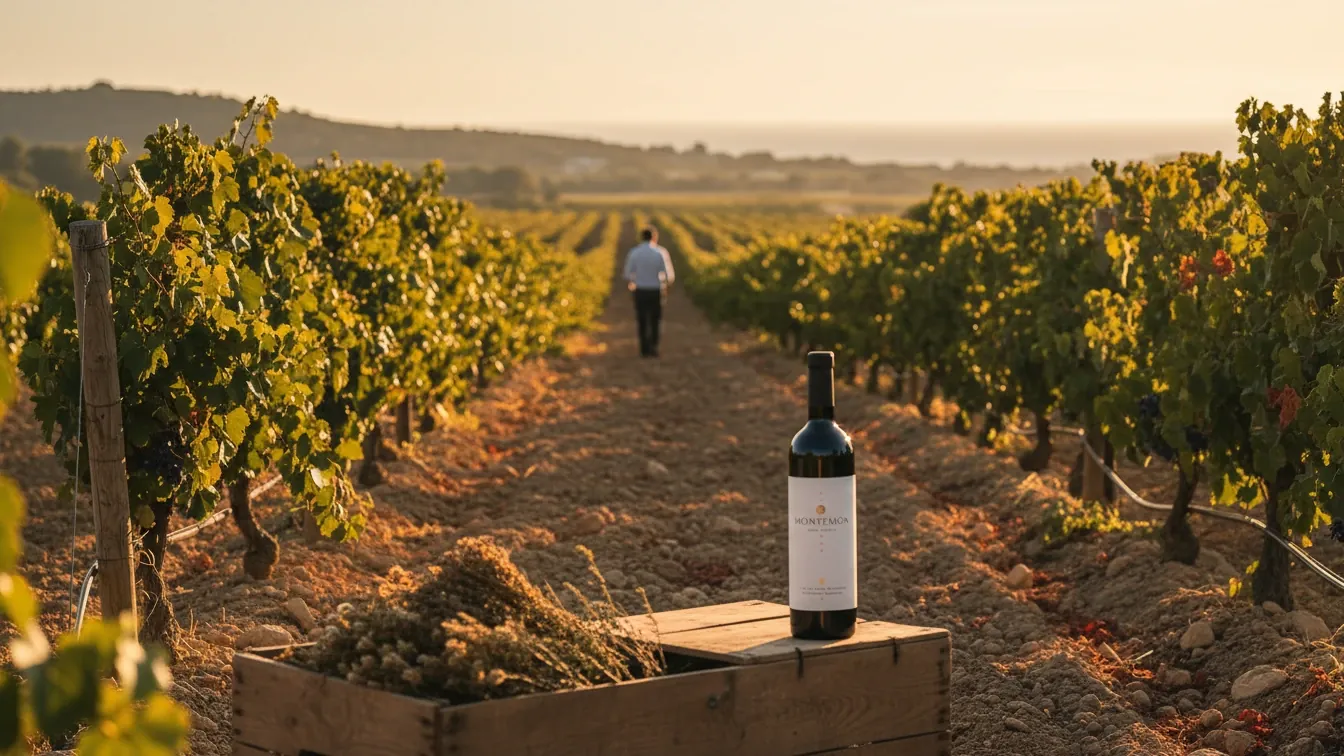
Mallorca grape varieties reveal the island’s identity more clearly than any postcard. Callet, Prensal Blanc, Manto Negro, Giró Ros and other native grapes translate hot summers, sea breezes and limestone soils into distinctive wines. Together, they offer visitors a richer tasting experience than familiar international varieties alone. At Montesion Wine Estate, these varieties provide a direct way to understand Mallorca through the glass.
A vineyard on Mallorca can look severe in August: pale soil, low green canopies and vines facing a hard Mediterranean sun. Yet the glass tells a more nuanced story. Local grapes retain freshness, carry the scent of dry herbs and respond to the island’s varied soils with remarkable precision. That balance explains why native varieties now sit at the centre of serious Mallorca wine.
For visitors planning a winery tour, grape names provide a practical map. Callet leads toward elegant, aromatic reds. Prensal Blanc offers a crisp, floral white style. Manto Negro brings warmth and red-fruit depth, while Giró Ros adds texture and perfume. Viognier, although not native, shows how a carefully chosen international grape can complement the island’s character.
This guide explains what to taste, how the varieties grow, which pairings make sense and how to read a local wine list. It also separates heritage grapes from modern plantings, because authenticity does not mean every bottle must contain only native fruit. Sources including montesionwineestate.com, mallorca.com and doplaillevant.com offer useful reference points for the island’s viticultural background.
Your tasting route through Mallorca grape varieties
A well-planned tasting should move from delicate whites to structured reds. Begin with Prensal Blanc or a blend based on it, then explore Giró Ros if available. Continue with rosé or lighter red wines before tasting Callet and Manto Negro. This progression keeps tannin from overwhelming the palate too early.
The island’s varieties also make more sense when tasted beside their landscape. Porreres, Felanitx, Manacor and other inland areas can feel dry and open, yet their soils are not uniform. Limestone, clay and iron-rich patches influence water retention, root depth and ripening. Meanwhile, sea breezes moderate some of the summer heat, helping grapes preserve aromatic definition.
The following contents map the main questions visitors usually bring to a tasting:
- What makes Mallorca’s native grapes distinctive?
- Which local red grapes should you taste first?
- Why does Prensal Blanc matter so much?
- How do the varieties compare in the glass?
- How do climate and biodynamic farming shape flavour?
- What should you order at a Mallorca winery?
- How much does a native-grape tasting cost?
- Which foods work best with island varieties?
- What mistakes can weaken a tasting?
- How can you plan a more meaningful wine visit?
What makes Mallorca’s native grapes distinctive?
Mallorca’s native grapes evolved under pressures that remain obvious today. Summers are hot and dry, rainfall can be irregular, and exposed vineyards receive strong sunlight. A variety that ripens too quickly may lose acidity, while one that struggles to mature can produce hard, herbal flavours. Local vines therefore offer more than historical interest; they represent practical adaptation to the island’s conditions.
Callet and Prensal Blanc are especially valuable examples. Callet can preserve freshness while producing moderate tannin and expressive red-fruit aromas. Prensal Blanc often retains a clean, lively profile despite the heat. Their success challenges the assumption that warm-climate wine must always taste heavy or low in acidity.
The island’s isolation also matters. Mallorca sits within the Balearic Islands, but it does not taste like a generic Mediterranean wine region. Sea influence, elevation, exposure and soil create sharp contrasts between nearby vineyards. Consequently, a single grape may show different levels of ripeness, spice or mineral tension depending on where it grows.
Historical continuity adds another layer. Some local varieties nearly disappeared when growers favoured higher-yielding or internationally recognised grapes. Conservation work brought several of them back into cultivation. The result is not a museum piece. It is a living wine culture that gives producers a strong regional language.
Which local red grapes should you taste first?
Callet: the island’s fine-boned red
The callet grape is one of Mallorca’s most distinctive red varieties. It usually offers moderate alcohol, medium colour, bright acidity and relatively gentle tannin. Aromas can suggest red cherry, wild berries, dried herbs and subtle earth. In skilled hands, it feels energetic rather than powerful, with a finish that remains lifted.
Callet’s reputation once suffered because vigorous vines could produce diluted fruit on fertile soils. Growers now understand that restraint matters. Poorer soils, lower yields and careful canopy management can concentrate flavour without turning the wine heavy. The grape’s apparent delicacy then becomes an advantage at the table.
Older examples show how well balanced Callet can develop. A mature bottle may bring dried fruit, cedar, spice and earthy notes while keeping its freshness. Younger versions can feel more vibrant, with crunchy red fruit and a savoury edge. Both styles reward slow tasting because the aromatics often widen after several minutes in the glass.
One useful comparison is to think of Callet as a Mediterranean red with the posture of a cooler-climate variety. It does not rely on sheer colour or alcohol to make an impression. Instead, it works through perfume, acidity and texture. That combination makes it an excellent starting point for visitors who normally prefer lighter reds.
Manto Negro: warmth, fruit and island breadth
Manto Negro is another central red grape in Mallorca. It typically contributes ripe red fruit, warmth, medium tannin and a broad middle palate. Depending on yield, harvest date and blending choices, it can feel either bright and supple or fuller and more generous.
The grape’s natural warmth suits roasted vegetables, grilled meats and richly seasoned island dishes. However, a well-made Manto Negro should not taste merely alcoholic. Freshness, savoury detail and careful extraction keep the wine balanced. Producers may blend it with Callet or other grapes to add aromatic lift and structural definition.
Manto Negro also demonstrates why native varieties should not be judged by one bottle. Vineyard age, soil depth, weather and cellar decisions all matter. A young, fruit-driven wine may suit a casual lunch, while a structured example can handle a slow evening meal. Ask about the vintage before deciding what style to expect.
Fogoneu, Gorgollassa and other red discoveries
Fogoneu and Gorgollassa occupy a more specialised place in the island’s wine story. Their availability varies, so visitors may encounter them in small-production wines, experimental cuvées or educational tastings rather than every restaurant list. Fogoneu can contribute colour and savoury complexity, while Gorgollassa is valued for its historical and genetic interest.
These grapes matter even when they appear in modest proportions. They widen the idea of what Mallorca can taste like and encourage growers to preserve vineyard diversity. In a tasting, their purpose is often exploratory rather than commercial. The most memorable glass may come from a variety you did not expect to see.
Why does Prensal Blanc matter so much?
Prensal Blanc is Mallorca’s essential native white grape. It typically produces pale wines with floral aromas, green apple, citrus and a clean finish. Its acidity can be moderate rather than piercing, so the best examples rely on harvest timing, site selection and gentle cellar work for freshness.
The grape is particularly effective in the island’s warm coastal climate. Its ability to retain malic acid during periods of intense heat helps preserve energy in the finished wine. As a result, a well-made prensal blanc wine can feel refreshing without becoming sharp or thin.
At the table, Prensal Blanc has an obvious regional advantage. Its subtle perfume and mineral edge suit grilled fish, prawns, shellfish, rice dishes and fresh cheeses. The wine’s clean profile can also work as an aperitif, especially during a warm afternoon when oak and heavy alcohol would feel out of place.
Producers may bottle it alone or use it in a blend. A single-variety wine makes its identity easiest to recognise, while a blend can add texture or aromatic breadth. Chardonnay, Viognier, Sauvignon Blanc and Giró Ros may contribute body or fragrance, but Prensal Blanc often keeps the final wine connected to Mallorca.
Visitors should also watch the serving temperature. Over-chilling suppresses floral notes and makes moderate acidity seem harder. Around 8 to 12 degrees Celsius usually allows the wine to show both freshness and texture. Letting the glass warm slightly can reveal pear, white flowers and a faint herbal note.
How do the varieties compare in the glass?
A comparison table helps visitors remember the main distinctions without reducing each grape to a simple label. These are broad tendencies, not fixed rules. Vintage, soil, vine age and winemaking can shift the profile considerably.
| Variety | Colour and structure | Typical aromas | Useful food direction |
|---|---|---|---|
| Callet | Medium colour, moderate tannin, bright acidity | Red cherry, berries, herbs, earth | Roast poultry, mushroom dishes, soft cheese |
| Manto Negro | Medium to full body, warm fruit, moderate tannin | Ripe red fruit, plum, spice | Grilled meat, lamb, roasted vegetables |
| Prensal Blanc | Pale colour, fresh finish, moderate acidity | Green apple, citrus, white flowers | Seafood, rice, fresh cheese |
| Giró Ros | Textural white, aromatic, balanced | Stone fruit, flowers, spice | Fish, shellfish, vegetable dishes |
| Fogoneu | Red-fruit depth and savoury structure | Dark berries, herbs, spice | Stews, cured meats, aged cheese |
| Viognier | Fuller white texture and pronounced aroma | Lychee, apricot, white flowers | Spiced fish, rice, poultry |
Giró Ros deserves particular attention from curious visitors. It can bring weight, aromatic complexity and stone-fruit character to white wines. Its texture may feel broader than Prensal Blanc, making it useful with dishes that need more body. It also shows that indigenous Spanish grapes do not all follow the same freshness-driven model.
Viognier provides an instructive contrast. It is not a native Mallorcan grape, but it can thrive in the island’s climate when harvested with care. A Demeter-produced Viognier from Porreres may offer floral intensity, lychee and exotic fruit while remaining fresh and balanced. Tasting it beside Prensal Blanc reveals the difference between native adaptation and a complementary international variety.
Blends deserve equal attention. A producer may use local grapes for identity and another variety for texture, aroma or structure. That approach does not weaken regional character. In many cases, it creates a more complete expression of the site and the vintage.
How do climate and biodynamic farming shape flavour?
Mallorca’s vineyard climate combines intense sunlight, dry summers and maritime influence. Sea breezes can moderate afternoon heat, while inland sites may experience larger day-to-night temperature shifts. These contrasts affect berry size, acidity, aromatic development and tannin maturity.
Soils add another level of variation. Iron-rich clay can contribute water-holding capacity and a savoury impression, while limestone encourages deep rooting and can support a firm, mineral finish. Low fertility often limits yields naturally. Smaller crops may concentrate flavour, although low yield alone never guarantees quality.
Biodynamic farming treats the vineyard as a connected ecosystem rather than a row of isolated vines. Demeter certification requires strict standards, including restrictions on synthetic inputs and a focus on soil vitality. Growers work with composts, cover crops, biodiversity and carefully timed preparations. The aim is not to make wine taste like a certification label; it is to keep the vineyard resilient.
In a biodynamic wine, flavour still comes from grape variety, soil, weather and cellar decisions. The farming method may support clearer site expression by improving soil structure and encouraging living microbial communities. Visitors often notice the result indirectly: healthier vegetation between rows, more insects and a vineyard that feels less sterile.
The term organic wine Spain can describe a broad range of practices, while biodynamic farming follows a more specific framework. Neither label replaces careful tasting. Instead, they help visitors understand the producer’s relationship with land, water and long-term vineyard health. That relationship matters on an island where agricultural runoff and water scarcity can affect fragile ecosystems.
What should you order at a Mallorca winery?
The best order depends on the purpose of the visit. Someone exploring local identity should begin with a single-variety Prensal Blanc, then compare it with a blend or Viognier. A red-wine drinker can start with Callet before moving to Manto Negro. This sequence makes the differences easier to recognise than beginning with a heavily oaked red.
At a biodynamic estate in Porreres, the experience often includes more than a bottle. The landscape, farming methods and local food explain why the varieties taste the way they do. A guided tasting can therefore become a form of landscape reading: first the pale soil and dry vines, then the aromas of herbs, fruit and flowers in the glass.
For a richer red occasion, the Montesión Callet Limited Edition 2007 offers a mature expression of the callet grape. Its dry, hot vintage supported healthy ripening, followed by spontaneous fermentation and 12 to 15 months in French oak. In the glass, ripe fruit, earthy undertones, moderate tannin and integrated acidity show how Callet can gain depth without losing balance.
That bottle suits visitors who want to understand age rather than chase intensity. The oak should support the fruit, not cover it. Pairing it with a stew, roast meat, mature cheese or a chocolate dessert creates a useful contrast between the wine’s savoury development and the dish’s richness.
For white-wine exploration, a fresh Prensal Blanc-led wine is the clearest educational choice. A Viognier bottling offers a different lesson, with floral intensity and exotic fruit. A rosé based partly on Viognier and other varieties can then show how aromatic grapes behave in a lighter format.
International varieties also have a place in the itinerary. Cabernet Sauvignon, Syrah, Petit Verdot and Merlot can perform well in Mallorca, especially when growers match them to suitable sites. They should not replace the native grapes in a regional tasting, but they provide a valuable reference point. Comparing them reveals what comes from the island and what comes from the grape.
How much does a native-grape tasting cost?
Prices vary by estate, group size, food and the level of guidance. A basic tasting may include three wines and a small local biscuit, while a more substantial experience adds olive oil, cheese, cured meats or seasonal dishes. Private sessions usually cost more because they require dedicated staff and a tailored format.
At the time of writing, an estate tasting menu can range from approximately €35 per person for three wines and Mallorcan biscuits to €85 for three wines with a fuller tapas selection. A wine and olive oil tasting may sit around €40, while a signature blending session can reach approximately €120 per person. These prices are useful benchmarks, not universal rates.
The return on that spending is not simply the number of glasses poured. Visitors gain context about grape varieties, vintage conditions, farming and food pairing. A tasting that includes vineyard or cellar explanation can prevent expensive mistakes later, such as buying a bottle whose style does not suit the meal or the recipient.
For groups, compare the value of private and shared formats. A shared tasting may offer a broader social atmosphere and lower cost. A private tasting can focus on Callet, Prensal Blanc or biodynamic practices in greater detail. Either format works when the wines match the visitor’s curiosity.
A practical budget should also include transport and time. Mallorca’s wineries are spread across different areas, and a designated driver or organised transfer may cost more than the tasting itself. That expense protects the experience and allows guests to assess wine with attention rather than rushing between appointments.
Which foods work best with island varieties?
Food pairing reveals structure more reliably than tasting notes alone. Prensal Blanc’s freshness suits seafood, sushi, grilled fish and rice dishes. Its floral character can also work with vegetable preparations, especially fennel, green herbs and lightly dressed salads. Avoid overly sweet sauces, which can make the wine seem austere.
Callet’s moderate tannin makes it flexible. Roast chicken, mushroom dishes, lentils and soft cheeses allow its red fruit and herbal notes to remain visible. A mature Callet can handle stews and darker sauces, but very spicy food may exaggerate alcohol and suppress its perfume.
Manto Negro usually welcomes more substantial cooking. Grilled lamb, pork, roasted aubergine and tomato-based dishes echo its warmth and ripe fruit. If the wine has firm structure, fat and protein will soften the tannin. If it is young and bright, serve it slightly cool to emphasise its freshness.
Giró Ros and Viognier have enough texture for richer fish, creamy vegetable dishes and spiced poultry. Their aromatic profiles can meet saffron, ginger or fruit-based sauces, provided the seasoning remains balanced. The goal is not to create a perfect rule; it is to keep the wine and food from competing.
Mallorca’s cuisine makes the pairings especially vivid. Pa amb oli, local cheeses, olives, sobrasada, coca and seafood all bring salt, fat or acidity to the table. Those elements explain why island wines often feel more complete with food than when tasted alone. The regional connection is not a marketing idea. It is a practical match between local ingredients and local wine structure.
What mistakes can weaken a tasting?
The first mistake is treating native grapes as interchangeable. Calling every local red “bold” misses the distinction between Callet’s aromatic lift and Manto Negro’s broader warmth. Likewise, describing every white as crisp overlooks the textural difference between Prensal Blanc, Giró Ros and Viognier.
Another error is tasting too many powerful wines in succession. High alcohol, oak and firm tannin fatigue the palate quickly. Begin with whites, continue through lighter reds and finish with structured or aged bottles. Water and plain bread can help, but sequence remains the strongest tool.
Over-chilling is common with white wine. Extremely cold service hides perfume and makes a balanced wine seem simple. Red wine can suffer from the opposite problem. Serving a Mediterranean red at a hot room temperature can magnify alcohol and flatten its freshness. Follow the producer’s suggested range and adjust gradually.
Visitors sometimes focus on the label while ignoring the vintage. Weather can change the balance of fruit, acidity and tannin from one year to the next. A hot, dry season may produce concentrated fruit, while a milder year can emphasise perfume and freshness. Asking about the growing season often produces more useful information than asking whether a wine is “strong.”
Finally, do not assume that a native grape must taste rustic. Careful vineyard work and precise fermentation can produce polished, elegant wines. Conversely, a fashionable variety can still taste ordinary if yields, harvest timing or cellar handling are poorly judged. Judge the wine in the glass, then use the grape name to understand it.
How can you plan a more meaningful wine visit?
Start by choosing one question rather than trying to learn every variety at once. You might ask how Callet handles heat, why Prensal Blanc remains fresh or how biodynamic farming changes vineyard management. A focused question gives the tasting a clear narrative and makes details easier to remember.
Before visiting, check whether the estate offers a native-grape flight, food pairing or vineyard walk. Experiences differ considerably. Some focus on current releases, while others include older vintages, amphora-aged wines or comparisons between oak and alternative vessels. The format determines what you can learn.
A useful itinerary includes three contrasts:
- Taste a native white beside an aromatic international white.
- Compare Callet with Manto Negro or another local red.
- Finish with an aged or oak-influenced wine to study texture and development.
Take notes on acidity, tannin, aroma, body and finish rather than only recording whether you liked the wine. Also write down the food served, because pairing can change your perception of structure. A wine that seems firm alone may feel beautifully balanced with cheese or roasted meat.
The strongest Mallorca wine experiences connect the bottle to place. Look at the vegetation between vineyard rows, notice the wind, ask about soil and listen for the practical reasons behind each farming choice. Those observations turn a tasting into an understanding of island agriculture.
When researching related topics, keep this hub as the reference point for native varieties. A detailed Callet article can explore vineyard management; a Prensal Blanc article can examine white-wine technique; a biodynamic farming article can focus on Demeter standards. Each spoke should return here so readers can compare the variety, landscape and tasting context in one place.
Why native grapes belong in Mallorca’s future
Mallorca’s local varieties offer a practical answer to a changing climate. Their long history on the island provides evidence of adaptation, while modern viticulture can refine their balance and consistency. Preserving them protects genetic diversity and gives growers alternatives to a narrow menu of international grapes.
Callet demonstrates how an overlooked red can become a source of finesse. Prensal Blanc proves that a warm island can produce whites with freshness and clarity. Manto Negro brings generosity, while Giró Ros and other less common varieties keep the regional palette open. Together, they make the island’s wine culture more resilient and more recognisable.
The strongest estates combine that heritage with disciplined farming. Demeter-certified biodynamic practice, hand harvesting, spontaneous fermentation and careful cellar work can support a transparent expression of place. The technique should never obscure the grape. It should help the grape speak more clearly.
For Montesion Wine Estate, the connection is especially tangible in Porreres, where Mediterranean conditions meet a working biodynamic landscape. A bottle shaped by native fruit, living soil and a dry island vintage carries more information than its tasting note. It records a relationship between agriculture and place.
That is why indigenous grapes deserve more than a brief mention on a wine list. They are the clearest route into Mallorca’s history, food, climate and future. Taste them in sequence, compare them honestly and let the island’s differences appear one glass at a time.
Frequently asked questions
Which grape varieties are native to Mallorca?
Mallorca’s principal native grapes include Callet, Manto Negro, Prensal Blanc, Fogoneu, Gorgollassa and Giró Ros. Callet and Manto Negro are important red varieties, while Prensal Blanc and Giró Ros are central to the island’s white-wine identity. Availability varies by estate, region and vintage, so specialised tastings may reveal varieties rarely seen on general restaurant lists.
What does Callet wine taste like?
Callet wine commonly shows red cherry, berry, herbal and earthy aromas with moderate tannin and bright acidity. It usually has less colour and weight than a heavily extracted international red, but it can gain depth through low yields, careful farming and bottle age. The result is often an elegant, food-friendly red with a distinctly Mallorcan character.
Is Prensal Blanc a dry white wine?
Prensal Blanc is generally made as a dry white wine with floral, citrus and green-apple notes. Its acidity is usually fresh but not aggressively sharp, which gives the wine a clean and balanced finish. It pairs especially well with seafood, fish, rice dishes and fresh cheeses.
What is the difference between organic and biodynamic wine?
Organic wine comes from grapes grown under approved organic farming standards, while biodynamic farming follows a more specific ecological system that treats the vineyard as an interconnected organism. Demeter certification includes strict rules concerning synthetic inputs, soil care and vineyard management. Both approaches can support sustainable production, but certification requirements and cellar practices should be checked separately.
How should I taste Mallorca’s native grapes?
Taste native whites before reds, then move from lighter and fresher wines toward fuller or oak-aged examples. Compare at least one single-variety wine with a blend, and note acidity, tannin, aroma, body and finish. Local foods such as seafood, cheese, olives and roasted meats can make differences between the varieties easier to understand.
Are Mallorca’s indigenous grapes suitable for food pairing?
Yes, Mallorca’s indigenous grapes are highly suitable for food pairing because they offer a broad range of acidity, tannin, aroma and body. Prensal Blanc suits seafood and rice, Callet works with poultry and mushrooms, and Manto Negro matches grilled meats and roasted vegetables. The best pairing depends on the wine’s vintage, winemaking style and serving temperature.
