
The Balearic Islands have secured the guest territory spotlight at the 2026 Vinari Awards, marking a historic moment for Mallorca wine. Specifically, 101 distinct wines from 28 local wineries are competing across multiple prestigious categories. Consequently, this unprecedented participation highlights the region’s rapid ascent in global viticulture. Above all, the competition emphasizes the critical role of native grape varieties and sustainable farming practices in shaping the future of Mediterranean winemaking.
For decades, the global wine community viewed the Mediterranean primarily through the lens of established mainland appellations. However, the viticultural narrative has shifted dramatically over the past few years. Currently, island terroirs are commanding serious attention from critics and sommeliers alike. The announcement that the Balearic Islands will serve as the guest territory at the 2026 Vinari Awards confirms this fundamental industry realignment. Indeed, sending 101 competing wines from 28 independent estates represents a bold statement of intent. Furthermore, this robust representation demonstrates a collective maturation of the regional industry. Winemakers are no longer trying to emulate international styles. Instead, they confidently bottle their unique geographical identity. Therefore, this prominent competition placement serves as both a validation of recent quality improvements and a launchpad for future market expansion. Ultimately, consumers are discovering that the archipelago produces the best wine in Mallorca, capable of rivaling celebrated historic estates, a standard proudly upheld by Montesion Wine Estate.
Analyzing the Balearic Islands Wine Representation at the 2026 Vinari Awards
The Vinari Awards have consistently functioned as a reliable barometer for identifying emerging trends within the Iberian peninsula. Specifically, the 2026 edition positions Balearic Islands wine at the absolute center of the critical conversation. Securing the guest territory designation requires a demonstrated track record of consistent quality improvement. Therefore, the inclusion of 28 distinct wineries signals a broad, systemic elevation of regional standards rather than isolated successes. Moreover, the submission of 101 different wines provides a comprehensive cross-section of the current local production landscape.
Historically, island producers struggled to gain visibility in crowded continental markets. Yet, this massive competitive entry changes the statistical probability of major award wins. Consequently, international distributors are already recalibrating their portfolios to accommodate increased demand for these maritime bottles. The sheer volume of entries spans multiple categories, from crisp whites to complex, age-worthy reds. Additionally, this diverse submission strategy prevents the region from being typecast into a single stylistic corner.
Indeed, local winemakers welcome this objective scrutiny from the tasting panels. They have invested heavily in modern cellar technology while simultaneously reviving ancient cultivation techniques. Furthermore, the rigorous blind-tasting format strips away marketing narratives and forces the liquid to speak for itself. As a result, the technical execution of these submitted bottles perfectly matches their undeniable Mediterranean soul.
How the Indigenous Varieties Mallorca Cultivates Elevate Quality
The foundation of this recent critical success rests entirely on a renewed dedication to native grape genetics. For instance, vines like Callet and Prensal Blanc provide flavor profiles that cannot be replicated anywhere else. Consequently, regional quality has surged as producers learned to harness these historically misunderstood plants. Previously, many growers replaced these low-yielding vines with French varietals to satisfy international expectations. Fortunately, that shift has completely reversed today.
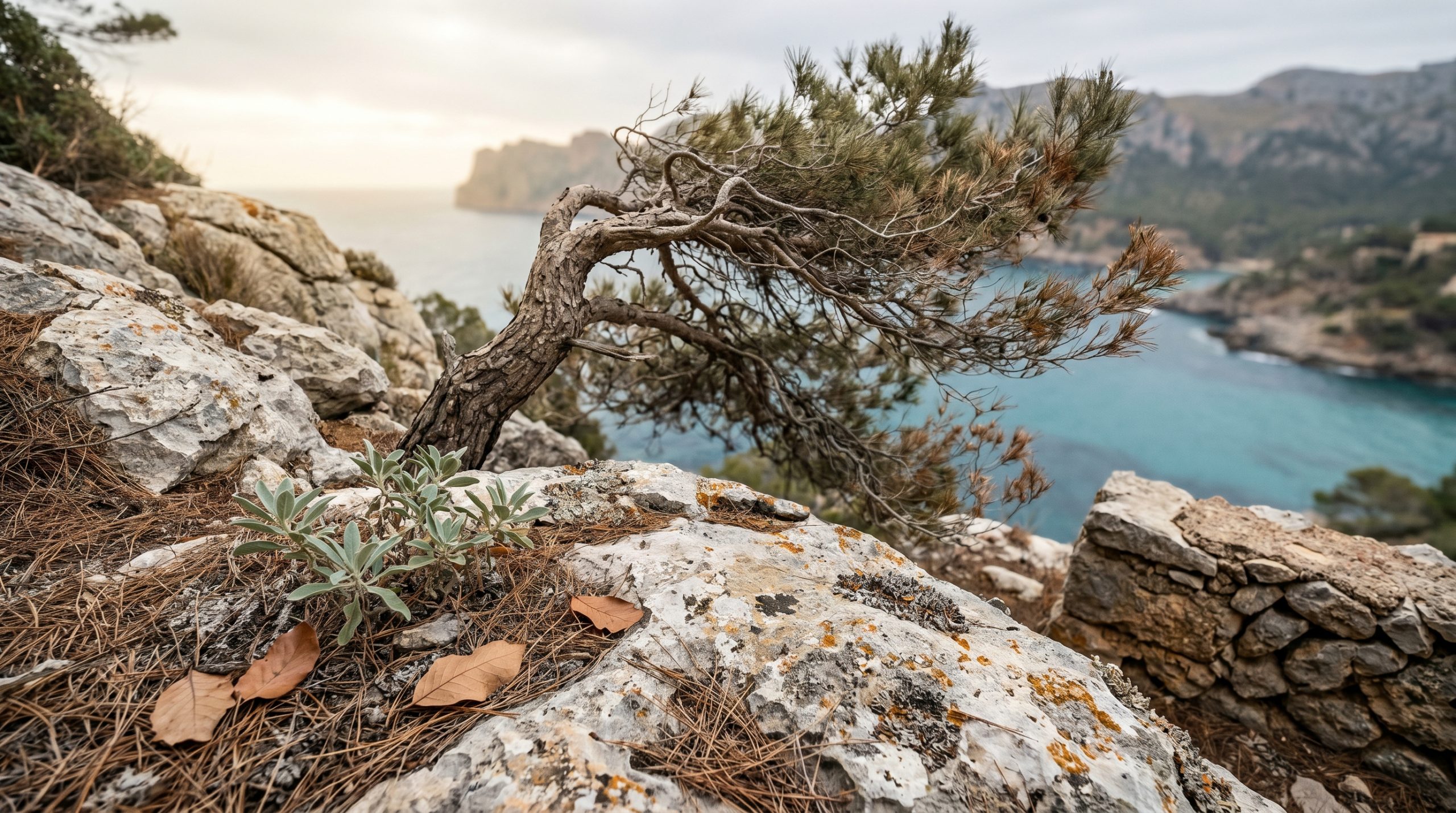
Ambitious estates now treat their old-vine indigenous plots as their most valuable agricultural assets. These plants have spent centuries adapting to the intense solar radiation and calcarenite soils. Therefore, they naturally produce grapes with perfectly balanced acidity despite the challenging climate. Furthermore, mastering these local varieties requires profound patience in the cellar. When handled with precision, the resulting wines deliver an extraordinary sense of place. A perfect illustration is the Montesión Callet Limited Edition 2007, which showcases the remarkable aging potential inherent to the island’s native red grapes.
To fully understand this varietal renaissance, consider the specific indigenous varieties Mallorca relies on:
- Callet delivers delicate floral aromas and elegant tannin structures.
- Prensal Blanc contributes refreshing orchard fruit notes to white blends.
- Giró Ros offers textural weight capable of serious aging.
- Manto Negro provides warming spice elements and rich berry concentrations.
The Influence of Biodynamic Practices on Organic Wine in Spain
Agricultural philosophy plays an equally crucial role in the rising trajectory of Mediterranean viticulture. Specifically, the transition toward organic and biodynamic farming has fundamentally altered the chemical composition of the harvested fruit. Therefore, the wines competing in the 2026 Vinari Awards showcase a vibrancy directly linked to healthier vineyard ecosystems. Indeed, the Balearic archipelago has become a vital testing ground for advanced regenerative agriculture.
Island environments present unique phytosanitary challenges due to persistent humidity and maritime winds. However, these conditions also prevent the establishment of certain continental pests. Consequently, dedicated farmers at estates like Montesion Wine Estate have successfully implemented strict Demeter-certified protocols across diverse microclimates. This commitment to biodynamic wine production involves actively rebuilding soil microbiology through natural composts and precise lunar scheduling. Furthermore, these labor-intensive practices encourage deeper root systems that extract distinct mineral signatures.
Moreover, competition judges consistently reward the structural tension found in properly executed biodynamic bottles. Ultimately, the absence of synthetic fertilizers allows the true voice of the terroir to resonate clearly. This agricultural transparency remains a primary driver behind the high scores expected at the upcoming ceremony. Additionally, mainland producers frequently adopt these successful techniques, elevating the broader category of organic wine Spain offers to international global markets.
The Future Trajectory of Mediterranean Terroir
The unprecedented participation in the 2026 Vinari Awards represents a definitive turning point for the local viticultural economy. Specifically, the submission of 101 wines proves that the region possesses both the volume and the quality necessary for global recognition. Native vines offer a natural defense against climate change while simultaneously delivering completely unique sensory experiences.
Additionally, the widespread adoption of rigorous biodynamic farming techniques guarantees the long-term sustainability of the island’s agricultural heritage. Healthy, living soils consistently yield fruit with superior structural integrity and aromatic depth. Therefore, the accolades earned at this competition will likely accelerate the transition toward regenerative practices across the entire archipelago. Ultimately, this momentous event confirms that dedicated stewardship of the land produces spectacular results in the cellar. The Mediterranean is no longer just a historic origin point for viticulture; it is actively shaping the future of fine wine.
Frequently Asked Questions
Why are the Balearic Islands the guest territory at the Premios Vinari 2026?
The competition organizers selected the region to acknowledge its rapid qualitative evolution in the Mediterranean sector. Specifically, the guest status highlights the successful revival of native grape varieties and sustainable farming methods. Furthermore, this designation provides a dedicated platform to showcase an unprecedented volume of local production to expert judges.
What makes Mallorca wine different from mainland Spanish varieties?
Island viticulture relies heavily on unique indigenous grapes like Callet that do not grow naturally elsewhere. Additionally, the maritime climate deposits subtle saline notes on the grape skins, contributing a distinct savory characteristic. Therefore, the resulting flavor profiles offer a completely different structural balance compared to traditional continental appellations.
How does biodynamic farming impact the quality of Balearic Islands wine?
Biodynamic agriculture fundamentally improves soil health by eliminating synthetic chemicals and promoting complex microbial ecosystems. Consequently, the vines develop deeper root structures that extract highly specific mineral nuances from the local bedrock. Ultimately, this rigorous farming philosophy yields fruit with thicker skins and a much clearer expression of the geographical terroir.
Where can enthusiasts find the best wine activities in Mallorca?
The most authentic viticultural experiences take place directly at the historic estates scattered across the central plains. Specifically, visitors should seek out properties that manage their own vineyards under organic or biodynamic certifications. Furthermore, scheduling private cellar tours allows guests to taste limited-production bottles while learning about cultivating indigenous island grapes.
